U.S. mortgage rates hit three-week high
The average 30-year fixed mortgage rate climbed to a three-week high, deepening pressure on U.S. homebuyers already squeezed by years of elevated borrowing costs and underscoring why housing demand is fading into late summer.
The move matters because mortgage rates remain the biggest gatekeeper for affordability. Even a small uptick can push monthly payments higher, price out first-time buyers and delay purchases, which in turn slows transaction volumes across the housing market and hits lenders, brokers and homebuilders.

Benchmark Treasury yields are part of the backdrop. The 10-year Treasury note, the key reference for mortgage pricing, was last around 4.7%, with a forecast of 4.719%, keeping financing costs sticky even as some traders look for relief in bond markets.
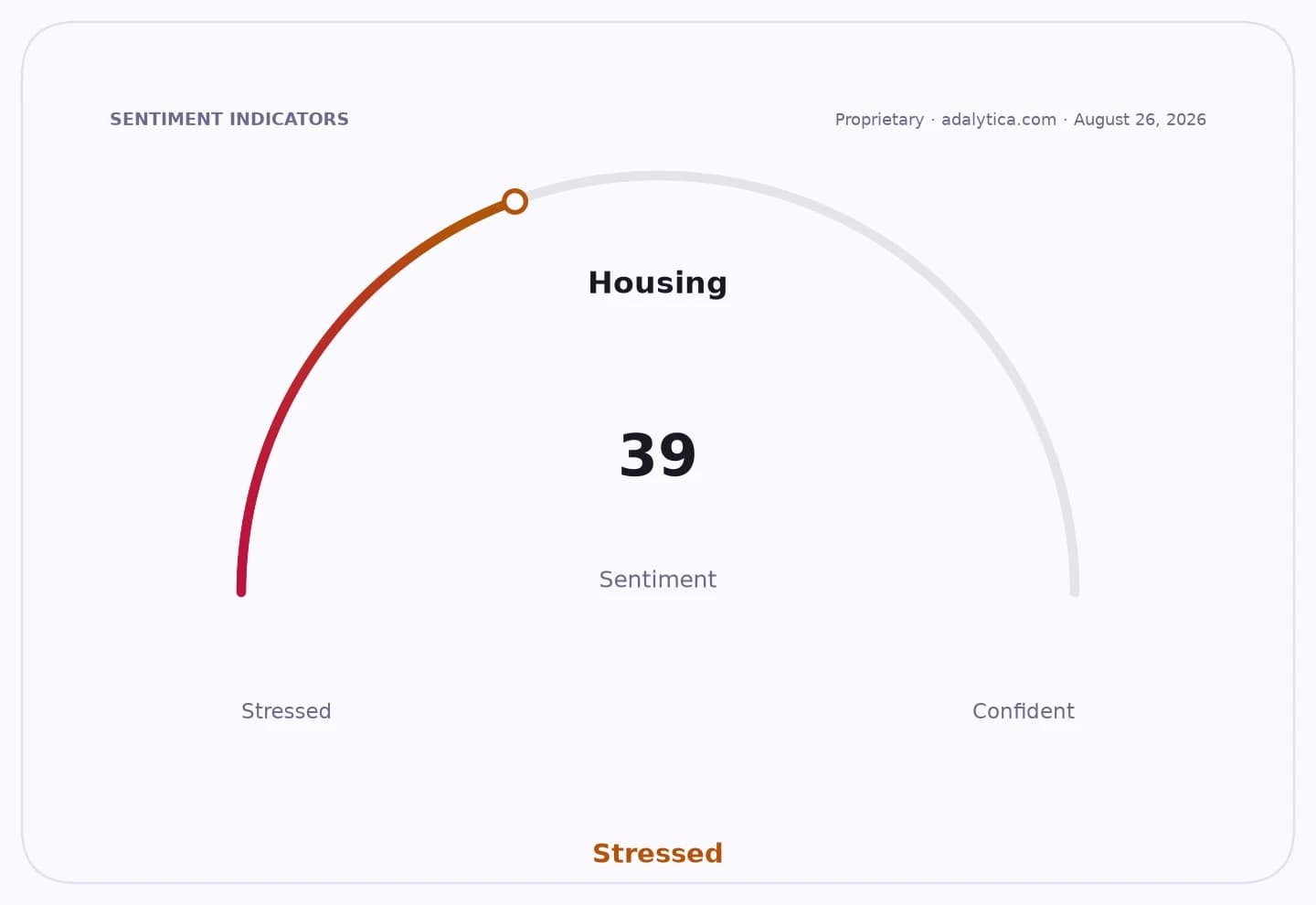
The rate backdrop is feeding through to housing sentiment. Adalytica’s Housing and Rent Inflation Sentiment gauge is at 39, labeled neutral, but its awareness reading sits at 21, labeled fear, and has fallen 18 points over the past 30 days, suggesting stress around affordability remains elevated even if the market has not turned outright negative.
Investors are feeling the impact across the housing chain. Rocket Companies, one of the most rate-sensitive names in the sector, closed at $14.01 on Aug. 26, below its 200-day moving average of $16.28, while United Wholesale Mortgage ended at $1.49, far under its 200-day average of $3.47. Both stocks reflect the same problem: weaker demand for refinancings and purchase loans when rates stay high.
Homebuilders are not immune, even if stronger balance sheets help cushion the blow. Toll Brothers closed at $149.32 on Aug. 26, near its 50-day moving average of $151.63, as investors weigh resilient luxury demand against a broader affordability squeeze that is limiting the pace of new-home sales.
The broader picture is that the housing market is being forced to function in a high-rate environment longer than many buyers expected. If Treasury yields stay near current levels, mortgage rates are likely to remain elevated into September, keeping pressure on home sales, loan originations and housing-related stocks.
| Entity | Gains | Losses |
|---|---|---|
| Treasury bond holders | ▲Higher yield appeal | ▼Homebuyers facing costlier loans |
| Lenders with strong refinance mix | ▲Some fee income if volumes hold | ▼Purchase mortgage demand |
| Homebuyers | ▲None from higher rates | ▼Affordability and monthly payments |
| Homebuilders | ▲Select luxury demand support | ▼Broader buyer traffic and sales pace |