US natural gas inventories rise 30 Bcf to 3.214 Tcf
US natural gas inventories rose by 30 billion cubic feet last week, matching expectations and leaving storage 5.2% above the five-year average as traders begin to price in the path toward winter.
The increase to 3.214 trillion cubic feet underscored a market that is no longer in the acute storage deficit seen earlier in the year, but still has to prove it can absorb late-summer supply without loosening too far. Stocks remain 1.5% below a year ago, a narrow gap that suggests the market is entering the shoulder season with a cushion, though not an oversized one.
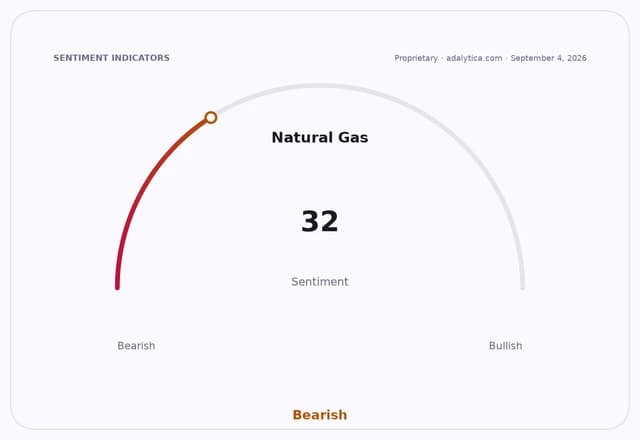
For investors, that balance matters because storage is one of the clearest near-term drivers of natural gas prices, exchange-traded products and producer sentiment. A build in line with forecasts usually limits price reaction on its own, but the report can reinforce the view that supply remains adequate unless weather turns hotter, exports accelerate or production slows. That helps explain why UNG, the US natural gas ETF, held near 10.75, with its 50-day moving average at 10.51 and RSI readings pointing to firmer momentum. Gas-weighted producers were also stronger, with XOP at 193.16 and EQT at 55.75, reflecting the market’s preference for upstream names that can benefit if prices stay supported into winter.
The data also fits a broader macro picture. US industrial production and unemployment trends point to an economy that is still expanding but not overheating, which tends to keep energy demand steady rather than explosive. That leaves weather and storage as the main swing factors. If injections continue to come in near expectations, the market may struggle to justify a sustained rally. If cooler forecasts, LNG demand or production hiccups tighten the balance, the recent move in gas-linked equities could extend.
The bullish case for gas bulls is that inventories are only modestly above seasonal norms and still below last year, leaving little room for a sequence of oversized builds or a warm early-autumn pattern. The bearish case is that a 5.2% surplus to the five-year average gives utilities and traders more breathing room than they had last year, limiting the urgency to chase prices higher.
For now, the storage report keeps the narrative centered on adequacy rather than scarcity — a constructive backdrop for consumers and a test for producers hoping winter demand will tighten the market again.
| Entity | Gains | Losses |
|---|---|---|
| Consumers / utilities | ▲Lower supply risk | ▼Less urgency for price spikes |
| Natural gas producers | ▲Winter upside optionality | ▼Softer pricing if injections persist |
| Gas bulls / long UNG | ▲Supportive storage gap | ▼No immediate bullish surprise |
| Gas-intensive industries | ▲More stable input costs | ▼Less chance of supply-driven relief |