US Open spending holds up amid weak consumer sentiment

US Open fans are still spending at the tournament even as broader consumer sentiment slumps, underscoring how premium live sports can hold up discretionary demand when households are tightening elsewhere.
That spending matters because it shows the pricing power of elite sporting events and the resilience of experiential consumption. Ticket sales, signature drinks such as the Honey Deuce and branded merchandise are all high-margin revenue streams for the U.S. Tennis Association and its commercial partners, and they help explain why major live events remain attractive even in a more cautious consumer environment.
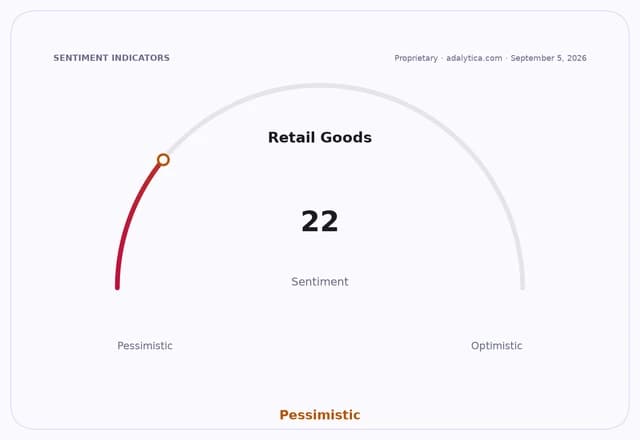
The backdrop is not especially friendly. Adalytica’s consumer-spending sentiment is at an “Extreme Fear” reading of 4, while consumer-confidence sentiment is also in “Extreme Fear” territory at 11. Retail-goods spending sentiment is weaker too, suggesting shoppers are generally more careful with nonessential purchases. Yet the US Open is benefiting from a different behavior set: affluent attendees and tourists are treating the tournament as a destination, not just a tennis match.
That split is important for investors because it reinforces the durability of premium live entertainment operators and their sponsors. Disney, through its ESPN rights exposure, and Live Nation, as a proxy for live-event spending, both trade on the idea that consumers will cut back on ordinary retail before they give up scarce, social, high-status experiences. A strong US Open also supports the broader hospitality and New York leisure economy, from food and beverage to transport and merchandise sales.
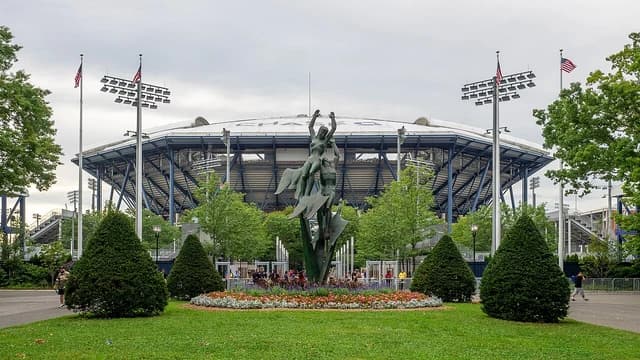
The move in sports consumption also fits a broader market narrative: in a softer macro backdrop, spending is becoming more selective rather than collapsing outright. Households may be pulling back on everyday goods, but they are still willing to pay for status, convenience and exclusivity — particularly when the product is tied to a limited-time event with strong brand pull.
For investors, the key question is whether this is a one-off late-summer spending pocket or evidence that premium live experiences can continue to outperform through a weaker consumer cycle. If the US Open is any guide, the answer is that discretionary demand is not disappearing — it is concentrating in the places where customers feel they are getting scarcity, spectacle and social cachet.
| Entity | Gains | Losses |
|---|---|---|
| U.S. Tennis Association | ▲Higher ticket and concession revenue | ▼Greater dependence on premium pricing |
| Merchandisers and concession sellers | ▲Strong per-capita spend | ▼Value shoppers |
| Live event operators | ▲Proof of resilient demand | ▼Broad retail spenders |
| Cautious consumers | ▲None | ▼More budget pressure on everyday discretionary purchases |