U.S. PPI Flat in July as Rate Cut Bets Rise
U.S. producer prices were unchanged in July, a softer reading that strengthens the case that inflation pressures are easing just as investors look for the Federal Reserve to begin cutting rates.
That matters because the PPI is one of the earliest signs of pipeline pricing pressure before it reaches consumers. A flat monthly reading suggests businesses are not yet facing broadening cost acceleration, which can help cool fears that inflation is re-accelerating after the earlier post-pandemic surge. For the market, that is exactly the kind of data that supports duration assets, narrows the odds of another Fed tightening cycle and keeps the path open for rate cuts later this year.
The importance is less about the headline number alone than the message it sends across the inflation chain. Producer prices feed into corporate margins, wage negotiations and eventually consumer inflation. If factory-gate and wholesale costs are stable, companies have less room to pass through higher prices, and that reduces the risk that sticky inflation becomes entrenched in services and household spending. In a labor market already showing signs of cooling, a benign PPI print makes it harder for policymakers to justify keeping policy restrictive for much longer.
For investors, the signal is straightforward: the inflation trade is becoming more about disinflation than overheating. That tends to favor Treasury bulls, rate-sensitive sectors such as utilities and real estate, and growth stocks that benefit when discount rates fall. It also keeps pressure on cyclical winners that depend on strong pricing power, because the market is increasingly betting that the era of easy price increases is fading.
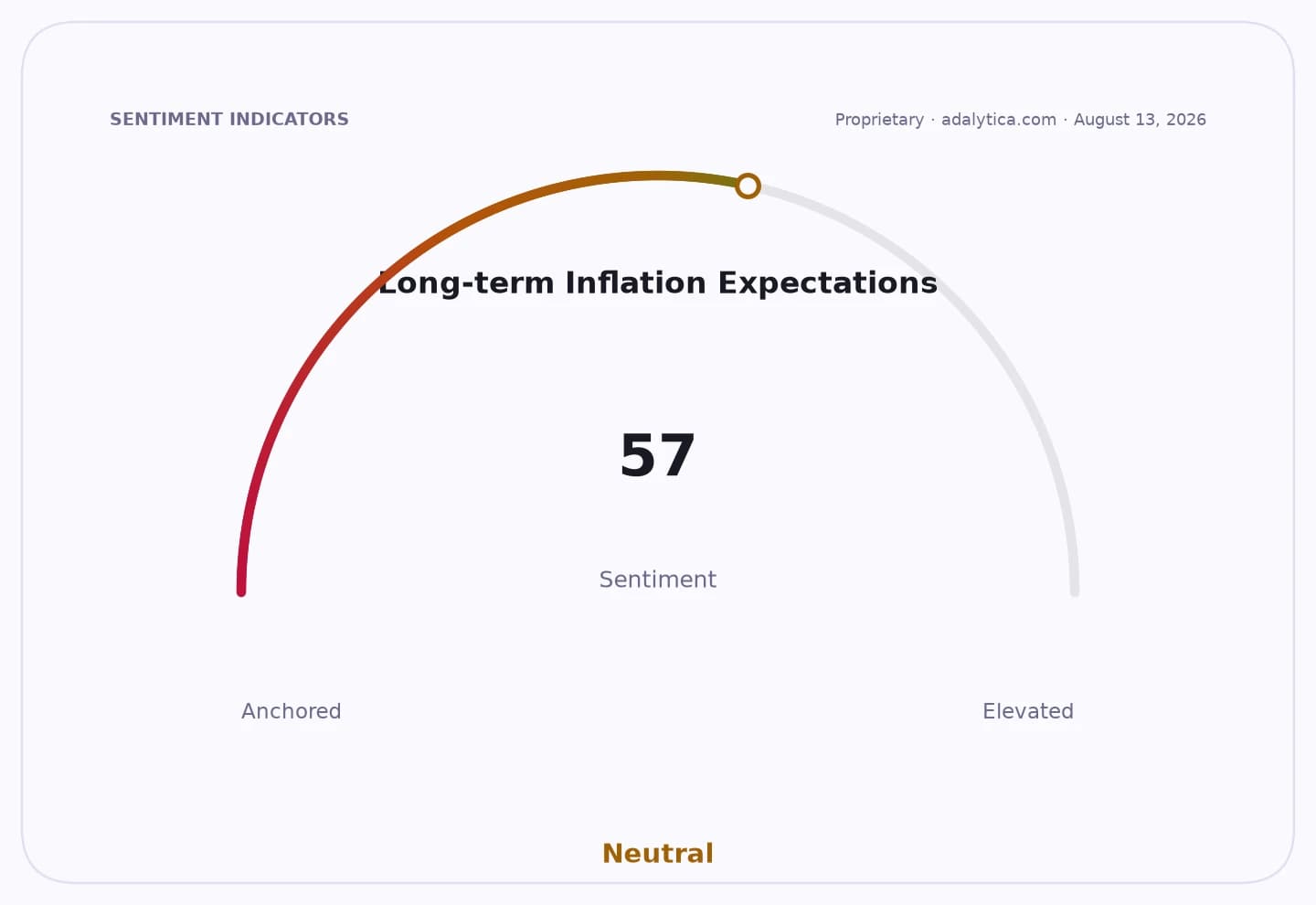
The broader narrative is that inflation is normalizing unevenly, but the direction is now more important than the level. Adalytica’s confidence gauge on the Fed’s 2% target is flashing “Extreme Greed,” reflecting how aggressively the market is leaning toward a lower-inflation, easier-policy backdrop. That can move quickly if the next consumer-price report contradicts the PPI, but for now the burden of proof has shifted back to the hawks.
The takeaway for investors is to stay positioned for falling inflation and lower yields, not a renewed inflation shock. If the next round of data confirms July’s restraint in producer prices, the next leg in markets is likely to come from assets that thrive when the Fed is closer to easing than hiking.
| Entity | Gains | Losses |
|---|---|---|
| Treasury bulls | ▲Lower yield pressure | ▼-- |
| Rate-sensitive stocks | ▲Easier valuation backdrop | ▼-- |
| Federal Reserve doves | ▲More room to cut rates | ▼Hawkish case weakens |
| Pricing-power companies | ▲-- | ▼Margins may compress |