The United States is stepping up pressure on other countries to avoid working with China in artificial intelligence, a move that could reshape supply chains, split the global AI market and add another layer of risk for chipmakers and cloud buyers exposed to both sides of the rivalry.
US Presses Allies to Limit China AI Ties
The policy push matters economically because AI has become one of the clearest drivers of capital spending in semiconductors, data centers and advanced manufacturing. If Washington succeeds in forcing partners to choose between U.S.-led and China-linked AI ecosystems, it could tighten access to chips, software, research partnerships and foundry capacity for Chinese developers while also making cross-border deals more costly and uncertain for multinationals.
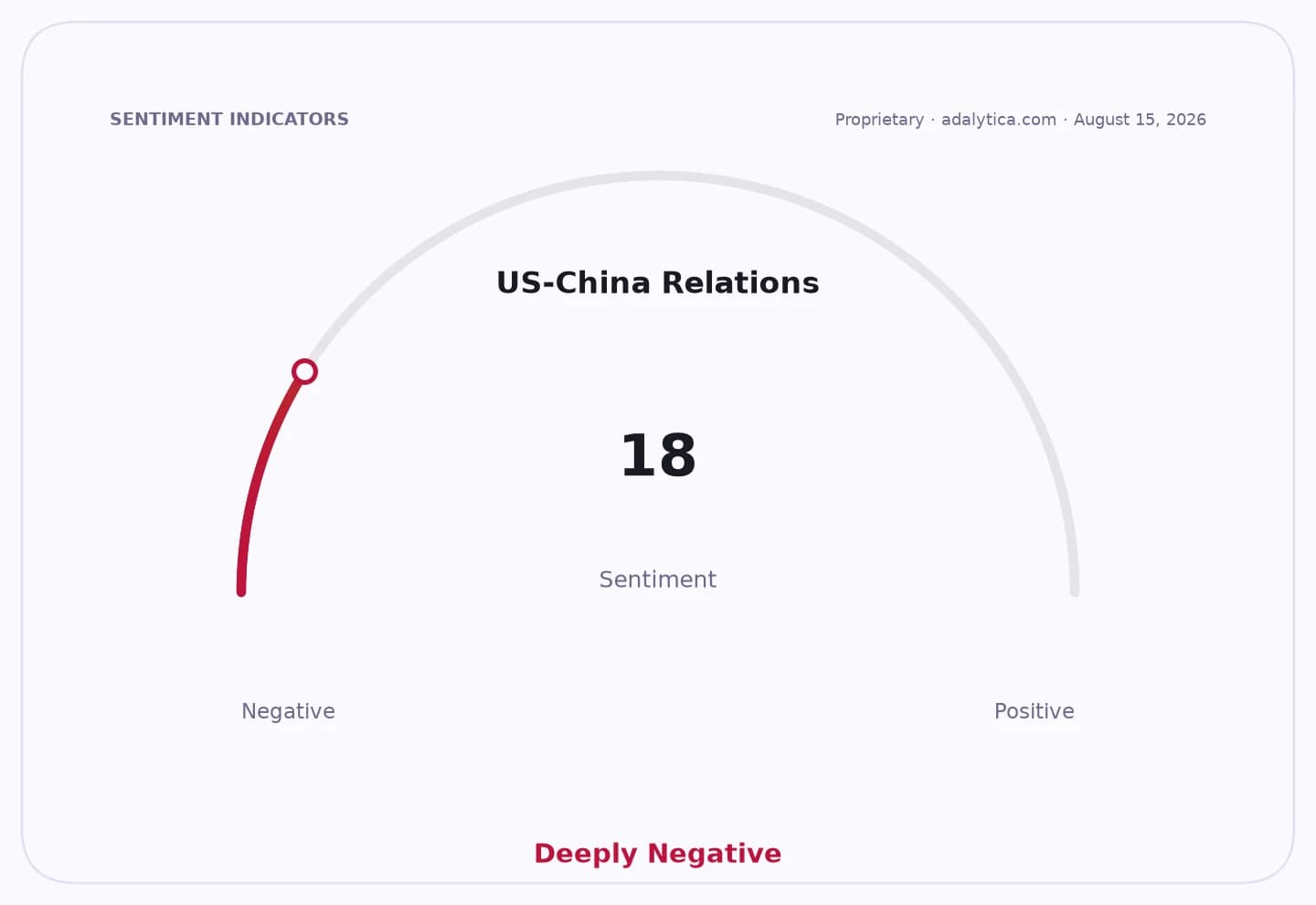
Sentiment IndicatorsⓘProprietary · adalytica.com · August 15, 2026
This is a snapshot — live sentiment, awareness and momentum for 130+ markets update continuously in the dashboard.Open AlphaPulse
Nvidia shares have rallied to $225.16, up sharply from a recent low near $170, but the stock’s fast climb also leaves it vulnerable to any escalation in export controls or allied restrictions. Technical indicators show the stock is trading well above its 50-day and 200-day moving averages, while RSI readings near 75 point to a stretched short-term setup even as demand for AI hardware remains strong.
Taiwan Semiconductor Manufacturing, which supplies the advanced chips that power much of the AI boom, is also in the crosshairs of the policy shift. Its shares closed at $426.35, above both the 50-day and 200-day moving averages, as investors continue to bet that AI demand will keep fabs running near capacity, though geopolitical restrictions could complicate customer relationships and future orders in China-related supply chains.
US-China Relations — 30-day sentimentadalytica.com
Explore this data interactively — full history, time series and cross-market comparisons.Open AlphaPulse

Alibaba is more directly exposed on the other side of the divide. Its U.S.-listed shares fell to $123.81, reflecting pressure on China technology names as investors weigh the risk that Beijing’s AI ambitions face a more coordinated Western containment effort. The stock remains below its 200-day moving average, underscoring how fragile sentiment is toward Chinese internet and cloud companies.
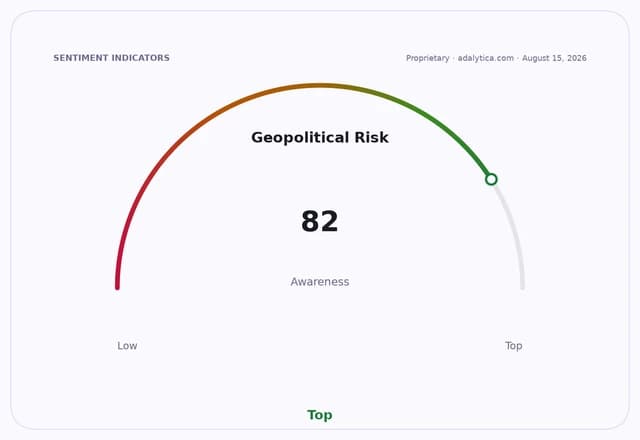
Adalytica’s US–China Relations Sentiment gauge has slid to 18, labeled Fear, while awareness remains elevated, suggesting investors are closely focused on the policy fallout. The broader market implication is that AI leadership is increasingly being treated as a geopolitical asset, not just a commercial race, with winners likely among U.S. chip suppliers and aligned allies, and losers among China-linked developers and firms dependent on cross-border technology flows.
The next catalyst is likely to come from formal U.S. measures, allied responses and any signs Beijing retaliates with its own export or procurement curbs, which could further redirect AI spending and supply chains.
| Entity | Gains | Losses |
|---|---|---|
| U.S. chipmakers | ▲Tighter allied alignment | ▼China-related sales |
| TSMC | ▲AI demand resilience | ▼Geopolitical concentration risk |
| Nvidia | ▲Continued AI capex demand | ▼Export-control exposure |
| Alibaba/China AI firms | ▲Domestic focus, policy support | ▼Access to global partners |