US Rates Around 3% Pressure Banks and Consumers
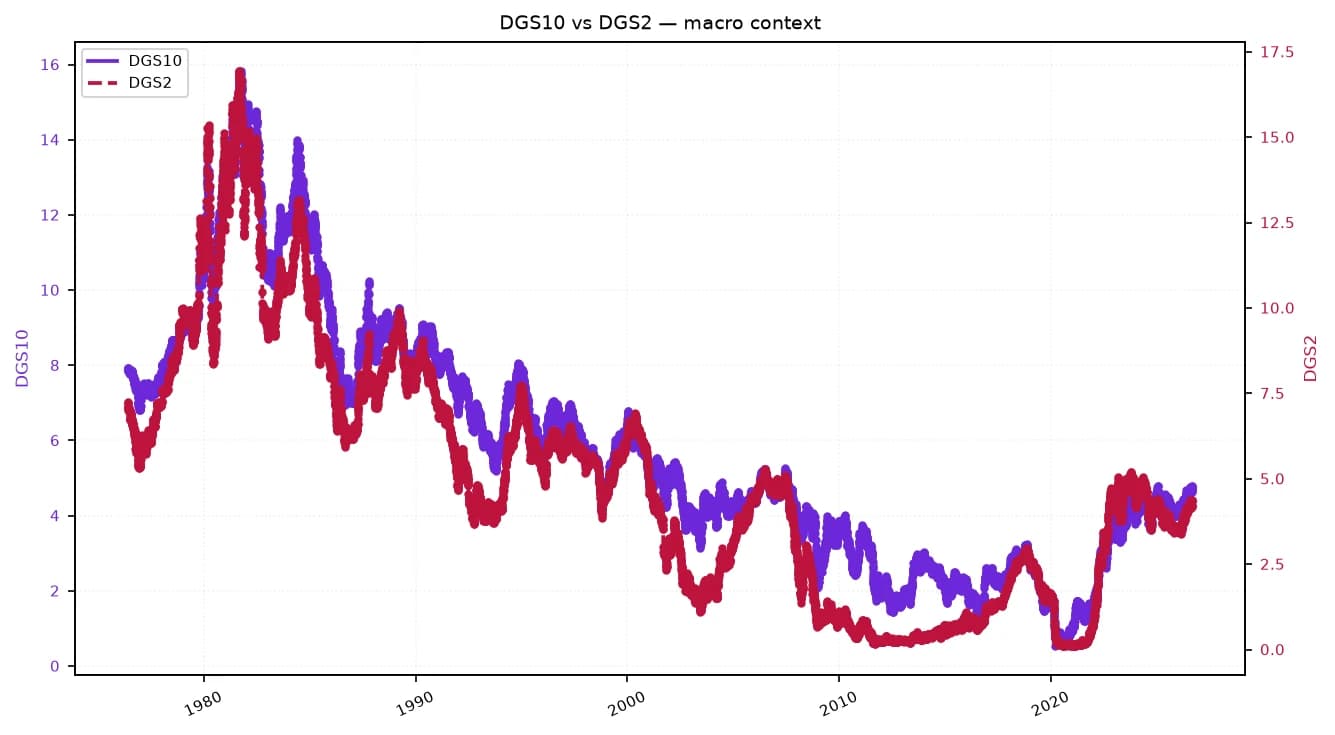
Long-term interest rates around 3% are becoming a direct economic headwind, raising borrowing costs for companies, tightening household budgets and changing the business case for banks and consulting firms that depend on corporate spending.
The shift matters because it ends the era when ultra-low rates acted as a blanket subsidy for risk-taking and consumption. Higher long-dated yields feed through to mortgages, credit card pricing and corporate lending, which can slow capital expenditure, squeeze discretionary income and force companies to reassess expansion plans. For financial markets, the move also alters asset allocation: bonds regain some appeal, while rate-sensitive equities face a tougher earnings backdrop.
In the US, the 10-year Treasury yield is around 4.80% and the two-year sits near 4.38%, levels that keep global funding costs elevated even before local policy effects are added. Shorter-dated Treasury yields are also close to 3.9%, underscoring how sticky the front end remains. That backdrop has helped keep pressure on risk assets even as equities rebound at times; the S&P 500 proxy SPY ended at 770.19 on Sept. 4, but technical readings remain mixed and Adalytica’s trade signal snapshot shows extreme fear sentiment. By contrast, the bond proxy TLT rose to 82.21, with its 50-day moving average still below its 200-day average, suggesting the recent bounce has not fully reversed the broader downtrend.
For lenders, higher rates are a double-edged sword. Net interest margins can improve if deposit costs lag loan yields, but credit demand often weakens when mortgage and consumer rates rise. The bank ETF XLF climbed to 58.10, near its recent range, reflecting some resilience in the sector, yet that strength could prove fragile if higher long-term rates begin to bite into loan growth or asset quality. The risk is greatest for households already stretched by housing and consumer debt costs.
The consulting angle is equally important. Firms focused on non-financial consulting typically benefit when companies need help with refinancing, cost cuts, treasury management and balance-sheet planning. But a sustained rise in rates can also dampen corporate income and expenditure, which may reduce demand for broader transformation projects and delay discretionary consulting budgets. The result is a narrower but potentially more defensive pipeline: more work tied to funding optimization and fewer large-scale growth mandates.
The macro story is not just that rates are high; it is that they are high for long enough to reshape behavior. If yields stay elevated, households will keep facing pressure on monthly payments, companies will face a higher hurdle rate for investment and service firms tied to corporate planning will see more demand for efficiency work than for growth-oriented advisory. Investors should watch whether bond yields stabilize or push higher again, because that will determine whether the current strain becomes a temporary earnings drag or a broader slowdown in domestic demand.
| Entity | Gains | Losses |
|---|---|---|
| Banks | ▲Wider lending spreads | ▼Softer loan demand |
| Bondholders | ▲Higher income yields | ▼Price volatility |
| Households | ▲More deposit income on savings | ▼Higher mortgage and card costs |
| Consulting firms | ▲More restructuring and finance advisory | ▼Fewer discretionary projects |