U.S. Rates, SPY 771.33, and Theta in Focus
The real story for investors is not that “theta as a percent of liquidity” looks elevated or cheap in isolation — it is that U.S. rates have settled back into a regime where liquidity, funding costs and the shape of the yield curve matter more than any single options metric. With the 10-year Treasury yield forecast at 4.76% and the 2-year at 4.26%, the market is still pricing in a meaningful term premium, and that continues to shape how stocks, bonds and risk appetite behave.
That matters because theta only has meaning inside a broader market structure. When cash yields are near 4.8% and short-dated Treasury rates sit above 4%, investors can earn real income without reaching far down the risk ladder. That raises the hurdle for equities, high-yield credit and other income trades that once benefited from near-zero rates. It also changes how traders think about volatility: if liquidity is tighter and financing is more expensive, time decay in options is not just a technical footnote, it is part of the cost of holding risk.
The bond market is telling a consistent story. The 10-year has climbed from 4.68% on July 30 to 4.70% on Aug. 3 and is seen at 4.76% on Aug. 4, while the 2-year is expected at 4.26%. That spread still leaves the curve only modestly positive, a sign that investors do not fully trust growth to run away or inflation to disappear. High-yield credit spreads at 2.79% remain contained, suggesting the market is not panicking about recession, but it is also not comfortable enough to declare an easy-risk environment.
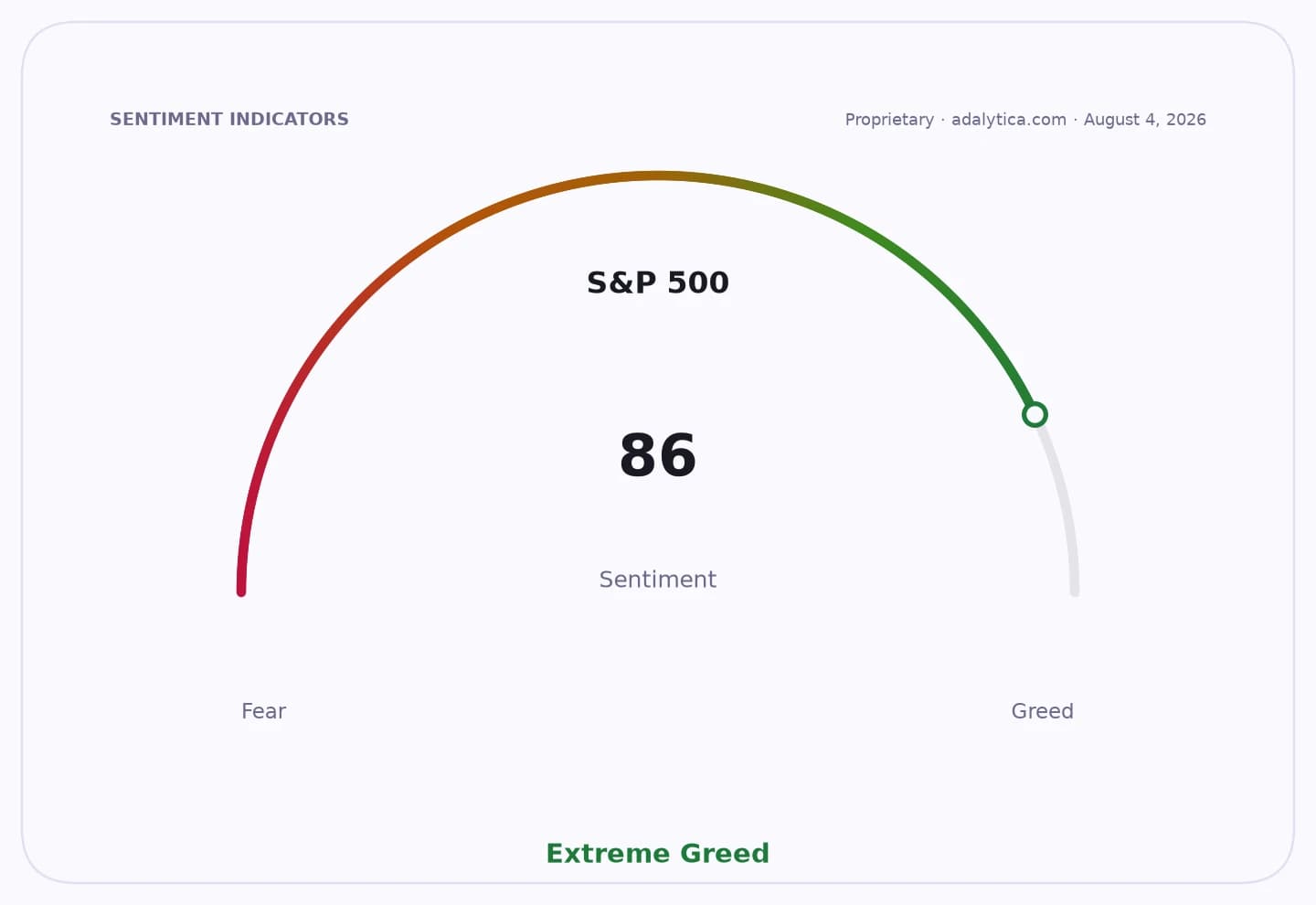
Equities reflect that tension. SPY has pushed to 771.33, above both its 50-day moving average of 745.20 and its 200-day moving average of 698.47, and the RSI at 59.7 shows momentum is firm but not extreme. Still, the rally has to coexist with a rates backdrop that is less forgiving than it was for much of the past decade. In plain English: higher risk-free yields mean investors can be choosier, and companies without durable cash flow or pricing power have a tougher time justifying rich valuations.
That is why the comparison between theta and liquidity is more useful as a narrative than as a standalone metric. Options decay accelerates when traders are paying up for leverage in a market where the alternative — Treasuries, bills and other cash-like instruments — suddenly pays real money. Liquidity is the base on which every derivative premium is built. When that base is firm, theta can be tolerated. When rates rise and funding gets tighter, theta becomes a tax on speculative positioning.
For long-term investors, the takeaway is straightforward: this is still an environment that rewards balance sheets, free cash flow and patience. It is less friendly to portfolios built on the assumption that cheap money will always cushion every dip. Stocks can still compound here, but the path is likely to favor durable businesses and diversified portfolios over rate-sensitive speculation. That makes it a market to watch closely, not one to chase blindly.
| Entity | Gains | Losses |
|---|---|---|
| Treasury buyers | ▲Higher risk-free income | ▼Lower price if yields rise |
| Cash-rich investors | ▲Better parking place for capital | ▼Less need to reach for yield |
| Quality stocks | ▲Durable cash flow is rewarded | ▼Overvalued names face pressure |
| Speculative options traders | ▲Short-term volatility opportunities | ▼Theta decay and higher financing costs |