U.S. retail sales rise as import prices accelerate

U.S. consumers kept spending in August just as import prices accelerated, reinforcing the case that inflation is proving stubborn enough to keep the Federal Reserve on alert.
That combination matters because it shows the economy still has enough momentum to absorb higher borrowing costs even as price pressures spread. For investors, it raises the odds that the Fed stays restrictive longer, which can keep pressure on valuations in rate-sensitive areas of the market while favoring companies with pricing power and strong cash flow.
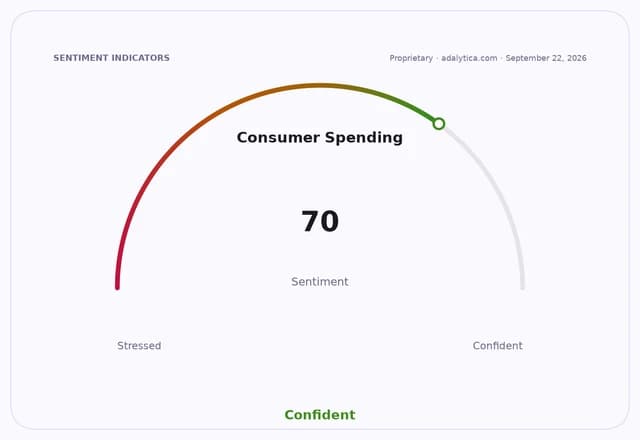
Retail sales rose 1.2%, the biggest gain since March and well above economists’ expectations for a 0.8% rebound, after a revised 0.5% decline in July. Core retail sales, which feed more directly into GDP, jumped 1.4%, also the strongest increase since September 2024. Economists at Goldman Sachs and JPMorgan lifted their estimates for third-quarter growth to 3.0% and 3.5%, respectively, from lower prior views.
The report is important because consumer spending is the backbone of the U.S. economy. August’s strength suggests households were still willing to spend despite higher gasoline prices, rising food and energy costs, and a softer tone in consumer sentiment. Spending at service stations rose 3.1%, while nonstore retailers gained 2.6% and food services climbed 1.2%. That tells investors the consumer remains resilient, but increasingly dependent on wage gains, household wealth, and less saving to keep the cycle going.
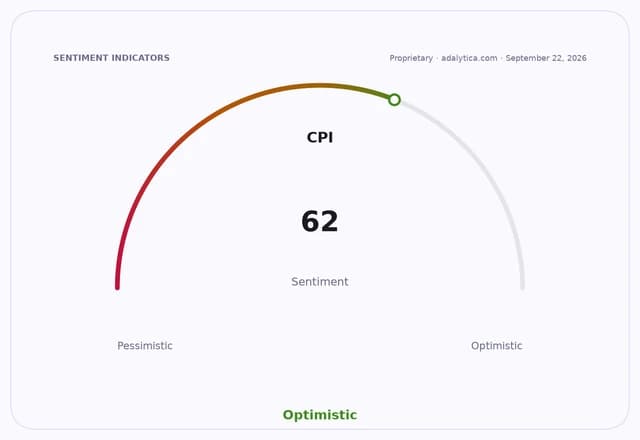
At the same time, the inflation backdrop is getting less comfortable. Import prices rose 0.7% in August, more than expected, after two months of declines. On a year-over-year basis, import prices were up 7.0%, the fastest pace since August 2022, with core imported inflation up 5.6%. That is a problem for the Fed because it suggests price pressures are not confined to domestic demand alone. Higher costs for imported capital goods, including computers, semiconductors and machinery, also point to the artificial-intelligence buildout as a fresh source of demand for equipment and components.
For markets, the message is straightforward: the economy is still hot enough to keep the Fed tightening, but inflation is hot enough to limit how quickly policy can ease later. That is usually a mixed setup for stocks. Broad indexes can hold up if growth stays firm, but higher rates tend to bite hardest in sectors that rely on cheap financing or long-duration earnings. By contrast, businesses with durable margins, strong balance sheets and the ability to pass on costs can navigate this environment better than weaker retailers or cyclical names.
The bigger question for investors is whether August marks genuine strength or just a short-lived burst driven by gasoline prices and households spending down savings. Several economists warned the pace was not sustainable, especially as real wages weaken and lower-income consumers feel more pressure. If that proves right, the fourth quarter could bring slower real spending even if nominal sales stay elevated.
For now, the takeaway is that the U.S. economy is still outrunning the Fed’s effort to cool demand. That should keep interest rates elevated, inflation sticky and volatility alive — a backdrop that rewards patience, diversification and companies with real earnings power. Worth watching, especially for investors looking beyond the next quarter and toward the next few years.
| Entity | Gains | Losses |
|---|---|---|
| U.S. retailers | ▲Stronger sales volumes | ▼Margin pressure from higher costs |
| Fed hawks | ▲More reason to keep rates high | ▼Dovish hopes for quick easing |
| Consumer staples and pricing-power firms | ▲Can pass through inflation | ▼Weak pricing power peers |
| Rate-sensitive stocks | ▲Steady growth backdrop | ▼Higher-for-longer rates |