U.S. Retail Sales Weak in July as Consumers Fade
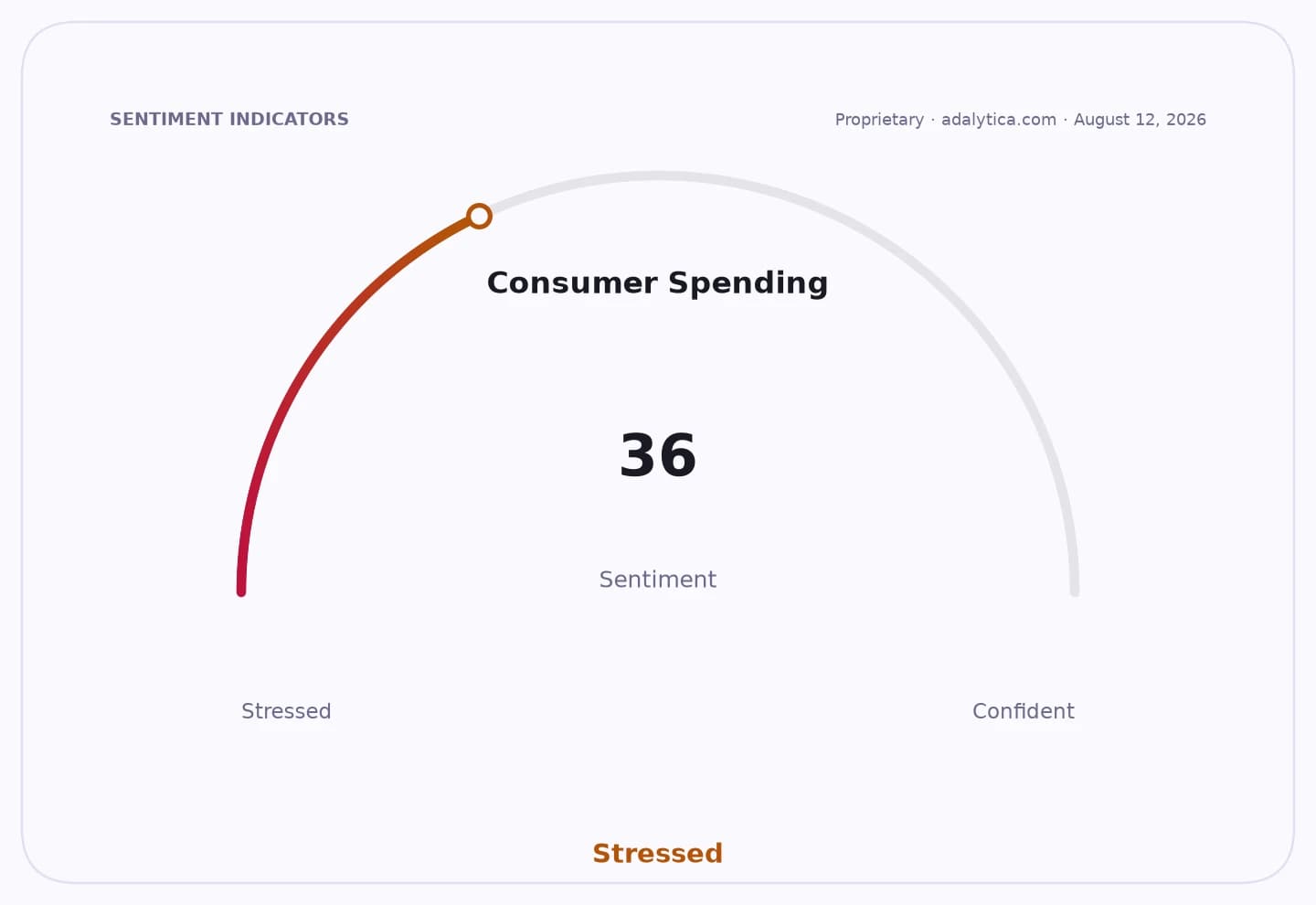
U.S. retail sales are expected to stay weak in July, and that matters because a soft consumer can ripple through everything from store traffic to earnings, hiring and the broader pace of growth.
The latest forecasts point to retail sales rising just 1.32% in July after a 0.24% gain in June, a pace that looks more like stagnation than a healthy rebound. At the same time, consumer sentiment is slipping again: the University of Michigan’s gauge is seen falling to 43.99 from 49.5, while the unemployment rate is still expected to edge down to 4.1%. That mix is awkward for the economy. Jobs remain relatively stable, but households do not sound confident enough to spend freely.
For investors, that makes the consumer discretionary trade a stock-picker’s market rather than a rising tide. Best Buy, Target and Walmart all tell different parts of the same story. Best Buy has recovered to $83.00, well above its 200-day moving average of about $69.42, but its RSI reading around 45 suggests the rally is not yet overheated. Target is the standout, with the stock at $154.01 versus a 200-day average near $115.03, but that strength also leaves it stretched after a sharp run-up. Walmart, meanwhile, has bounced to $116.01 after a deep June selloff, and its 74.1 RSI reading shows momentum has turned hot again. In other words, investors are rewarding resilient retailers, but they are also demanding proof that spending can hold up.
That is why this retail slowdown matters beyond one monthly print. If consumers are simply buying essentials and trading down, Walmart can keep gaining share. If households are still willing to spend on electronics and seasonal goods, Best Buy can stabilize demand. But if confidence keeps eroding, even the strongest retailers will have to lean harder on price, promotions and efficiency to protect margins.
The long-term lesson for investors is familiar: weak retail data does not automatically mean a broken economy, but it does usually favor the best operators. Companies with scale, loyal customers and disciplined costs tend to come out stronger when spending is sluggish. For patient investors, that argues for focusing on resilient franchises rather than chasing every bounce. Keep an eye on the next retail update, but think in years, not weeks.
| Entity | Gains | Losses |
|---|---|---|
| Walmart | ▲Share gains from trading down | ▼Margin pressure from promotions |
| Target | ▲Investors in resilient turnaround | ▼Bulls expecting easy consumer strength |
| Best Buy | ▲Recovery from oversold levels | ▼Buyers if electronics demand stalls |
| Cash-strapped households | ▲Short-term budget discipline | ▼Discretionary spending power |