U.S. Treasuries, dollar firm as debt stress rises

The world’s debt problems are starting to look less like a distant warning and more like a preview of what can happen when borrowing gets too big, too fast, and too expensive.
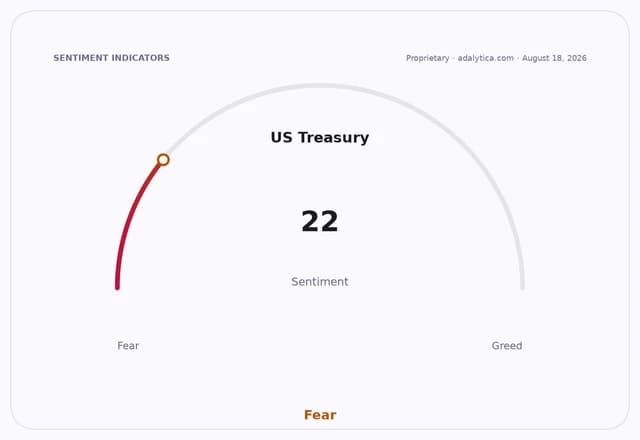
That matters for the United States because the same forces that have strained state governments, companies, and households abroad are now showing up in the bond market at home: Treasury yields are elevated, the Federal Reserve is still holding its policy rate at 3.63%, and the 10-year Treasury yield is sitting near 4.69%. For investors, that is not just a macro headline. It is the backdrop for everything from mortgage rates to equity valuations to the government’s own refinancing bill.

The broader lesson is simple. When debt loads climb and rates stay high, financial stress tends to migrate from the weakest borrowers to the whole system. That is why the Reserve Bank of Australia’s warning over rising state government debt matters beyond Australia. It is another reminder that governments can lose room to maneuver just like companies and households do. Once interest costs rise faster than revenues, borrowing stops being a tool for growth and starts becoming a drag on it.
You can already see why bonds and defensive assets are drawing attention. The iShares 20+ Year Treasury Bond ETF, TLT, has been trading around $81.66, below its 50-day moving average of $83.95 and its 200-day moving average of $85.17. That tells you long-duration Treasuries are still under pressure, even after bouts of risk aversion. The iShares 7-10 Year Treasury Bond ETF, IEF, is holding up better near $92.93, but it too remains below its 50-day average. In plain English: investors are still demanding a meaningful yield premium to own U.S. debt, and they are not yet convinced the path lower in rates is guaranteed.
The U.S. dollar is also firming in that kind of environment. The U.S. Dollar Index ETF, UUP, is trading around 28.14, above both its 50-day and 200-day moving averages. A stronger dollar often reflects demand for safety, but it also makes life harder for exporters and for global borrowers with dollar-denominated debt. That matters because debt stress rarely stays local. It can tighten financial conditions across borders and then boomerang back into U.S. markets through trade, earnings, and credit spreads.
For long-term investors, the key issue is not whether debt crises appear in one country or another. It is whether they force central banks and governments to keep rates higher for longer, limit fiscal stimulus, or trigger waves of refinancing stress. Higher-for-longer rates compress the present value of future corporate cash flows, which is why growth stocks can be vulnerable even when the underlying businesses remain strong. They also raise the hurdle rate for every new project, acquisition, and share repurchase.
That is why patience and diversification matter. Investors do not need to predict the next sovereign scare to benefit from it. They need to own businesses with real free cash flow, durable pricing power, and balance sheets that can handle a tougher financing environment. Broad index funds still make sense for many investors, but so do high-quality companies with low debt and recurring revenue. In a world where governments are wrestling with heavier obligations, the winners will be the borrowers least dependent on cheap money.
The next move in Treasuries will tell investors a lot about whether this is a temporary spell of caution or the beginning of a more structural repricing of sovereign risk. Either way, the message from global debt pressure is clear: borrowing is no longer cheap, and that changes the investment math for everyone. This is a story worth keeping on your watchlist.
| Entity | Gains | Losses |
|---|---|---|
| U.S. Treasuries | ▲Safe-haven demand | ▼Higher financing costs |
| TLT / long bonds | ▲Flight-to-quality bids | ▼Duration losses |
| UUP / U.S. dollar | ▲Safe-haven inflows | ▼U.S. exporters |
| Highly leveraged borrowers | ▲— | ▼Refinancing pressure |