US Treasury Pushes Financial Literacy at G-7, G-20
Treasury Secretary Scott Bessent is trying to turn financial education into a G-7 and G-20 policy race, a move that matters because the US is framing household balance-sheet resilience as a macroeconomic issue, not just a classroom one.
The proposal, aimed at the world’s largest economies, fits a broader effort by Washington to link financial literacy to growth, savings and financial stability at a time when the cost of borrowing remains materially above the ultra-low rates that defined the post-crisis era. The federal funds rate sits at 3.63%, down sharply from the inflation-fighting peaks of the early 1980s but still high enough to keep pressure on consumers, lenders and governments that depend on credit-sensitive spending.
That backdrop helps explain why the idea has policy weight beyond its headline appeal. When rates are elevated, the difference between a borrower who understands refinancing, compounding and credit-card terms and one who does not can shape delinquency rates, savings behavior and demand across the economy. In the US, unemployment remains relatively low at 4.1%, and GDP is still forecast to expand 1.28% in the current period, suggesting the economy has avoided recession but is still operating with enough friction to make household financial decisions important for growth.
For investors, the story is less about the competition itself than what it implies for credit quality, retail spending and the financial sector’s customer base. Banks and card lenders benefit when consumers manage debt more efficiently, but they also face a more discerning borrower who may borrow less aggressively and shop harder for rates. That matters for firms such as Charles Schwab, which relies heavily on interest-sensitive funding and client behavior, and for consumer lenders whose spreads and charge-off trends depend on how well households navigate a higher-rate environment.
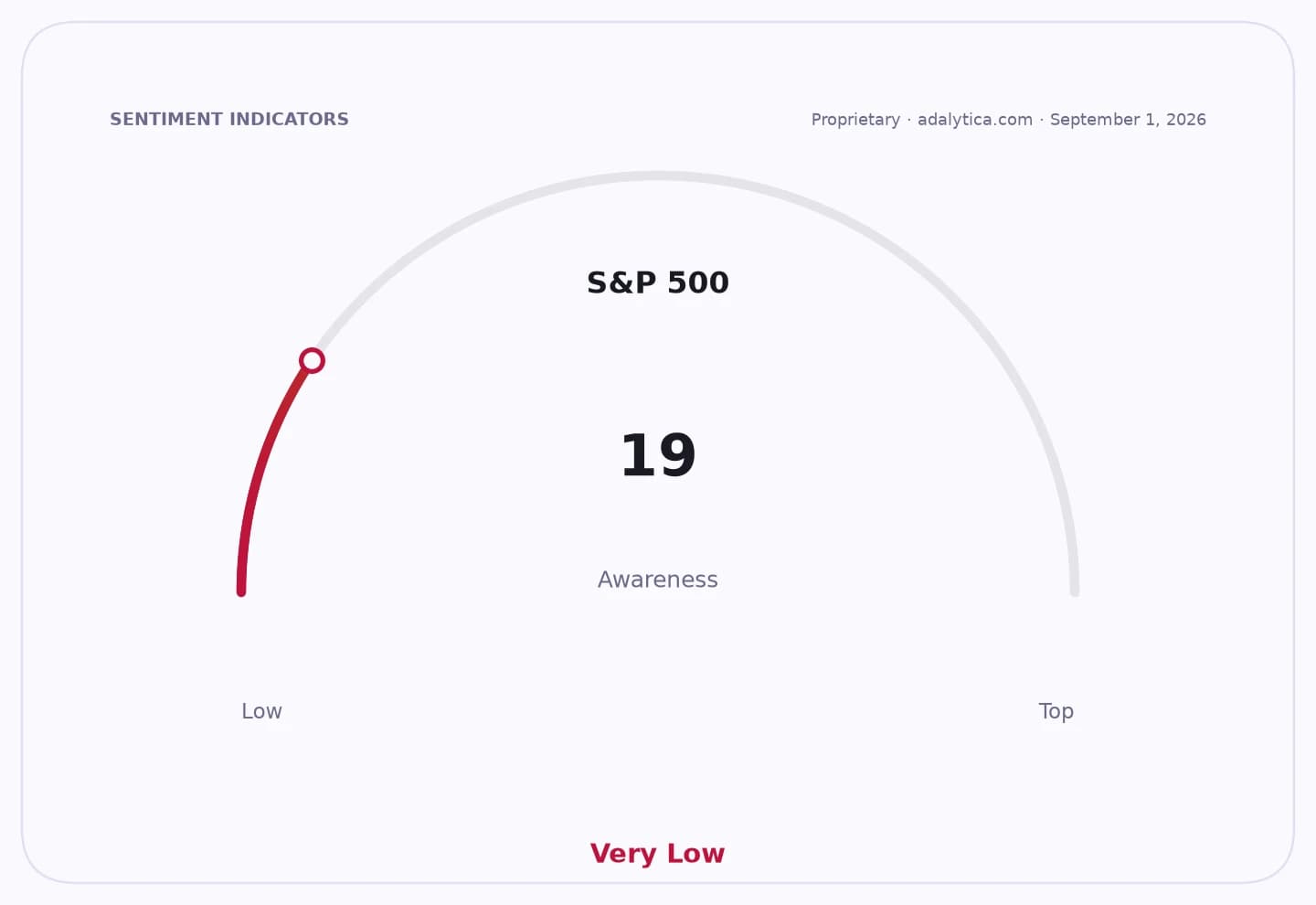
Equity markets have been signaling some of that tension. Financials represented by the XLF exchange-traded fund have rebounded, with the fund closing at $57.20 on Sept. 1, above both its 50-day and 200-day moving averages, though its RSI reading of 42.9 suggests momentum has cooled after a strong summer run. Broader US equities, tracked by the S&P 500 proxy SPY, remain marked by unsettled sentiment: Adalytica’s trade-signal snapshot showed neutral sentiment but elevated fear, underscoring how quickly investors are rotating between risk-on and defensive positions.
The politics are as important as the economics. A US-led push on financial literacy gives Washington a relatively low-friction way to argue that economic competitiveness is also about household capability, not just industrial policy or trade protection. That may resonate with countries trying to sustain consumption without relying too heavily on fiscal support or cheaper credit.
The bull case is that better financial literacy trims defaults, raises savings and supports more stable consumer demand, which is constructive for banks, payment companies and the broader equity market. The bear case is that education campaigns rarely change behavior quickly enough to offset the immediate effect of tight credit conditions, and a more cautious consumer could slow spending before any long-run benefits show up.
For investors, the key takeaway is that Bessent’s pitch points to a policy environment where consumer resilience is becoming part of the macro conversation alongside rates, labor data and growth. If the initiative gains traction, the next watchpoint will be whether it leads to coordinated reforms in budgeting, debt disclosure and school curricula — and whether lenders, card issuers and retail names start pricing a more disciplined consumer into earnings assumptions.
| Entity | Gains | Losses |
|---|---|---|
| US Treasury / Bessent | ▲Policy influence | ▼No immediate payoff |
| Banks / Card lenders | ▲Better credit behavior | ▼Less debt-driven growth |
| Consumers / Savers | ▲Stronger money habits | ▼Higher short-term caution |
| High-debt borrowers | ▲Financial guidance | ▼Easier credit expansion |