USD/CAD Rises As Oil Gains Fade On Risk Aversion

The Canadian dollar is losing its early lift from higher crude prices because investors are reaching for the US dollar as Middle East tensions intensify and global risk appetite fades.
USD/CAD recovered from an intraday low near 1.3760 to trade around 1.3790 on Tuesday, underscoring how quickly the oil-positive impulse for the loonie has been capped by broader demand for safe havens. The move came even as oil prices extended a recent surge, with West Texas Intermediate trading above $96 a barrel after closing at $96.53 on the latest session, well above the mid-$80s levels seen at the end of August.
That split reaction matters because Canada’s currency usually benefits when crude rallies, given the country’s role as a major energy exporter. But in this case, the market’s dominant driver is not commodity support for Canada — it is geopolitical stress. Escalating tensions in the Middle East have triggered risk aversion across assets, lifting the greenback and outweighing the usual positive correlation between oil and the loonie.
The US dollar itself remains firm. The DXY dollar index was near 98.87 in the latest reading, while Adalytica’s US Dollar Trade Signals showed sentiment at 76, in “Greed” territory, even after a modest one-day pullback. That suggests positioning and macro demand still favor the dollar as traders seek liquidity ahead of Friday’s US inflation data, which could shape expectations for Federal Reserve policy and the rate outlook more broadly.

For Canada, the macro arithmetic is more complicated. Higher oil prices can improve export receipts and support national income, but they also tend to arrive alongside broader inflation pressures and tighter global financial conditions. If investors interpret the conflict as a source of persistent supply risk rather than a clean boost to Canadian terms of trade, the currency may struggle to fully capture the benefit.
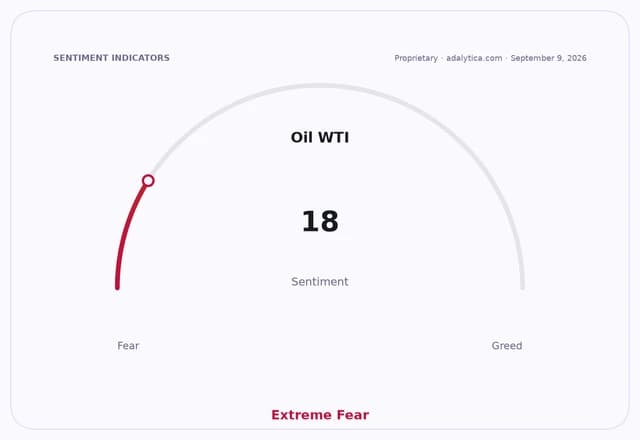
The technical backdrop also points to a market that is still digesting the shock rather than breaking trend. WTI’s latest close at $96.53 pushed it above both its 50-day moving average of $81.95 and 200-day moving average of $79.16, while RSI readings above 74 indicate strong momentum. Yet Adalytica’s WTI trade signals show sentiment at 18, or “Fear,” highlighting how quickly oil’s macro support can be overshadowed by the broader market stress it creates.
For investors, the key question is whether the current move is a temporary risk-off episode or the start of a more sustained oil-led inflation impulse that keeps the dollar firm and commodity currencies under pressure. A deeper escalation in the Middle East would likely reinforce both higher energy prices and demand for the US currency, leaving the Canadian dollar vulnerable unless crude strength becomes the dominant market theme again.
| Entity | Gains | Losses |
|---|---|---|
| US dollar | ▲Safe-haven demand | ▼Risk-sensitive currencies |
| Canadian dollar | ▲Higher oil prices | ▼Broad risk aversion |
| WTI crude | ▲Geopolitical supply fears | ▼Demand-sensitive assets |
| Canadian exporters | ▲Better energy receipts | ▼FX translation volatility |