USD/CNY Holds Near 6.71 as Yuan Weakness Persists

USD/CNY edged higher, but the pair’s broader technical picture still points to yuan weakness as a firmer dollar and persistent downside momentum keep the Chinese currency under pressure.
The latest move matters because the yuan has spent much of the past year trading under a cloud of weak trend signals, and the current rebound in the dollar is giving those forces a fresh lift. On the offshore proxy, the yuan has slipped to 6.71 per dollar, near its weakest level in recent sessions, after recovering briefly from a deeper selloff earlier this year. The 50-day moving average remains above spot, while the 200-day average sits higher still, underscoring that the currency is still trading below key long-term trend markers.
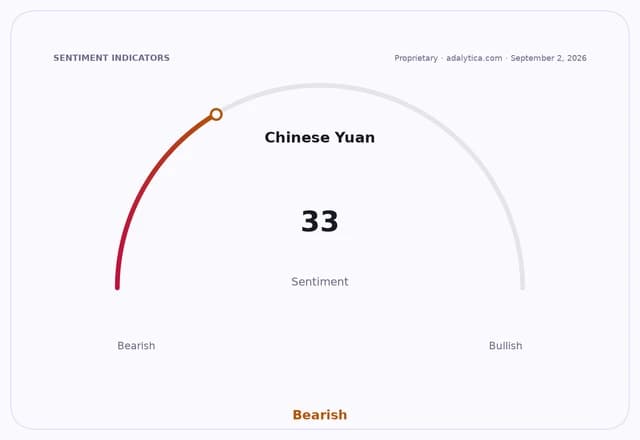
Momentum indicators also argue that the path of least resistance remains lower for the yuan. The relative strength index has fallen to 17.9, a level that usually reflects an oversold market, but oversold conditions do not necessarily mark a durable turn when the underlying trend is still negative. The MACD remains below its signal line, reinforcing the bearish setup even after intermittent rebounds. In Adalytica’s Chinese yuan trade signals, the sentiment reading has slipped to neutral at 33, even as awareness remains elevated at 76, suggesting the market is highly focused on the currency but not yet convinced of a sustained reversal.
For investors, the issue is less about a single day’s price action than about what a weaker yuan means for capital flows, hedging costs and broader Asia FX positioning. A softer Chinese currency can offer a buffer to exporters and help offset slowing domestic demand, but it also raises the risk of renewed pressure on neighboring currencies and can complicate policymakers’ efforts to keep financial conditions orderly. For global portfolios, a stable or firmer dollar tends to tighten financial conditions, support US assets relative to emerging markets and keep pressure on carry trades built around a weaker greenback.
The dollar’s recent recovery is central to that narrative. US dollar trade signals show sentiment at 57, neutral but firmer than earlier in the summer, while awareness has picked up again. That lines up with a broader market backdrop in which US yields have risen and commodity-linked support for risk currencies has faded. Reuters- and Bloomberg-tracked moves across major currencies show the yen weakening sharply and the euro struggling to hold ground, a sign that the dollar’s rebound is not isolated to China’s currency pair.
The bull case for the yuan is that the latest move lower has already pushed the currency into technically stretched territory, leaving room for short-covering if US data soften or if China’s policymakers lean harder against depreciation. The bear case is that as long as the dollar remains supported by yields and the yuan trades below its moving averages, rallies are likely to be sold rather than followed.
For now, the market is treating the yuan’s bounce as a pause rather than a trend change. Traders will be watching upcoming US inflation and growth data, along with any signs of stronger Chinese policy guidance, for evidence that the bearish setup is starting to break.
| Entity | Gains | Losses |
|---|---|---|
| US dollar | ▲Firmer yield support | ▼None in the near term |
| Chinese exporters | ▲Greater price competitiveness | ▼Higher hedging costs |
| Chinese importers | ▲— | ▼More expensive dollar purchases |
| Long-yuan traders | ▲Potential oversold bounce | ▼Ongoing downside trend |