UUP Holds Near 28.07 as FX Volatility Rises
An FX flash crash is less a macro verdict than a liquidity event, and the market’s recent price action suggests traders are still being forced to distinguish panic from opportunity in real time.
The main economic point is that currency markets can dislocate sharply even without a lasting change in fundamentals, which matters because the damage from a flash move is often concentrated in execution rather than direction. When liquidity thins, stop orders cascade and algorithms amplify the move, prices can gap far beyond fair value before snapping back, leaving traders with slippage, widened spreads and forced exits that have little to do with the broader trend.
That distinction matters now because the dollar remains firm while volatility indicators point to a market that is not calm enough for complacency. The U.S. Dollar ETF, UUP, has held near 28.07, above both its 50-day and 200-day moving averages, while the RSI sits around 59, a reading that suggests the rally is neither overbought nor exhausted. The euro and yen proxies are weaker by comparison: FXE trades around 107.01, below its 50-day and 200-day averages, and FXY sits at 59.68, also under its long-term average. That combination implies the dollar still has support, but not so much that crowded positioning and thin liquidity cannot produce abrupt reversals.
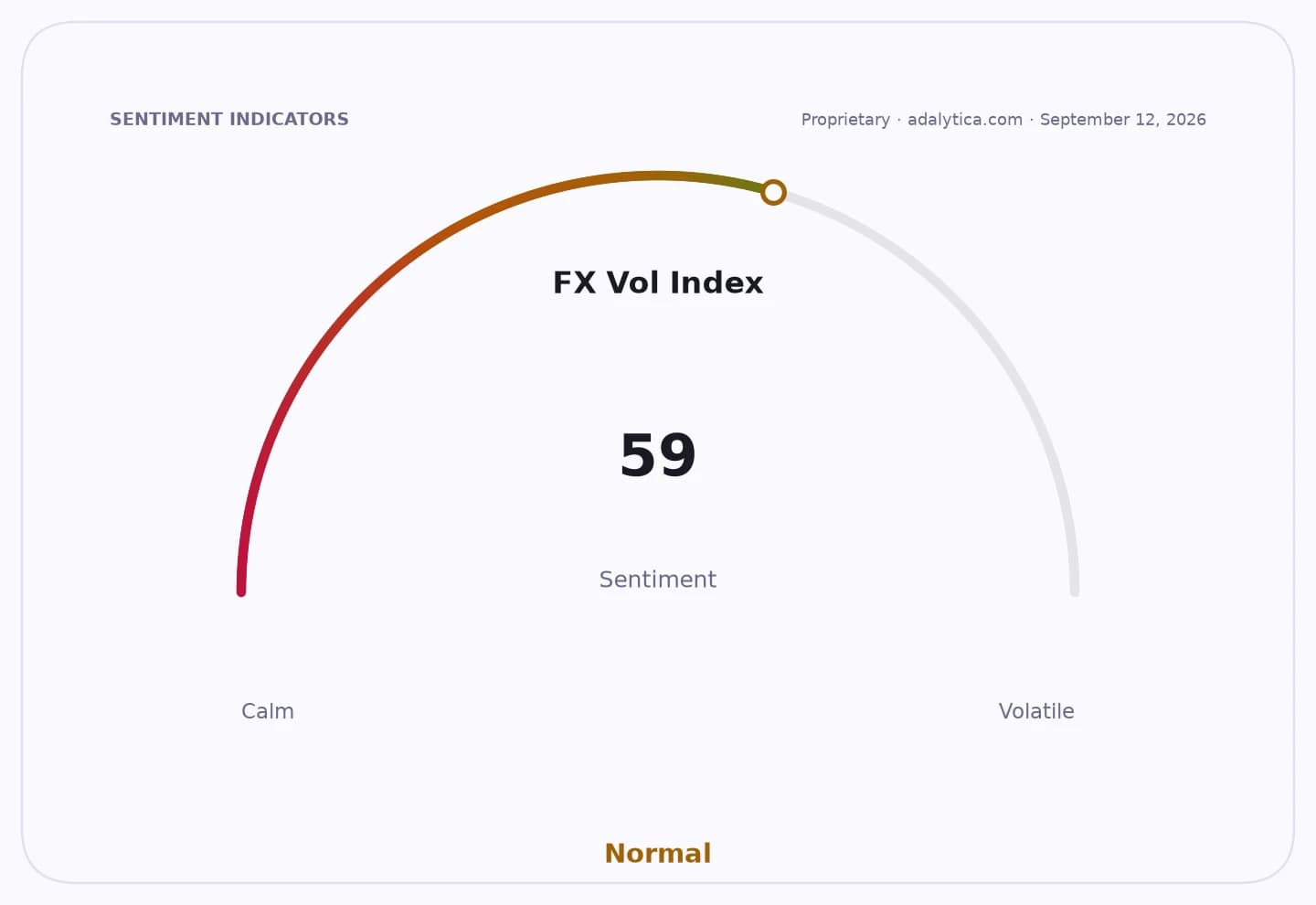
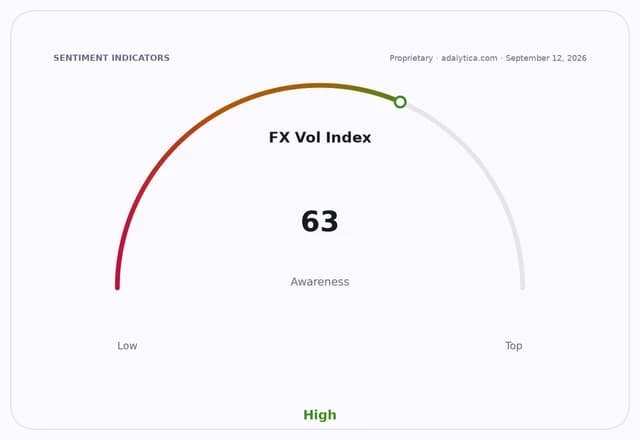
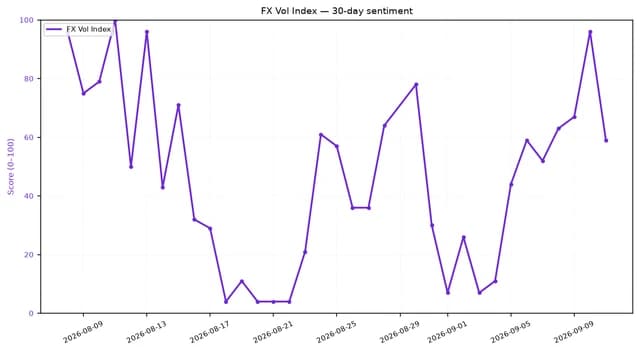
The risk is not only directional. Adalytica’s FX volatility trading signals show sentiment at 59, down 37 points on the day even after a sharp seven-day rise, while global stability sentiment is in “fear” territory at 30. That is the kind of backdrop in which flash moves tend to be more violent: traders are alert, but not necessarily positioned for a one-way trend, and that leaves markets vulnerable to stop-loss cascades when a trigger hits.
For investors, the practical takeaway is that execution quality matters more during stress than in normal trading. Exness is using that theme to market its platform, saying it has over 3x less slippage during high-impact news across selected instruments and the lowest spreads on major and minor FX pairs in a comparison of spread-only accounts. Those claims are designed to appeal to traders who care less about predicting the next shock than about surviving it. In flash-crash conditions, the difference between a tight spread and a wide one, or between fast and unstable execution, can decide whether a position remains a trade or becomes a loss.
The bull case for the dollar is that U.S. rates and relative growth keep it anchored, limiting any sustained breakdown in FX. The bear case is that the more stable the underlying trend looks, the more dangerous the market can become if liquidity evaporates around data releases, central bank headlines or overnight sessions. In that setting, the move itself can be self-reinforcing as automated flows, stop orders and panic selling interact faster than human traders can respond.
What investors should watch next is less the headline level of the dollar than the conditions under which it trades. Persistent strength in UUP alongside weaker euro and yen proxies would argue for a durable dollar bid, but any sudden widening in volatility or deterioration in market depth could produce a classic flash crash: a sharp, temporary dislocation that punishes reactive traders and rewards those with disciplined execution and pre-set risk controls.
| Entity | Gains | Losses |
|---|---|---|
| Dollar bulls | ▲Relative-rate support | ▼Crowded short-term positioning |
| FX brokers with tight execution | ▲Higher client demand in stress | ▼Slippage-prone rivals |
| Disciplined traders | ▲Better entry/exit control | ▼Panic sellers and chasers |
| Euro and yen traders | ▲Opportunity on overshoots | ▼Holders facing sudden dislocations |