Vidisha onion prices rise on weak rainfall
Onion prices in Vidisha, the parliamentary constituency of Agriculture Minister Shivraj Singh Chouhan, have risen sharply as poor rainfall and tighter supply push a key kitchen staple higher, underscoring how quickly food inflation can filter through to household spending and the political mood.
The increase matters beyond a single district because onions sit at the centre of India’s food-price basket. When prices climb, consumers with limited flexibility cut elsewhere first, and that can ripple through local retail demand. The latest move is especially sensitive because it comes after years of relative stability, with residents saying the jump is the steepest in about seven years.
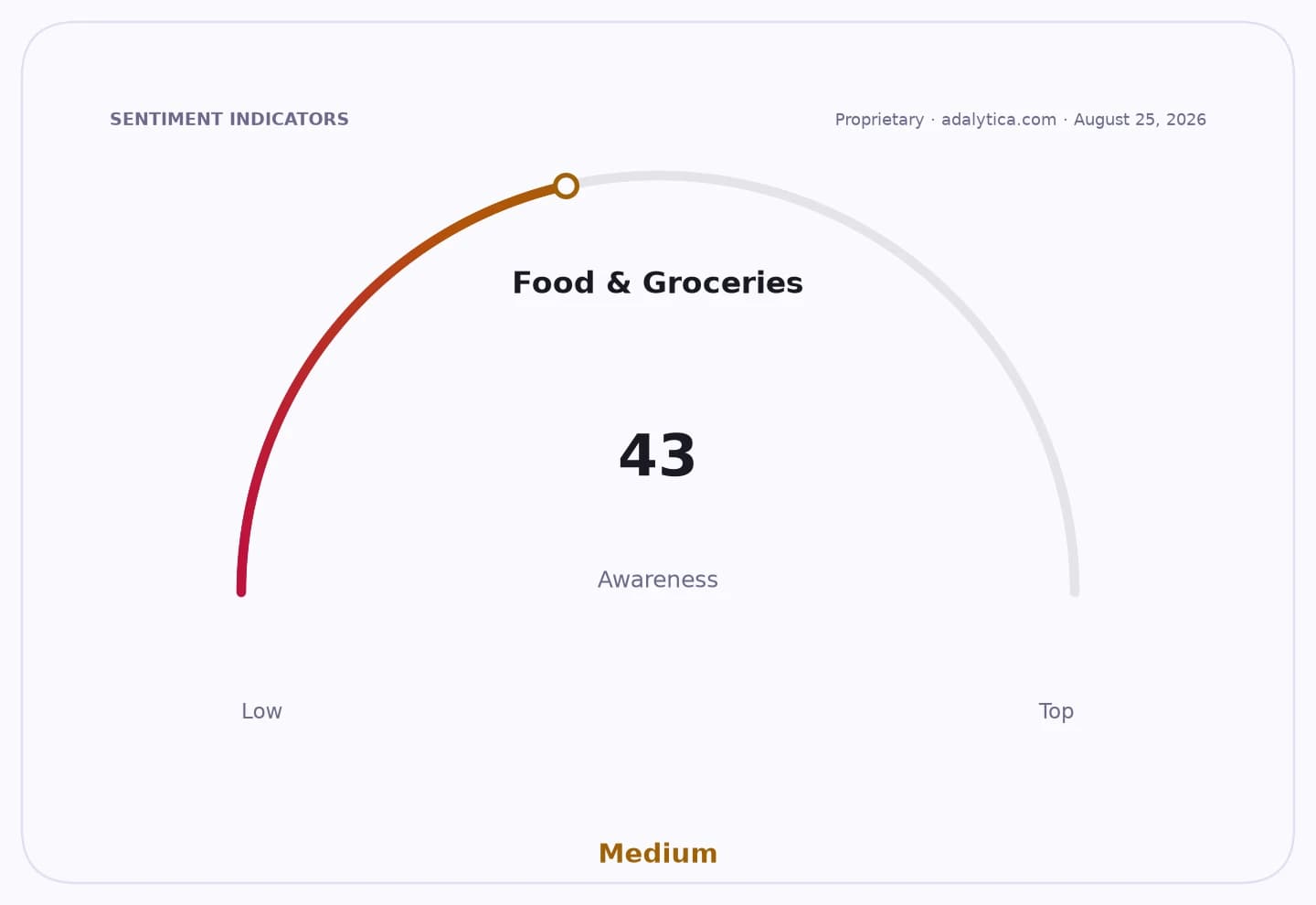
The broader inflation backdrop helps explain why the spike has drawn attention. India’s consumer price pressures have been uneven, but essential food items remain the main source of volatility. Adalytica’s CPI sentiment gauge is in “Fear” territory at 26, reflecting heightened concern around consumer prices, while food and grocery spending sentiment is at the maximum “Extreme Greed” reading, suggesting spending on necessities remains strong even as prices rise.
That dynamic is important for policymakers as well as investors. For the government, onion inflation is a political risk because it is visible, immediate and hard to explain away to voters. For markets, repeated food shocks can complicate the inflation outlook and keep pressure on the Reserve Bank of India’s room to ease policy. A sustained rise in staples can also squeeze margins for food retailers and processors if procurement costs rise faster than they can pass through prices.
Officials have already responded with buffer-stock releases and supply measures aimed at calming the market, including a fixed retail price ahead of Rakshabandhan. Those steps can cool prices in the short term, but they also highlight the structural problem: weather disruptions and uneven crop supply continue to leave India’s food system vulnerable to sharp local price swings.
For consumers, the key question is whether the current spike proves temporary or turns into another broader food inflation cycle. For investors, that means watching not just onion prices but rainfall, government stock releases and the next inflation prints for signs that kitchen-table inflation is feeding into the wider economy again.
| Entity | Gains | Losses |
|---|---|---|
| Consumers with access to fixed-price supply | ▲Lower near-term prices | ▼Less benefit if shortages persist |
| Farmers with sellable stock | ▲Better farm-gate realizations | ▼Risk of policy intervention |
| Government/administration | ▲Relief from immediate price pressure | ▼Political scrutiny over food inflation |
| Retailers and households | ▲Supply stabilisation | ▼Higher grocery budgets |