Vietnam Gold Falls as Global Bullion Hits Record

Vietnam’s gold market fell sharply on Sept. 3 even as global bullion surged to a fresh record, underscoring how local pricing remains driven as much by domestic supply constraints and policy distortions as by the international spot market.
In Hanoi and Ho Chi Minh City, SJC bullion was quoted around 144.4 million to 147.4 million dong a tael, down as much as 1.3 million dong from the previous morning, while some 9999 ring-gold products also eased for a third straight session. By contrast, world gold was marked at $4,401 an ounce, up about $100 from a day earlier and equivalent to roughly 139.3 million dong a tael, leaving SJC about 8.1 million dong higher than overseas prices.

That gap matters because it highlights the fragmentation of Vietnam’s gold market. When domestic bars trade materially above world prices, local buyers are paying a premium that can reflect limited supply, tighter trading conditions and regulatory barriers to arbitrage. For the broader economy, a wide spread can distort household savings behaviour and intensify demand for foreign currency or informal channels if investors see gold as a store of value.
The move also came alongside a firmer U.S. dollar backdrop in Vietnam. The State Bank lifted its central rate to 25,615 dong per dollar, while commercial banks nudged retail quotes higher, keeping exchange-rate pressures in view. A stronger domestic currency environment would normally help cap imported gold costs, but the local market’s reaction shows the premium on SJC bullion is not being set by import parity alone.
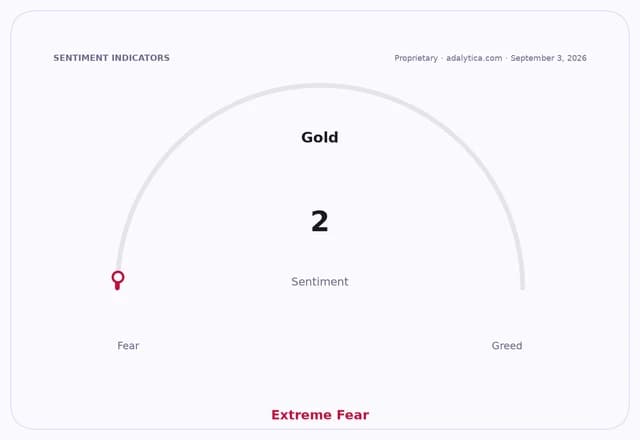
For investors, the divergence is a reminder that global gold strength does not translate evenly into every market. Bullion miners and gold-linked funds remain supported by the international rally, but Vietnamese consumers and traders face a very different pricing structure. The record run in world gold still reinforces the case for gold as a hedge against macro uncertainty, yet local market participants must contend with policy-sensitive spreads that can compress returns or even overwhelm the benefit of a rising spot price.
Technical indicators on gold-related instruments point to a market that is still volatile rather than exhausted. Gold Fields and Newmont shares have both swung sharply in recent weeks, while GLD, the largest U.S. gold ETF, sits near its 50-day moving average after a pullback from earlier highs. That suggests the global uptrend remains intact, but positioning is no longer one-way.
The key question for the coming sessions is whether the domestic premium narrows as supply improves or whether Vietnam’s market keeps decoupling from the global rally. If the gap persists, local gold prices may stay more sensitive to regulatory and liquidity conditions than to the next move in New York bullion.
| Entity | Gains | Losses |
|---|---|---|
| Global gold bulls | ▲Benefit from record spot prices | ▼Face volatility after sharp run-up |
| Vietnamese buyers | ▲Can buy after local pullback | ▼Still pay a wide premium to world gold |
| SJC sellers/holders | ▲Retain elevated domestic pricing power | ▼Risk margin compression if premium narrows |
| Gold miners and ETF holders | ▲Supported by strong international gold | ▼Exposed to short-term price swings |