Visa shares near $369.59 after Kapitalbank contactless rollout
Visa has expanded its contactless payments ecosystem with Kapitalbank by enabling cardholders to pay with a smartphone, a small feature with outsized importance for how money moves in everyday life.
For investors, this is the kind of incremental rollout that compounds over time. Each new mobile-wallet connection makes Visa’s network stickier, increases the likelihood of more transactions flowing through its rails and deepens relationships with banks that want to keep customers inside a modern digital payments experience. In a business built on scale, convenience and trust, even a single-country implementation can matter.
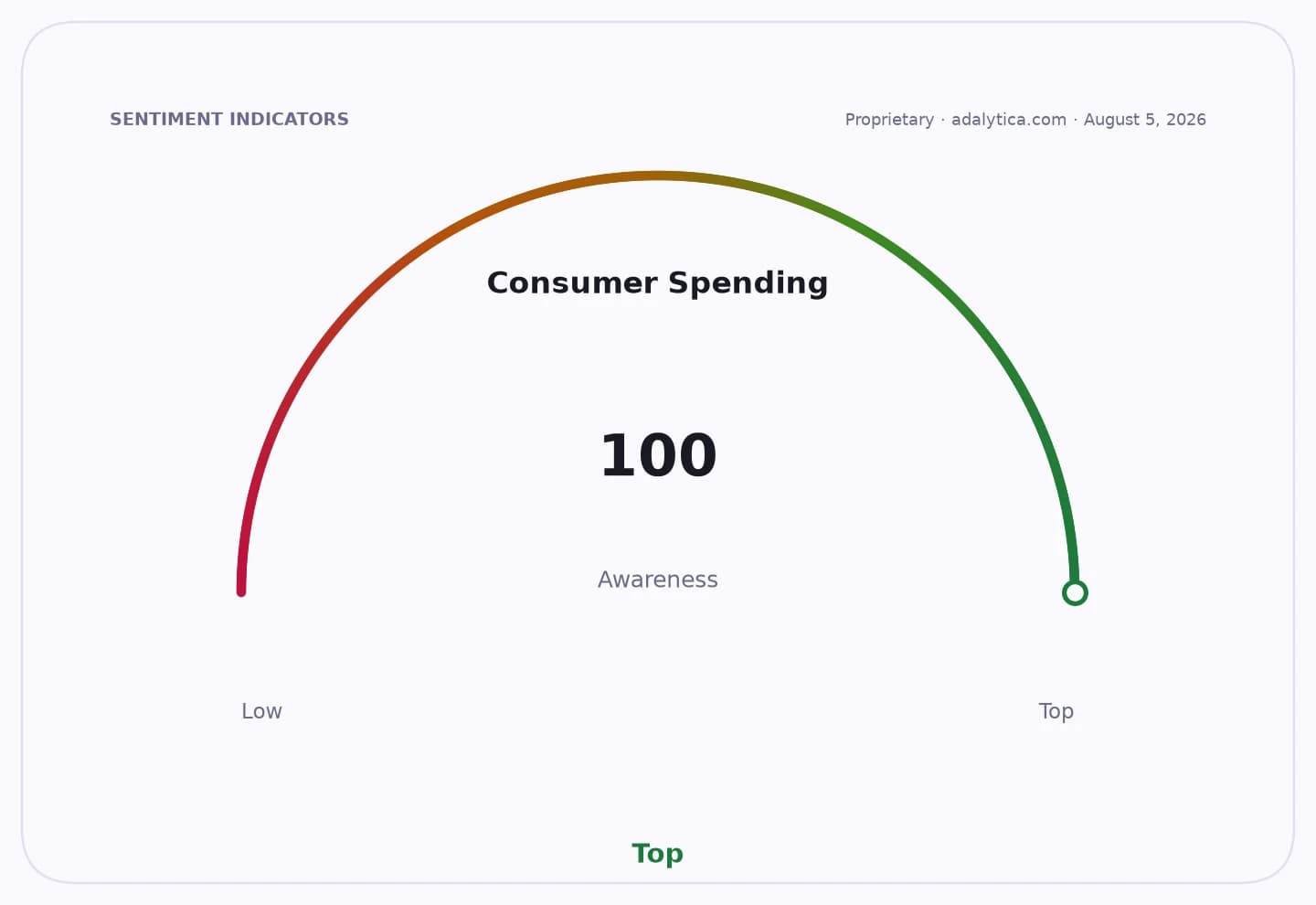
The timing also fits a broader payments backdrop that is getting more competitive and more consumer-sensitive. The Adalytica.com Consumer Spending Sentiment gauge is sitting at 96, labeled “Extreme Greed,” while awareness is at 100, suggesting consumers are active but also highly tuned to payment friction and fees. That matters because people tend to gravitate toward payment methods that are fast, simple and widely accepted — especially when they are comparing cards, mobile wallets and bank apps in their daily purchases.
Visa’s latest push with Kapitalbank speaks to that secular shift. Contactless and smartphone-based payments are no longer a novelty; they are becoming the default expectation in many markets as smartphones replace wallets for a growing share of routine spending. For Visa, that supports long-term payment volume growth and helps defend its position against rivals that are trying to win more of the customer interface.
The stock has also been holding up well. Visa shares recently traded near $369.59, above both the 50-day moving average of about $341.91 and the 200-day moving average of about $329.69. RSI readings around 64 suggest the stock is firm but not stretched to the extremes seen earlier this summer, while the price has stayed close to the upper end of its recent Bollinger Band range. In plain English: investors have been rewarding the company’s durability, and they still see room for the payments story to run.
That is the real investing takeaway here. A smartphone tap in one banking partnership may look minor, but it is exactly the sort of product integration that keeps Visa embedded in global commerce. Over years, not quarters, that can mean more transactions, more relevance and more dependable cash generation.
If you are a long-term investor, this is worth watching as part of a broader thesis: digital payments keep taking share from cash, and Visa remains one of the strongest toll collectors in that transition. For buy-and-hold portfolios, that kind of compounding machine deserves a spot on the watchlist.
| Entity | Gains | Losses |
|---|---|---|
| Visa | ▲More payment volume | ▼None material |
| Kapitalbank | ▲Better customer convenience | ▼Legacy payment friction |
| Cardholders | ▲Faster smartphone taps | ▼Less need for cash/cards |
| Competing payment rivals | ▲— | ▼Share of everyday transactions |