Visa, IFC Launch Risk-Sharing Payments Program

Visa is teaming up with the World Bank’s International Finance Corporation on a five-year risk-sharing initiative aimed at expanding digital payments and financial inclusion across emerging markets, starting with 14 countries in Latin America and the Caribbean.
The deal matters because it lowers a key barrier for banks in lower-rated markets: settlement and credit risk on Visa-linked transactions. By having the IFC share credit settlement risk, the program is designed to help about 50 financial institutions, many rated below investment grade, connect more unbanked consumers and small businesses to digital payment rails.
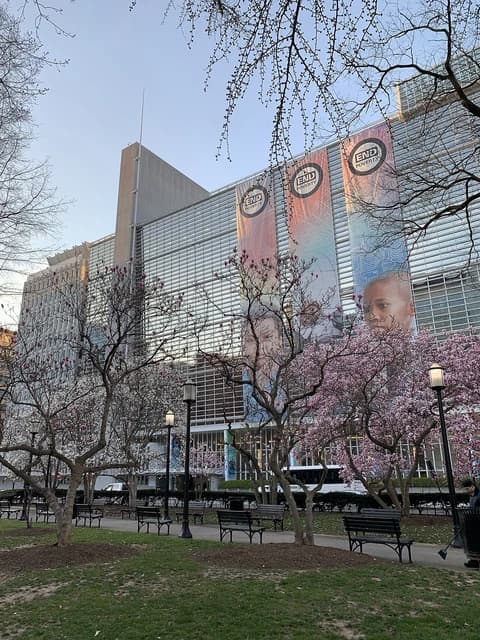
That should support a larger shift away from cash in economies where access to formal banking remains limited. Visa said the initiative could underpin about $200 million of risk sharing over five years, with the stated goal of helping people and small firms save, spend, borrow and grow inside the formal economy.
For Visa, the partnership opens another avenue to widen transaction volume in markets that still offer long runway for card and digital-payments penetration. For the IFC, it is a way to use its balance sheet to crowd in private capital and expand access to payment infrastructure without taking on the full risk that often keeps smaller lenders from scaling.
Investors tend to value Visa on the durability of its payments network and its ability to expand into underpenetrated markets, rather than on near-term earnings from any single initiative. The stock has been volatile in recent sessions, with the shares last trading at $370.45, above their 50-day moving average of $364.87 and 200-day moving average of $333.85, while RSI readings near 49 point to a neutral technical backdrop.
Mastercard, which also benefits from secular growth in digital payments, faces the same broad opportunity set as Visa as governments and development institutions push more commerce onto electronic rails. The broader market backdrop is cautious, however, with Adalytica’s S&P 500 trade signals showing “Extreme Fear,” a reminder that investors are still rewarding visible cash flow and resilient growth stories.
The next catalyst will be whether the program translates into additional bank partners and transaction growth in the targeted countries, especially if it can be replicated beyond Latin America and the Caribbean into other emerging markets.
| Entity | Gains | Losses |
|---|---|---|
| Visa | ▲More payment volume | ▼Little near-term revenue clarity |
| IFC / World Bank | ▲Broader financial inclusion | ▼Takes settlement-risk exposure |
| Emerging market banks | ▲Lower entry risk | ▼Higher implementation burden |
| Cash-based merchants / consumers | ▲Easier digital access | ▼Less reliance on informal payments |