Volksbanks to Offer Crypto Trading in Germany
Volksbanks are moving to offer crypto trading, a sign that Germany’s local banking sector is no longer treating bitcoin as a fringe asset but as a customer-retention fight that could shape who controls the next generation of brokerage flows.
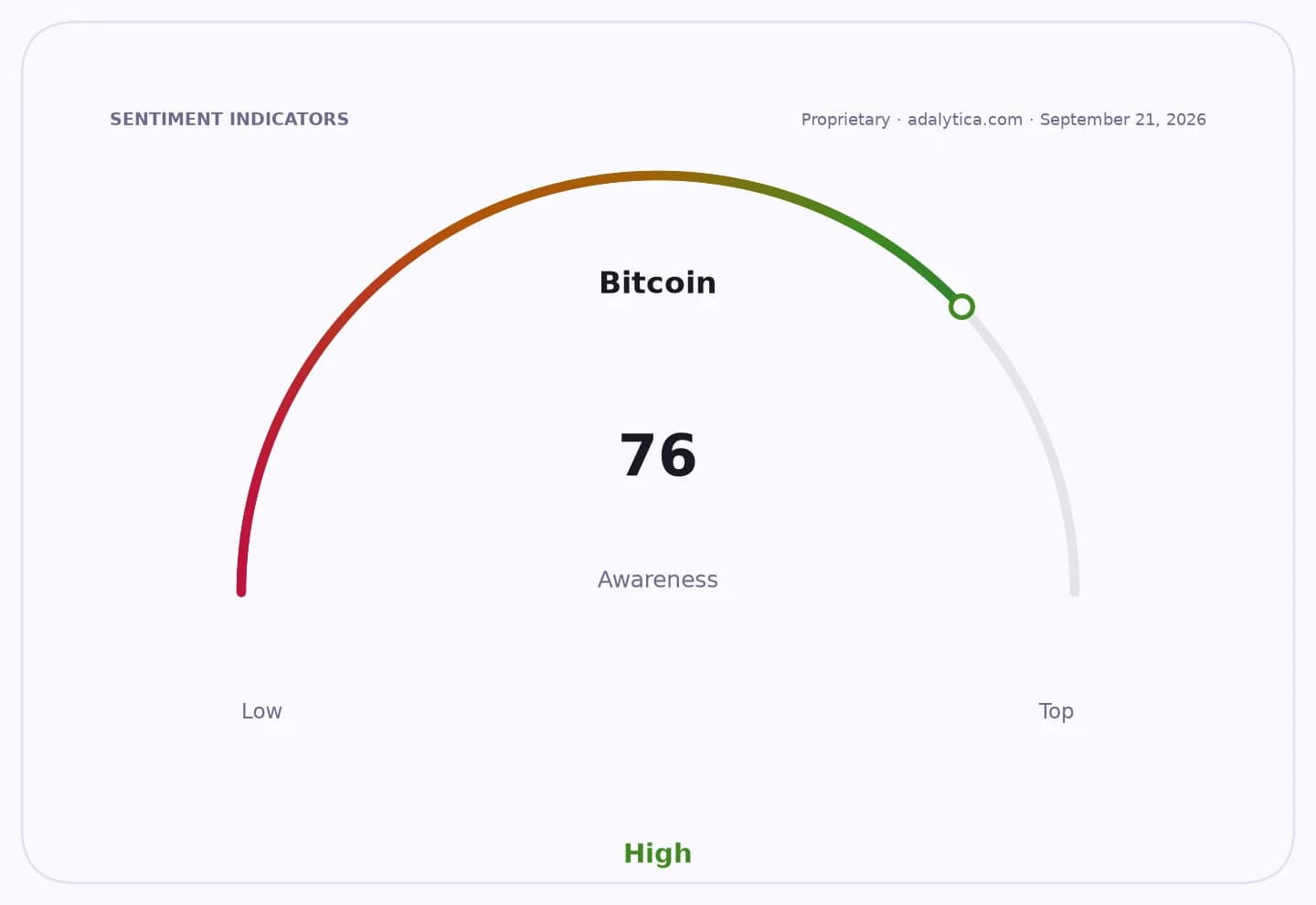
That matters because the battle is less about this week’s bitcoin price than about where young investors open their first investment account, where their cash sits, and which financial brand captures the fees when risk appetite returns. With bitcoin around $86,588 on Monday and Adalytica’s Bitcoin Fear & Greed Index sitting at 79, the market is already back in a speculative mood. The latest push by cooperative lenders shows the distribution game is broadening beyond crypto exchanges and U.S. platforms such as Coinbase and BlackRock’s IBIT.
For Volksbanks, the logic is straightforward: if younger customers increasingly want access to bitcoin and other digital assets, the bank either offers it or risks handing the relationship to an outside app. That is a bigger strategic issue than a single product launch. Once a customer opens the door for crypto trading, the same platform can be used to sell ETFs, savings plans, payments and other higher-margin services. In banking, the first account often becomes the most important account.
The macro backdrop is also supportive. U.S. 10-year Treasury yields are hovering near 5%, while oil has jumped back above $107 a barrel, a mix that keeps inflation and rate expectations in focus and reinforces the appeal of alternative assets for some investors. At the same time, bitcoin has been trading above both its 50-day and 200-day moving averages, a technical setup that suggests momentum remains intact even after bouts of volatility. Coinbase shares have also rebounded to about $201, while IBIT has climbed to roughly $49, underscoring how capital is still flowing toward crypto exposure through regulated channels.
The real investment takeaway is that the next phase of crypto adoption may not be driven only by pure-play exchanges. It may come from mainstream banks and brokers wrapping access in familiar, regulated, low-friction products. That is bullish for the entire crypto infrastructure stack, from trading venues and custody providers to ETF issuers and market makers. It is also a warning to slower incumbents: if they do not offer a credible crypto on-ramp, they risk losing the youngest and most profitable customers to competitors that do.
For investors, that creates two angles. The first is direct exposure to bitcoin and the listed vehicles tied to it, where momentum and sentiment remain strong. The second is the picks-and-shovels trade in firms that benefit as traditional banks normalize crypto access. My view is that the market underestimates how quickly this can move from a niche experiment to a standard banking feature. The banks that move first may win the customer; the infrastructure providers may win the trade.
| Entity | Gains | Losses |
|---|---|---|
| Volksbanks | ▲younger customers, fee income | ▼legacy product inertia |
| Coinbase / crypto exchanges | ▲broader retail adoption | ▼monopoly on crypto access |
| IBIT / Bitcoin ETFs | ▲regulated inflows | ▼direct-only crypto platforms |
| Late-moving banks | ▲less advantage | ▼customer relationships to rivals |