Vonovia Shares Sink as Berlin Housing Debate Shifts
Vonovia’s stock may be approaching a new catalyst as Germany’s biggest residential landlord is trying to position itself not as part of the housing problem, but as part of the solution.
That matters because the debate over housing scarcity in Berlin is moving from politics into capital allocation. If policymakers and voters accept that large, private landlords are needed to add supply, modernize aging stock and keep rents manageable, Vonovia could gain a clearer operating backdrop and a better valuation case after a volatile year for the sector.
Chief Executive Luka Mucic said the company “must be part of the solution” to the housing shortage, pointing to roughly 1,000 new units currently under construction in Berlin and about 6,000 built there since 2013. He also stressed that Vonovia’s average rent in its Berlin portfolio was 8.26 euros per square meter at the end of June, with new leases averaging 10.80 euros.
That framing is important for investors because Berlin remains one of Europe’s most politically sensitive housing markets, and Vonovia owns about 130,000 apartments in the city through itself and Deutsche Wohnen. The company’s size makes it a lightning rod for rent politics, but it also gives it scale advantages in construction, modernization and energy upgrades that smaller owners cannot match.
Mucic used that argument to reject calls from the Left party for expropriation of large housing portfolios, saying “vergesellschaftung” does not solve the shortage and that Germany instead needs conditions that encourage more new building. He also welcomed the federal coalition’s recent move to make state-level expropriation of large residential landlords legally impossible, though he said the implementation must be watertight.
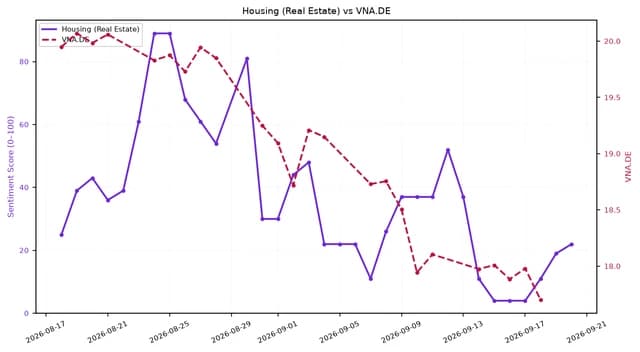
For the market, the message is straightforward: policy risk has not disappeared, but the direction of travel is becoming less hostile. That is enough to matter for a stock that has already been punished by higher rates, weak sentiment and a tough housing backdrop. Vonovia’s shares closed at 17.70 euros on Sept. 18, far below the 50-day moving average of just over 20 euros and the 200-day average near 21.8 euros, showing how deeply the market has discounted the sector.
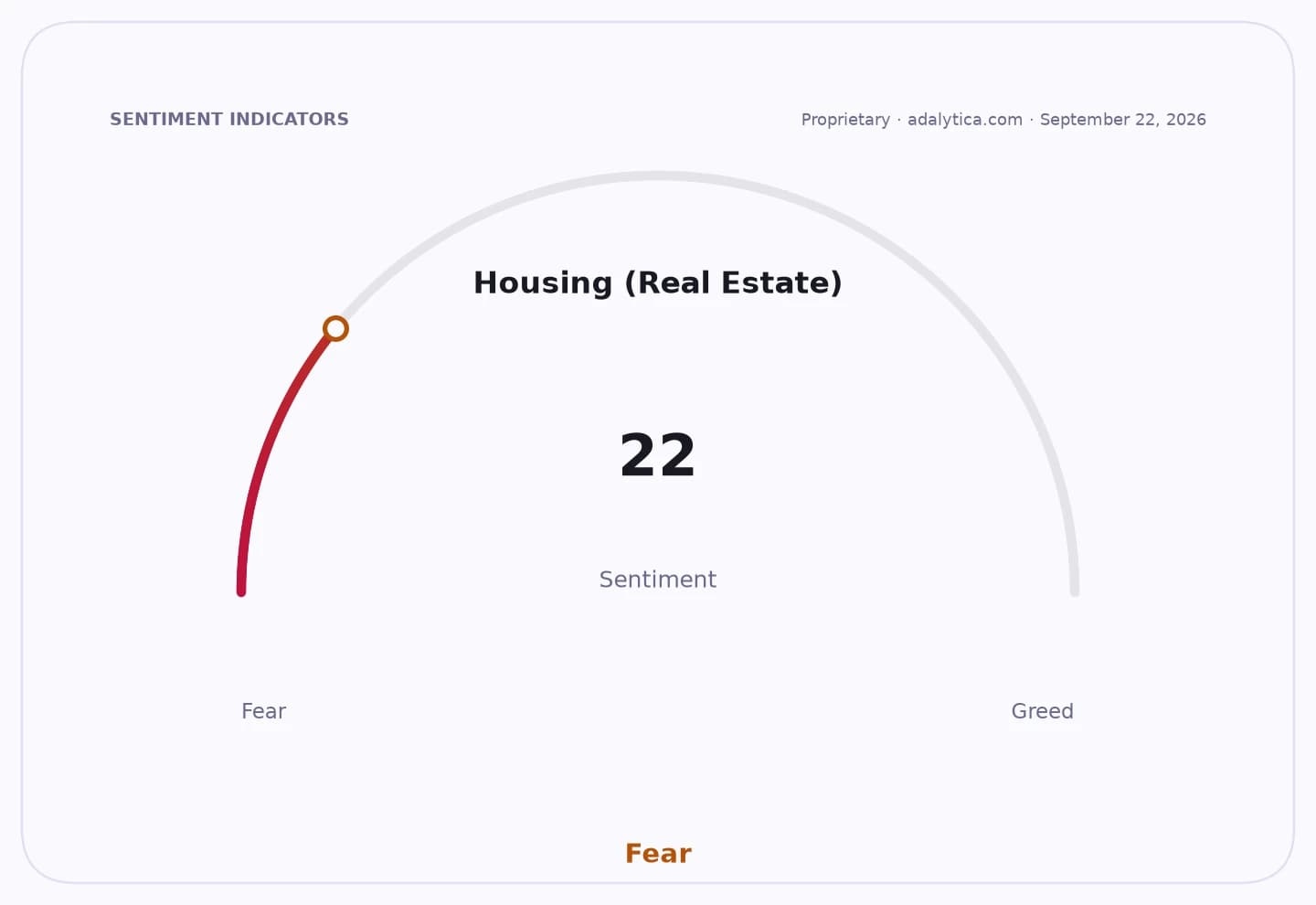
The broader setup still favors patient investors who want exposure to a rebound in European housing rather than a pure bond-proxy trade. Adalytica’s Housing Fear & Greed Index is still in fear territory, while its housing and rent inflation sentiment gauge also points to caution. That is exactly the kind of environment that can set up asymmetric upside if political rhetoric cools, refinancing pressure eases and the market starts to value rental housing as a cash-flow and supply-constrained asset again.
Vonovia will not solve Berlin’s housing shortage alone, and Mucic acknowledged that. But the company does not need to solve it to win. It only needs policymakers to stop treating scale as the enemy and start treating it as infrastructure. If that happens, the next leg for Vonovia could come from a rerating as much as from earnings.
| Entity | Gains | Losses |
|---|---|---|
| Vonovia | ▲Policy acceptance; rerating potential | ▼Expropriation risk narrative |
| Berlin renters | ▲More supply; more modernization | ▼Short-term rent pressure fears |
| German housing policymakers | ▲Practical supply solution | ▼Populist expropriation case |
| Smaller landlords | ▲Less regulatory focus on scale | ▼Competitive advantage vs. Vonovia |