Wall Street falls as oil and yields rise
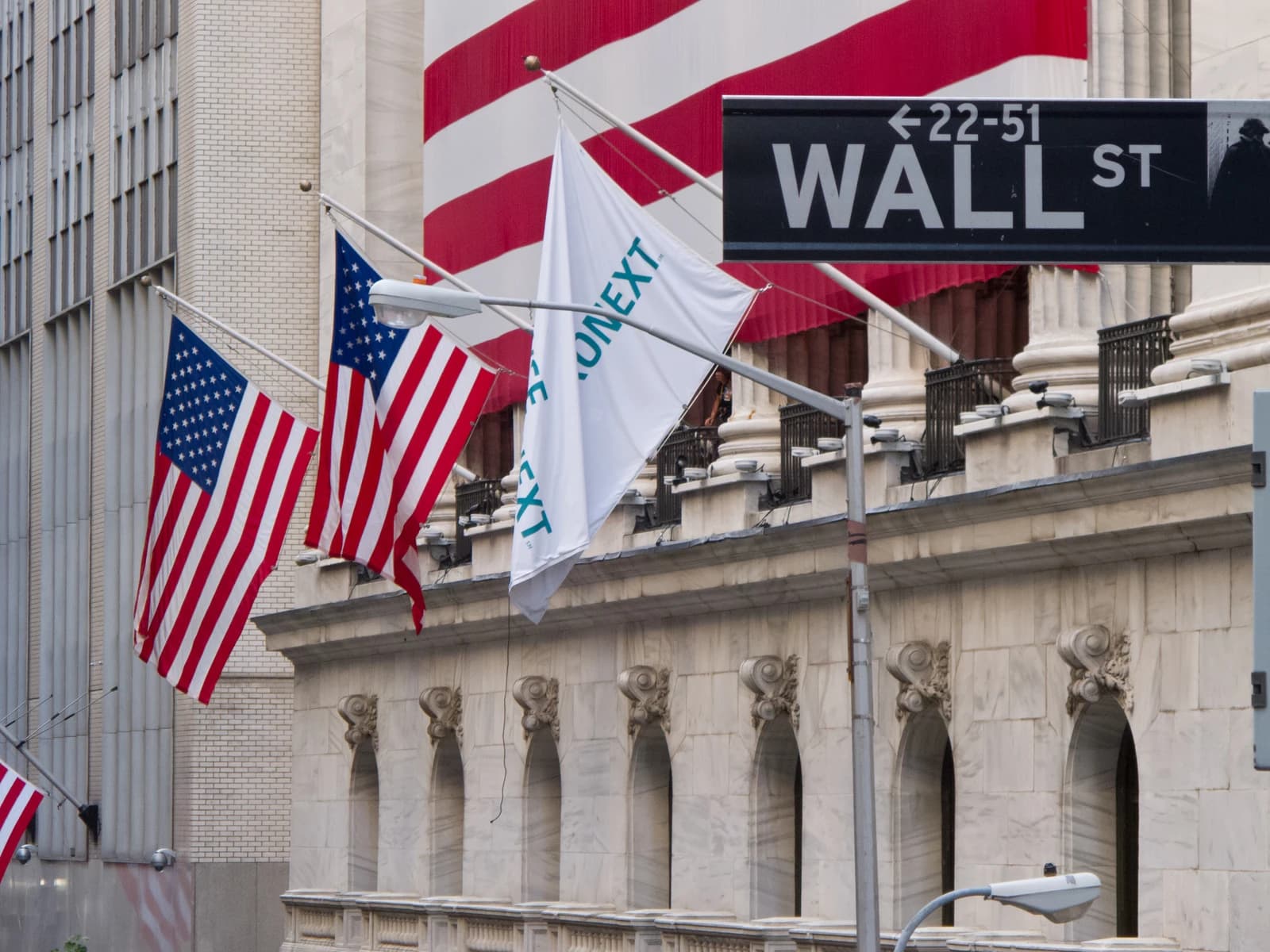
Wall Street finished in the red as rising oil prices and a broad bond selloff kept pressure on equities, with the Dow Jones Industrial Average down 0.77% and extending a three-day losing streak.
The move matters because higher crude, now above $101 a barrel, is feeding renewed inflation worries just as Treasury yields climb toward 5% and European borrowing costs hit multi-year highs. That combination raises the cost of capital, tightens financial conditions and makes it harder for stocks to justify elevated valuations.

The S&P 500 slipped below the flatline, while the Nasdaq 100 lost 0.29%, showing that the weakness was broad rather than confined to one pocket of the market. Investors were selling into sectors most exposed to a slowing economy and tighter rates, with industrials down 1.51%, consumer discretionary off 1.39% and utilities falling 1.16%.
Energy was the lone bright spot in the S&P 500, underscoring how the same oil shock hurting rate-sensitive assets is supporting producers. Chevron rose 1.91%, while IBM gained 3.40%, but those advances were not enough to offset losses in names including Alphabet, Procter & Gamble, Boeing and Nike.
The tone was even weaker in the Nasdaq, where Datadog jumped 7.11% and Meta Platforms added 6.48%, but Charter Communications plunged 8.13%, Comcast fell 6.61% and Shopify dropped 5.45%. The split highlights a market still willing to reward select growth winners while punishing companies tied to consumer demand and higher financing costs.
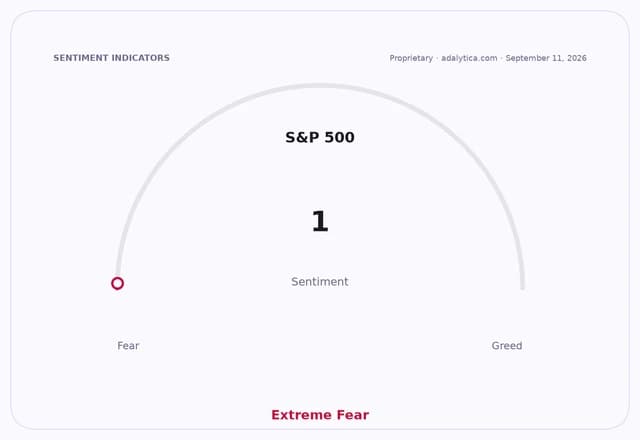
Technical readings also point to a market losing momentum. The SPY ETF closed at 765.94, just above its 50-day moving average of 758.65, with RSI at 50.2 after recent weakness, while Adalytica’s S&P 500 trade signals snapshot showed “Extreme Fear” sentiment at 1 and awareness at 23.
Treasury bonds drew steady demand as a defensive play, with TLT ending at 81.00 and Adalytica’s U.S. Treasury bonds snapshot showing “Extreme Greed” sentiment at 94. That divergence suggests investors are still seeking safety even as they worry that inflation and debt pressures may keep yields elevated.
The next catalyst is whether oil and bond yields stabilize enough to ease pressure on equities, or whether another rise in inflation fears pushes Wall Street deeper into its bearish stretch.
| Entity | Gains | Losses |
|---|---|---|
| Energy producers | ▲Higher crude prices | ▼Rate-sensitive sectors |
| Treasury bond holders | ▲Safety demand | ▼Equity investors |
| Tech megacaps | ▲Selective rotation inflows | ▼Weakening broad market sentiment |
| Consumers and cyclicals | ▲None | ▼Higher inflation and financing costs |