Walmart Cuts Prices, Adds Apple Pay and Google Pay
Walmart is leaning harder into price cuts, faster delivery and new payment options as it tries to keep value-conscious shoppers spending even after posting its weakest comparable sales in six years.
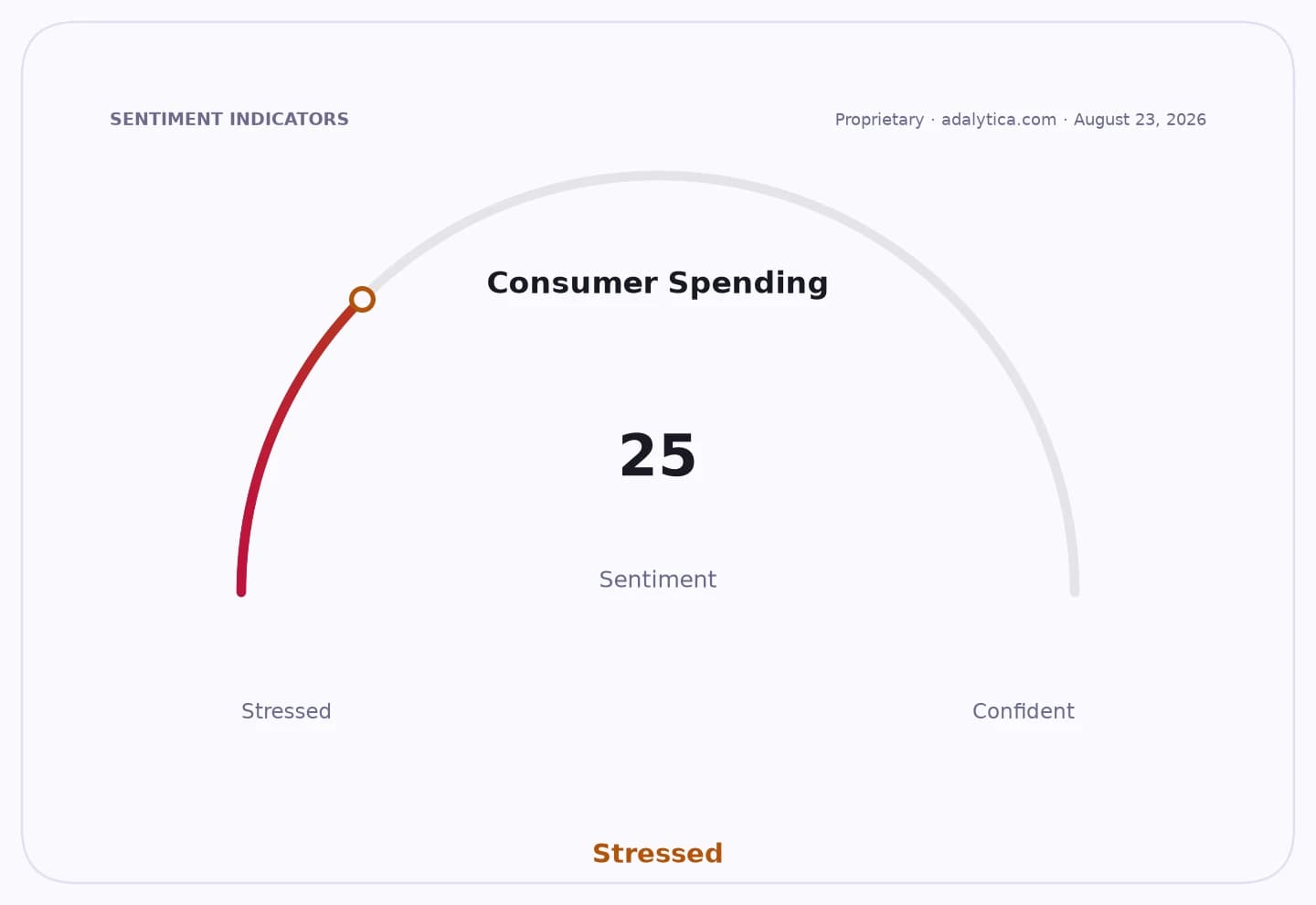
The retail giant is promoting more than 50 deals across appliances, household essentials and tech, a timing that fits with a consumer backdrop still showing signs of strain. Adalytica’s consumer spending sentiment gauge is in “fear,” while Walmart’s own earnings sentiment sits at neutral, underscoring a market where shoppers remain selective and bargain hunting is doing more of the work.
That matters because discount-led traffic can defend Walmart’s scale advantage even when discretionary spending slows. The company said e-commerce sales jumped 24%, helped by its fast-delivery push, and that digital strength helped offset weakness in stores enough for revenue to top forecasts.
The shift also gives investors a clearer read on Walmart’s strategy: keep winning the budget shopper, move more sales online and make checkout easier. Walmart will begin accepting Apple Pay and Google Pay on Aug. 24, a notable reversal after years of resisting the mobile wallets, and a move that could reduce friction in stores and support conversion at the register.
For investors, the key issue is whether deal-driven volume can keep translating into traffic and sales without further pressuring margins. Walmart’s shares have been volatile around the latest results, with the stock recently trading below its 50-day average and well under its 200-day average after a sharp post-earnings slide, even as short-term momentum has improved from oversold levels.
The next catalyst is whether the deal campaign and contactless payments can stabilize comparable sales heading into the crucial back-to-school and holiday periods, while broader consumer caution continues to favor discounters over full-price retailers.
| Entity | Gains | Losses |
|---|---|---|
| Walmart | ▲Traffic from bargain hunters | ▼Margin pressure from discounts |
| Budget shoppers | ▲Lower prices and easier checkout | ▼Fewer promotions if demand improves |
| Amazon and other e-commerce rivals | ▲Higher overall online demand | ▼Walmart’s faster delivery competition |
| Full-price retailers | ▲— | ▼Share of cautious consumer spending |