Walmart is emerging as the preferred large-cap retail shelter for hedge funds even as its shares have sold off sharply from recent highs, underscoring how investors are rotating toward cash-generative, defensive growth at a time of renewed market stress.
Hedge Funds Favor Walmart as Defensive Retail Shelter
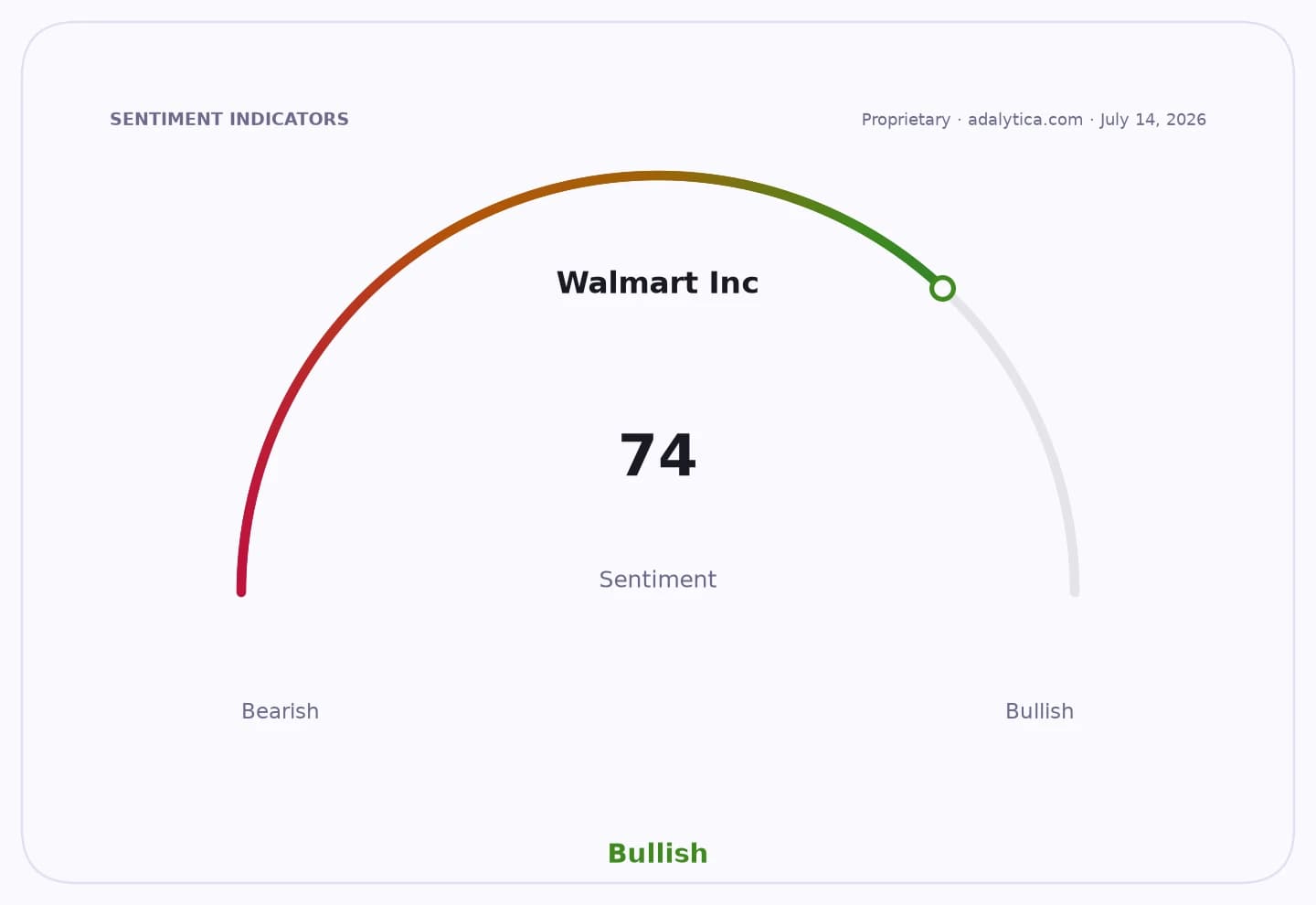
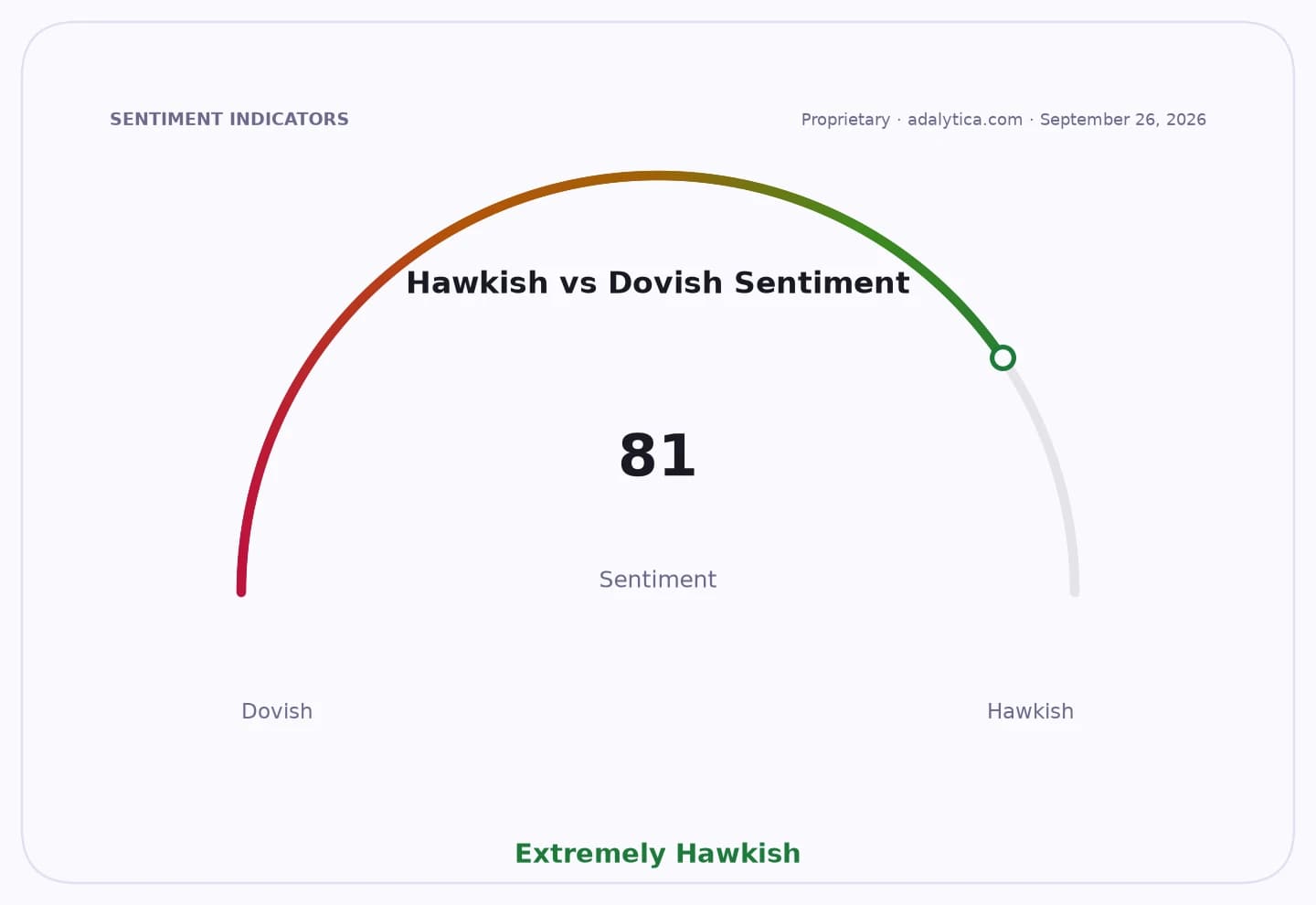
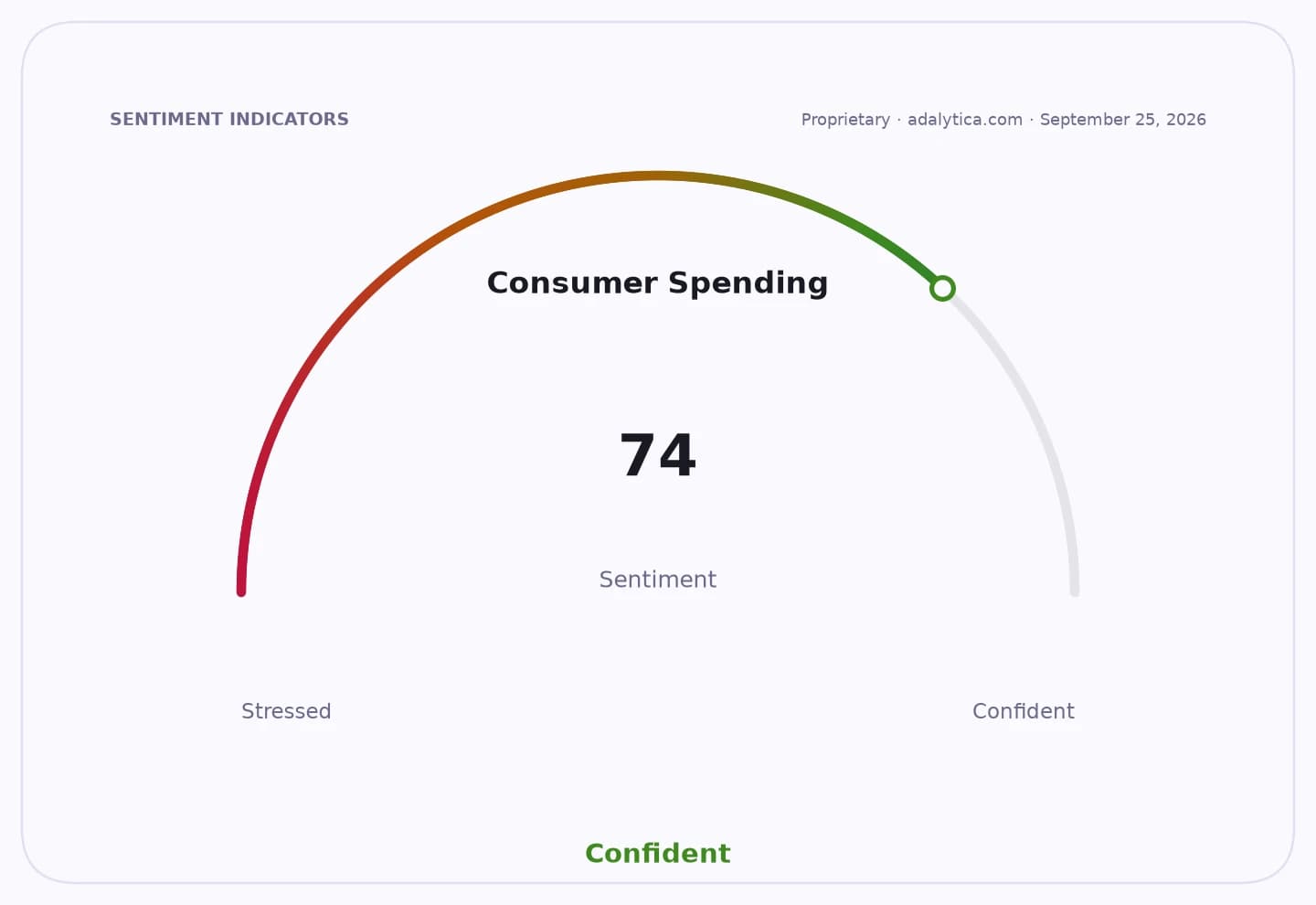
The appeal is straightforward: Walmart combines scale, pricing power and steady traffic in a consumer backdrop that remains supportive but fragile. Adalytica’s consumer spending sentiment is still in “Extreme Greed” at 96, suggesting households are willing to spend, while broad equity sentiment on the S&P 500 has slipped into “Fear” and “Extreme Fear,” a sign that managers are looking for businesses that can hold up if risk appetite fades further. In that setting, Walmart’s omnichannel model and food-driven basket have become more attractive than the more cyclical or margin-sensitive profiles of Amazon and Target.
Sentiment IndicatorsⓘProprietary · adalytica.com · July 14, 2026
This is a snapshot — live sentiment, awareness and momentum for 130+ markets update continuously in the dashboard.Open AlphaPulse
That relative preference matters economically because retail leadership often shifts fastest when markets begin to question the durability of the growth cycle. Hedge funds have had their best first half in 13 years, but the rally has been concentrated in momentum and healthcare, and some managers are already warning that crowded trades may be losing traction. Walmart offers a different proposition: not maximum upside, but a high-visibility earnings stream backed by everyday demand. That makes it a natural parking place when investors want equity exposure without taking full macro risk.
The stock action reflects that tension. Walmart has climbed well above its 200-day moving average, but more recently it has given back much of its summer advance. At $113.70, the shares sit below the 50-day average of $120.64 and the relative strength index is 36.9, which points to a stock that has been sold, but not yet broken. Amazon has also retreated from its highs, though it remains far above its 200-day line, while Target has rebounded more cleanly but still looks like a turnaround trade rather than a defensive compounder. For hedge funds choosing among the trio, Walmart’s mix of scale and stability is the clearest fit for a late-cycle or uncertain market.
Fundamentally, Walmart has been executing well enough to justify the interest. In its latest quarterly filing, Walmart said U.S. e-commerce added about 5.2 percentage points to comparable sales and Sam’s Club online sales contributed another 3.1 points, evidence that the company is still taking share without relying solely on brick-and-mortar traffic. Fuel sales also helped. That matters because it shows Walmart is not just a recession hedge; it remains a structural winner in omnichannel retail, with growth coming from logistics, membership and digital fulfillment as much as from low prices.
Target’s case is more fragile. Its shares have bounced strongly from earlier lows, but the business still faces tariff exposure, higher compensation and promotion pressure, and it lacks Walmart’s grocery-heavy defensive mix. Amazon remains the stronger secular growth story, but its valuation and exposure to broader tech and e-commerce sentiment make it less of a pure hedge-fund shelter when the market is de-risking. In other words, Walmart is winning not because it is the most exciting retail name, but because it best fits the current mandate: preserve capital, keep exposure to consumption, and avoid the weakest parts of the consumer stack.
For investors, the key question is whether the move is a temporary style rotation or the start of a deeper defensiveness trade. If macro anxiety persists and the broader market remains under pressure, Walmart could continue to attract active capital even after its rally. If risk appetite recovers, the stock may lag higher-beta retail and technology names. But with consumer spending still resilient and market sentiment deteriorating, Walmart looks increasingly like the hedge funds’ preferred answer to a simple problem: how to stay invested without being fully exposed.
| Entity | Gains | Losses |
|---|---|---|
| Walmart | ▲Defensive inflows | ▼Upside if risk rally returns |
| Amazon | ▲Secular growth premium | ▼Safe-haven bid |
| Target | ▲Turnaround attention | ▼Defensive rotation |
| Hedge funds | ▲Lower-volatility exposure | ▼Momentum concentration risk |