Walmart Dunkin Deal Expands Home Delivery
Walmart’s partnership with Dunkin’ for nationwide home delivery is another sign that the fight for the U.S. consumer is moving from price alone to convenience, and that matters because delivery is now a profit lever, not just a service perk.
The biggest implication is economic: retailers and restaurant brands are being pushed to squeeze more value out of every order by turning stores, clubs and menu items into last-mile fulfillment engines. Walmart has already told investors that eCommerce shipping and fulfillment costs remain a key pressure point, even as comparable sales rose 3.3% in the latest quarter, driven by stronger transactions and average ticket. A tie-up with Dunkin’ gives Walmart another way to deepen basket size and increase order frequency without building new infrastructure from scratch.
For investors, the story is not really about coffee and breakfast sandwiches. It is about Walmart using its scale to pull more spending into its ecosystem while leveraging the one asset rivals cannot easily copy: a national physical network already embedded in consumers’ daily routines. In a market where consumers are still hunting for value, the combination of grocery, general merchandise and now branded food delivery creates a stickier proposition than a standalone retailer or delivery app can offer.
That is why the move fits a broader trend across retail and food service. McDonald’s and Starbucks have both highlighted delivery, digital engagement and menu-based traffic as core growth tools, while Walmart has been leaning harder on fulfillment methods that convert stores into logistics hubs. The economics are straightforward: if Walmart can spread delivery costs over larger orders and higher frequency, it can protect margins while widening the gap versus smaller chains and pure-play delivery platforms.
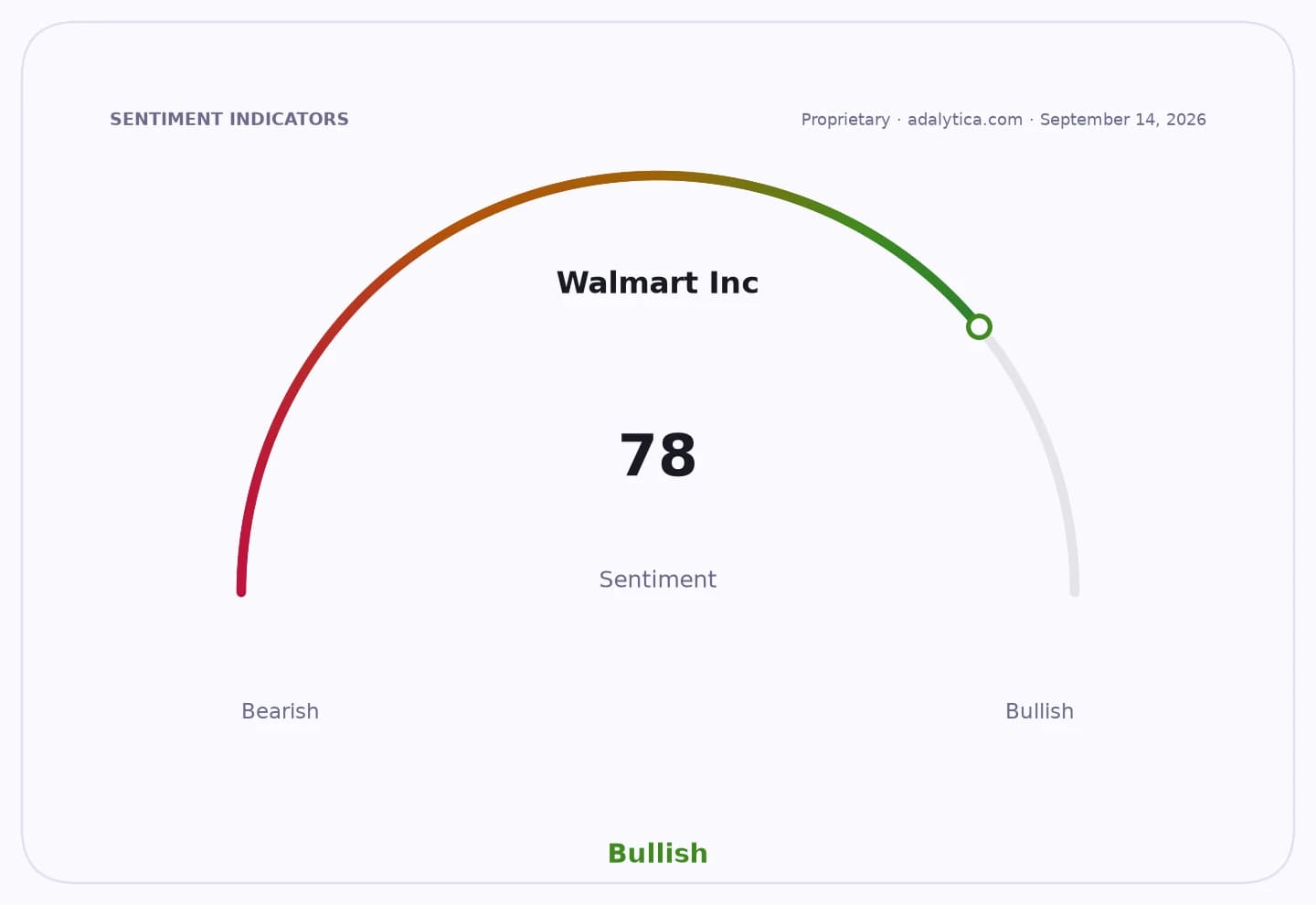
The stock has already been pricing in a lot of operational strength, with Walmart trading above its 50-day moving average in recent sessions and showing stronger momentum than it did earlier in the year. Adalytica’s Walmart earnings sentiment gauge is also flashing “Greed,” while the consumer spending snapshot reads “Extreme Greed,” underscoring how investors are increasingly willing to pay for exposure to resilient household spending and convenience-led commerce.
The real upside here is not a single coffee order. It is the chance for Walmart to keep turning its network into a toll road for everyday consumption, and that is exactly the kind of secular advantage the market tends to underestimate until it is already obvious. For investors, the actionable takeaway is clear: the best positioned names are the retailers and restaurant brands with scale, data and fulfillment reach, while the losers are the convenience-dependent competitors that have to pay up for every mile of delivery.
| Entity | Gains | Losses |
|---|---|---|
| Walmart | ▲Higher basket size | ▼Delivery-only rivals |
| Dunkin’ | ▲Wider reach | ▼Smaller breakfast chains |
| Consumers | ▲Easier access | ▼Legacy convenience stores |
| Pure-play delivery apps | ▲More order volume | ▼Margin pressure |