Walmart Pulls Back After Q2 Profit Surge

Walmart’s second-quarter profit surge is not enough to keep the bullish trade intact, and that matters because the market has been paying up for the company as a defensive winner in an uncertain consumer environment. The latest earnings showed profits jumped 28.8% to $9.4 billion, but slowing U.S. sales growth and the sharp pullback in the stock have shifted the debate from “best-in-class retailer” to “how much good news is already priced in.”
That is the key investment issue. Walmart has spent much of the year being treated as a safety trade: resilient traffic, omnichannel scale and a relatively reliable earnings profile as consumers trade down. But when a stock has already rallied hard, investors want clean revenue momentum, not just margin-supported earnings growth. The market’s reaction suggests the bar is now higher, especially as discretionary spending shows signs of strain and the broader consumer backdrop looks fragile.

The technical setup reinforces that caution. Walmart has slipped to $105.71, below its 200-day moving average of $118.01 and its 50-day average of $112.76, while the RSI reading of 35.7 points to weakening momentum rather than a crowded overbought trade. The stock’s recent swings also show how quickly enthusiasm can reverse once earnings no longer deliver a clear upside surprise.
That makes the current pullback more than a routine post-earnings wobble. Investors are reassessing whether Walmart is still a compounding story or simply a crowded defensive holding. The company remains formidable, with scale, grocery share and digital execution that few retailers can match, but the move lower says the market is questioning whether profit growth can keep outrunning slower top-line trends in the U.S.
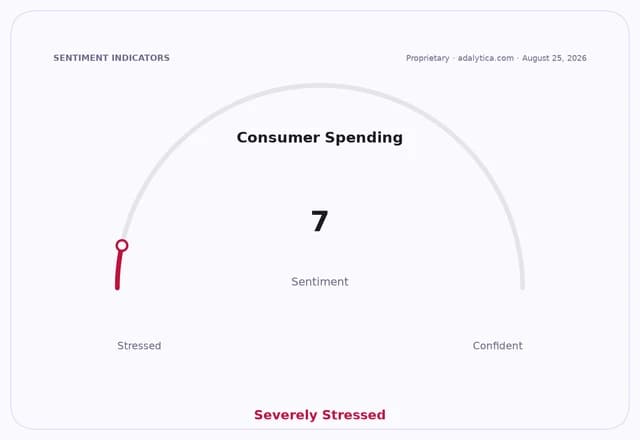
There is also a broader signal here for consumer stocks. If Walmart, one of the market’s most trusted barometers of household demand, can post a strong earnings increase and still lose favor, then investors should be wary of extrapolating resilience across retail. That leaves room for more differentiation: operators with pricing power and omnichannel leverage can still win, but the market is becoming less forgiving of growth that depends too heavily on margin management.
The opportunity, in our view, is not to chase the latest emotional reaction but to stay selective. Walmart can still work as a quality compounder if consumer spending stabilizes, but the easy bullishness is gone. For now, the better trade may be to own the retailers and suppliers most exposed to eventual spending recovery, while avoiding names whose valuation already assumes near-perfect execution.
| Entity | Gains | Losses |
|---|---|---|
| Walmart bears | ▲Lower valuation risk | ▼Missed earnings upside |
| Walmart bulls | ▲Better entry point | ▼Momentum trade unwinds |
| Defensive retailers | ▲Relative attention | ▼New scrutiny on sales growth |
| Consumers/traders | ▲More selective pricing | ▼Fading confidence in retail strength |