Walmart Sales Miss Hits Shares and Retail Sentiment

Walmart’s rare sales miss is the clearest sign yet that even America’s most resilient retailer is feeling the strain of cautious shoppers, and investors are responding fast.
The stock fell about 10% after the company reported weaker-than-expected sales, a sharp reminder that the consumer, while still spending, is becoming more selective. That matters because Walmart has long been one of the best gauges of household health: when it stumbles, it usually says something important about the broader economy, not just one company’s quarter.
The implication for investors goes beyond a single earnings report. Walmart’s model is built to win when shoppers trade down and seek value, so a miss here suggests the pressure is not just hitting discretionary chains. It also raises questions about how much pricing power retailers really have after a long stretch of inflation, and whether margins across consumer-facing companies can keep expanding if traffic softens.
The stock reaction underscored that tension. Even after a long run that pushed Walmart well above its 50-day moving average in recent months, the shares have now snapped lower, with the latest drop dragging them back toward a more neutral technical setup. By contrast, rival discount and warehouse retailers have held up better, showing that investors still prefer names with clear value positioning and stronger membership economics.

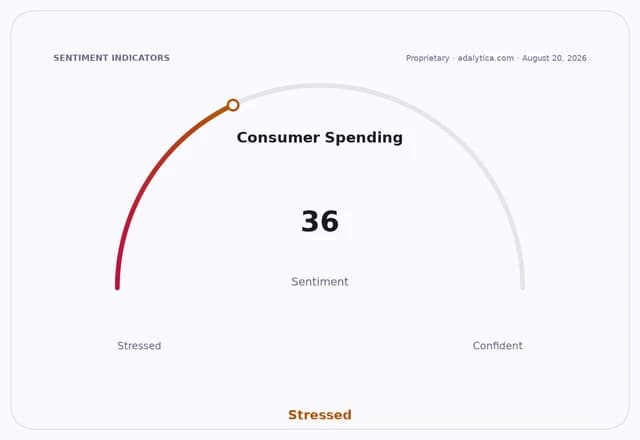
That fits a broader pattern in consumer data. Adalytica’s Consumer Spending Sentiment snapshot has softened into neutral territory, while recent retail commentary from companies such as Lowe’s has pointed to restrained discretionary spending. In plain English, households appear to be prioritizing necessities and delaying bigger-ticket purchases, especially in categories tied to home improvement and other optional spending.
For long-term investors, the bigger question is not whether Walmart is broken — it isn’t. The company still has one of the strongest logistics networks, one of the most recognizable brands, and a scale advantage that smaller chains can’t match. But a rare miss like this is a warning that even high-quality compounders are not immune to a slower consumer backdrop.
If spending remains uneven, Walmart should still be one of the better places to hide in retail. But investors may want to keep expectations realistic: the next leg of gains is more likely to come from steady execution and margin discipline than from a quick rebound in shopper confidence. For now, Walmart is worth watching — and for patient investors, it remains a name to consider holding for the long term.
| Entity | Gains | Losses |
|---|---|---|
| Value shoppers | ▲Lower prices | ▼Less promotional upside |
| Walmart rivals | ▲Relative sales share | ▼Pricing pressure |
| Walmart | ▲Long-term defensive appeal | ▼Near-term margin and sales momentum |
| Retail investors | ▲Clearer read on consumer weakness | ▼Short-term share price losses |