Walmart shares fall to $111.43 as payroll costs rise
Walmart’s pay scales are drawing attention because the retailer’s biggest cost advantage is now being tested by a tighter labor market, rising store payroll and heavier investment in automation and e-commerce.
For employees, the question of how much Walmart pays is not just about hourly wages. It is about a compensation ladder that runs from store associates to department managers, pharmacists and corporate staff, and about whether those wages can keep pace with inflation, competition for workers and the demands of a more complex retail operation. For investors, the issue matters because payroll is one of the largest expenses in a business that makes money on razor-thin margins.
That is especially relevant now. Walmart’s shares have retreated from a February peak near $130.66 to around $111.43 on Aug. 6, while remaining above the 200-day moving average. The stock is trading below its 50-day average, a sign momentum has cooled even after a long run-up. The move suggests investors are starting to reassess whether the company’s scale advantage is enough to absorb higher labor and operating costs without denting profitability.
The pay debate also lands against a broader retail backdrop in which wages remain a competitive weapon. Target has disclosed higher compensation expense, including stores payroll and incentive pay, in recent filings, while Costco continues to lean on a premium pay model to defend service levels and retention. Walmart sits in the middle: it cannot match Costco’s labor intensity, but it also cannot afford to fall behind rivals if it wants to protect staffing, shrink control and customer service.
That balancing act matters economically because Walmart employs more than a million people in the US alone and operates at enormous scale across stores, clubs, warehouses and delivery networks. Small changes in average pay or staffing levels can move operating expenses by hundreds of millions of dollars. Walmart’s latest filing already pointed to higher depreciation from continued capital spending and higher expenses tied to its operations, underscoring that payroll is part of a broader cost stack that is becoming harder to compress.
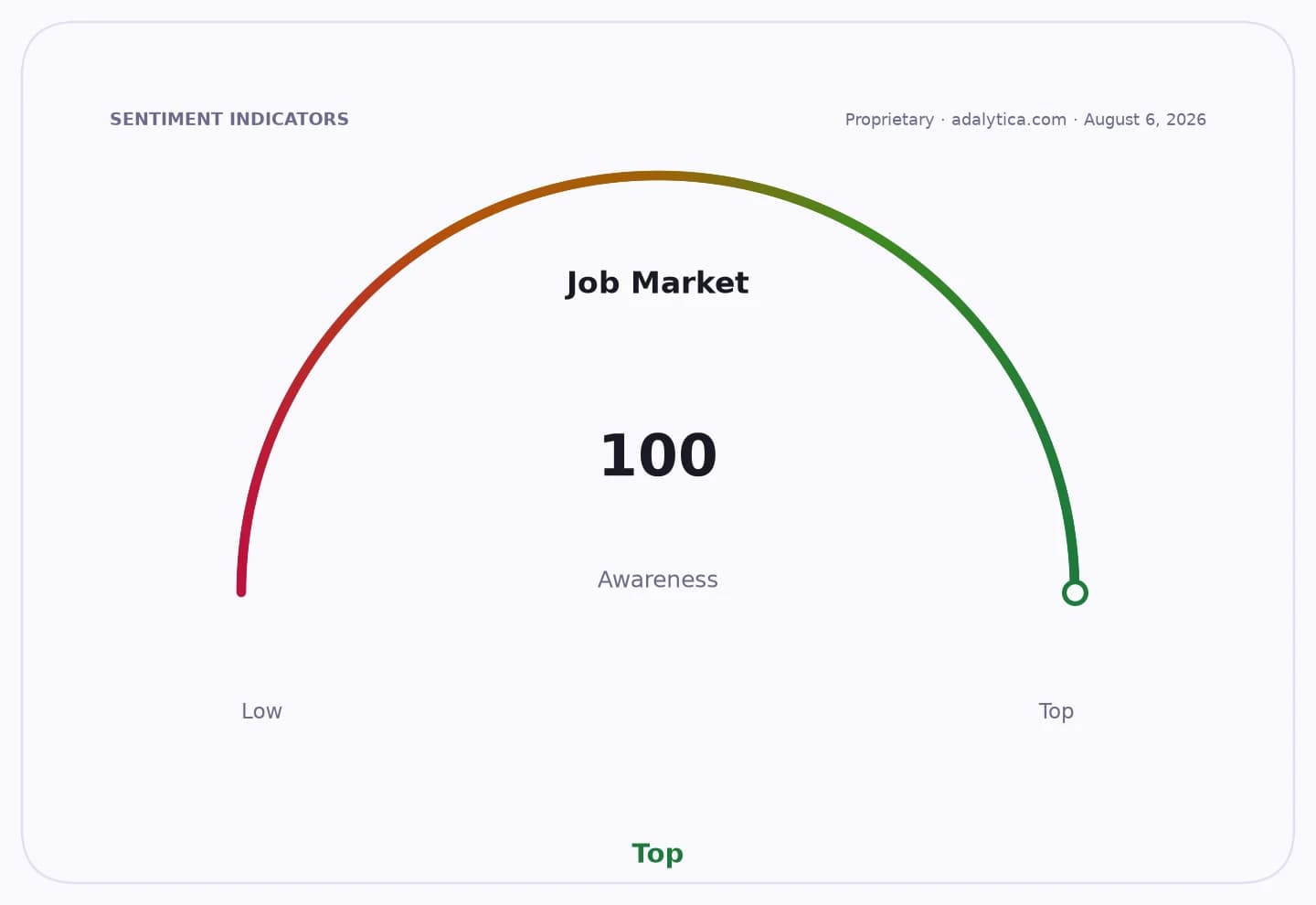
The market context is equally important. Adalytica’s Job Market Sentiment gauge is at 93, labeled “Extreme Greed,” while the broader payroll snapshot remains neutral but volatile. That speaks to a labor environment where workers still have leverage in many service sectors, even as hiring conditions soften in parts of the economy. For Walmart, that means wages are not merely a human-resources issue; they are a defense against turnover, lost sales and service deterioration.
Investors will be watching whether Walmart can keep raising wages selectively — especially in pharmacists, managers and logistics roles — while using technology and scale to cap the overall wage bill. The bull case is that better pay improves retention, productivity and execution, supporting same-store sales and share gains. The bear case is that wages rise faster than productivity, squeezing margins at a time when the stock already looks less extended.
For now, the story around Walmart pay is less about individual salaries than about the economics of running the world’s largest retailer. In a business built on volume and efficiency, compensation is one of the few levers that can either reinforce the model or expose its limits.
| Entity | Gains | Losses |
|---|---|---|
| Walmart employees | ▲Higher pay and retention | ▼Wage pressure if costs tighten |
| Walmart investors | ▲Better staffing if pay improves execution | ▼Margin risk from rising payroll |
| Target and other retailers | ▲Better labor benchmarking | ▼Harder competition for workers |
| Walmart management | ▲More stable operations if pay is calibrated | ▼Less room to absorb cost inflation |