July 4, 2026 — The yen’s drop to around 162 per dollar has become the clearest market signal that global rate differentials are again overwhelming Japan’s currency defenses, raising the risk of official intervention and threatening to feed imported inflation into an already strained consumer economy.
Weak Yen Raises Intervention and Inflation Risks

The Japanese currency touched about 162.4 per dollar this week, its weakest level in nearly four decades, before recovering slightly to 161.34 on July 3. Finance Minister Katayama called for decisive measures to stabilize the currency, according to the supplied news context, underscoring that Tokyo is again confronting a familiar problem: a weak yen supports exporters and equity sentiment, but lifts the cost of food, fuel and other imports for households and retailers.
Sentiment IndicatorsⓘProprietary · adalytica.com · July 4, 2026
This is a snapshot — live sentiment, awareness and momentum for 130+ markets update continuously in the dashboard.Open AlphaPulse

The pressure is coming from the U.S. side of the equation. The 10-year Treasury yield climbed to 4.48% on July 1, while the effective federal funds rate held near 3.63% in June. That combination preserves the appeal of dollar assets and carry trades funded in yen, especially after strong U.S. employment data reinforced expectations that U.S. rates may stay elevated. The result is a currency move that is less about Japan-specific selling than about investors being paid to hold dollars.
That matters economically because Japan imports much of its energy and food. A weaker yen raises local-currency import costs, forcing companies either to absorb the hit through margins or pass it on to consumers. The risk for policymakers is that exchange-rate weakness becomes an inflation channel at a time when consumer tolerance for price increases appears limited.

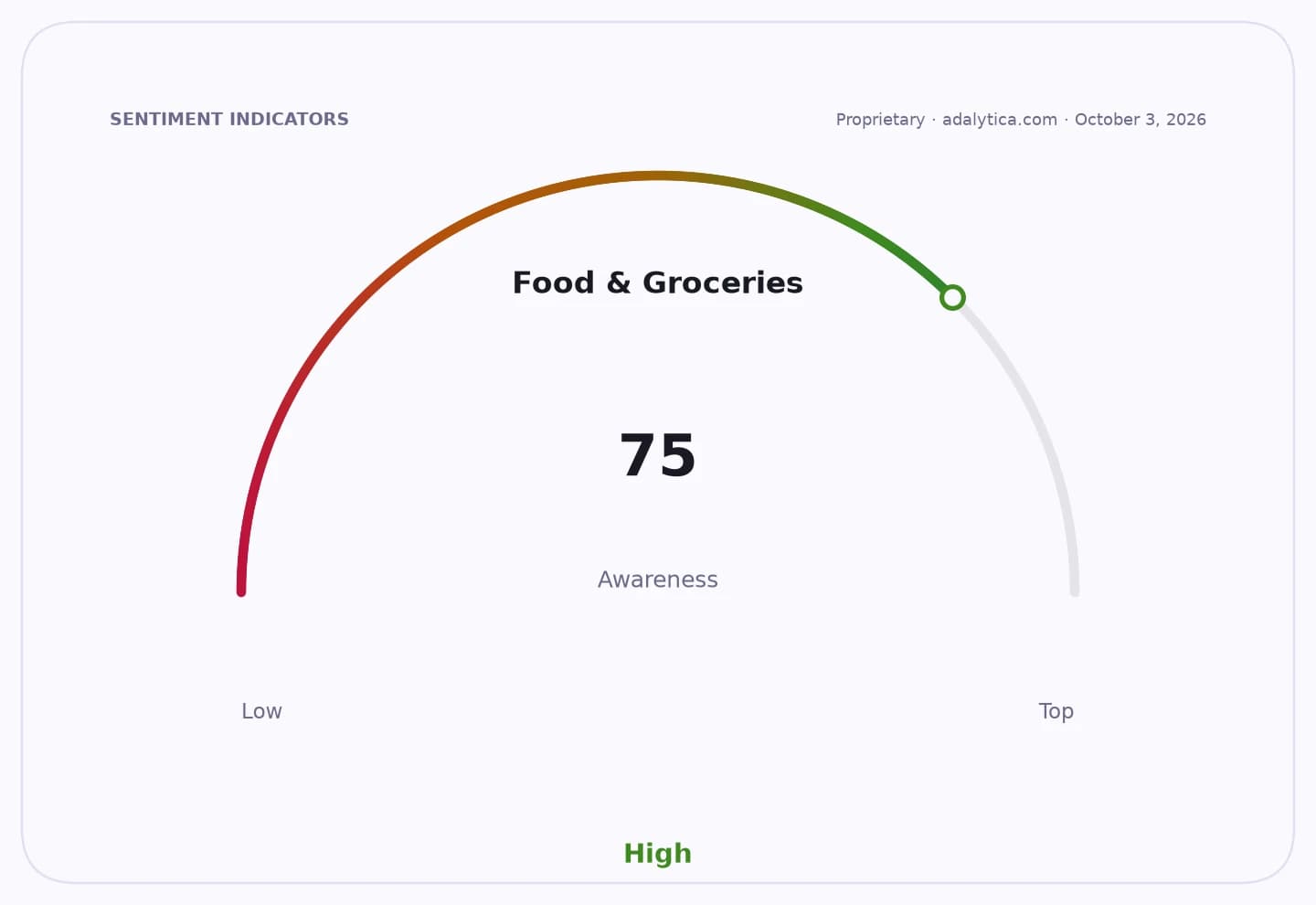
Proprietary indicators from Adalytica.com point to that strain. Food and grocery spending sentiment fell to 4, an “Extreme Fear” reading, down 89 points over seven days. Broader consumer spending sentiment dropped to 17, classified as “Fear.” CPI sentiment was neutral at 50, but awareness remained subdued. Those gauges suggest the currency move is landing in an economy where households are already cautious about everyday spending.
Investors are watching for two risks: intervention and earnings dispersion. The yen’s decline can boost the translated overseas profits of Japanese exporters, helping explain why the Nikkei has been able to rise even as the currency weakens. But the same move is a cost shock for import-heavy companies, food retailers and domestic consumer businesses.
Shares of Aeon Co. and Seven & i Holdings show the mixed market read-through. Aeon closed at 1,407.5 yen on July 3 after rebounding from 1,298 yen two sessions earlier, but remained well below its 200-day moving average of 1,984 yen, a conventional technical sign of longer-term weakness. Seven & i rose to 2,024 yen, moving closer to its 200-day moving average of 2,045 yen. The rebound suggests investors are distinguishing between oversold domestic names and companies better able to defend margins, but neither stock is immune to a weaker yen’s impact on procurement costs.
Currency traders are also alert to stretched positioning. The dollar-yen pair traded above its upper Bollinger Band earlier in the week, while the 14-day relative strength index reached 90.5 on July 2 before easing to 67.3 on July 3. Those conventional technical indicators point to an overextended move, though they do not by themselves reverse the fundamental pressure from U.S. yields.
For Tokyo, the policy problem is that verbal warnings may have limited force unless backed by credible action. Intervention can produce sharp yen rallies, but unless the underlying yield gap narrows, traders often use those moves to rebuild dollar positions. That makes U.S. inflation, labor-market data and Treasury yields as important to Japan’s currency outlook as domestic policy statements.
The next phase will turn on whether Japanese officials move from warning to action and whether U.S. yields keep the dollar carry trade alive. Until that changes, the weak yen remains both a support for parts of Japan’s equity market and a growing tax on households, retailers and import-dependent businesses.
| Entity | Gains | Losses |
|---|---|---|
| Japanese exporters | ▲Higher overseas earnings | ▼Intervention volatility |
| Import-dependent retailers | ▲Nominal sales support | ▼Margin pressure |
| Japanese households | ▲Limited wage offset | ▼Imported inflation |
| Dollar carry traders | ▲Yield advantage | ▼Intervention risk |