Wheat prices rise on Black Sea supply risks
Wheat prices are being driven by geopolitics, logistics and policy more than by any single tax rate, with futures firming as traders weigh disruption risks in the Black Sea and wider pressure on global grain flows.
That is the key market takeaway behind Russia’s Agriculture Minister Oksana Lut’s comment that the price of wheat does not depend only on the VAT rate. Even where taxes influence farm economics, they are only one part of a broader pricing structure shaped by export access, freight costs, harvest timing, weather and government intervention. For investors, the message is that wheat remains a supply-sensitive market in which policy headlines can move prices, but shipping routes and production risks still matter more.
The latest move in U.S.-listed wheat exposure points to that underlying tension. The Teucrium Wheat Fund, WEAT, closed at $24.36 on Aug. 12, up from $23.71 a day earlier and well above its 50-day moving average of $23.44. Volume jumped to 796,545 shares, more than double the prior session, suggesting renewed demand after a pullback from the July peak near $26. The fund remains below that high, but the bounce leaves it above both its 50-day and 200-day moving averages, a sign the broader uptrend has not broken even after a sharp mid-summer retracement.
The corn market is showing a similar pattern of resilience, though with a less dramatic advance. CORN, the Teucrium Corn Fund, rose to $18.20 on Aug. 12 from $17.57 the previous day, recovering from recent weakness and moving back above its 50-day average of $17.41. That rebound matters because grain prices often move together when investors are reassessing global crop supply, shipping risk and import demand. If wheat keeps firming while corn stabilizes, it would reinforce the view that agricultural markets are being underpinned less by a single weather event than by a broader risk premium across staple crops.
The economic significance is straightforward: wheat is a politically sensitive food input, so even modest supply shocks can flow through to flour, bread and feed costs, especially in import-dependent economies. When geopolitical tension threatens the Black Sea — one of the world’s most important grain export corridors — the market tends to price in the possibility of tighter available supply even before shipments are physically interrupted. That makes the pricing of wheat more about expected scarcity than current inventory alone.
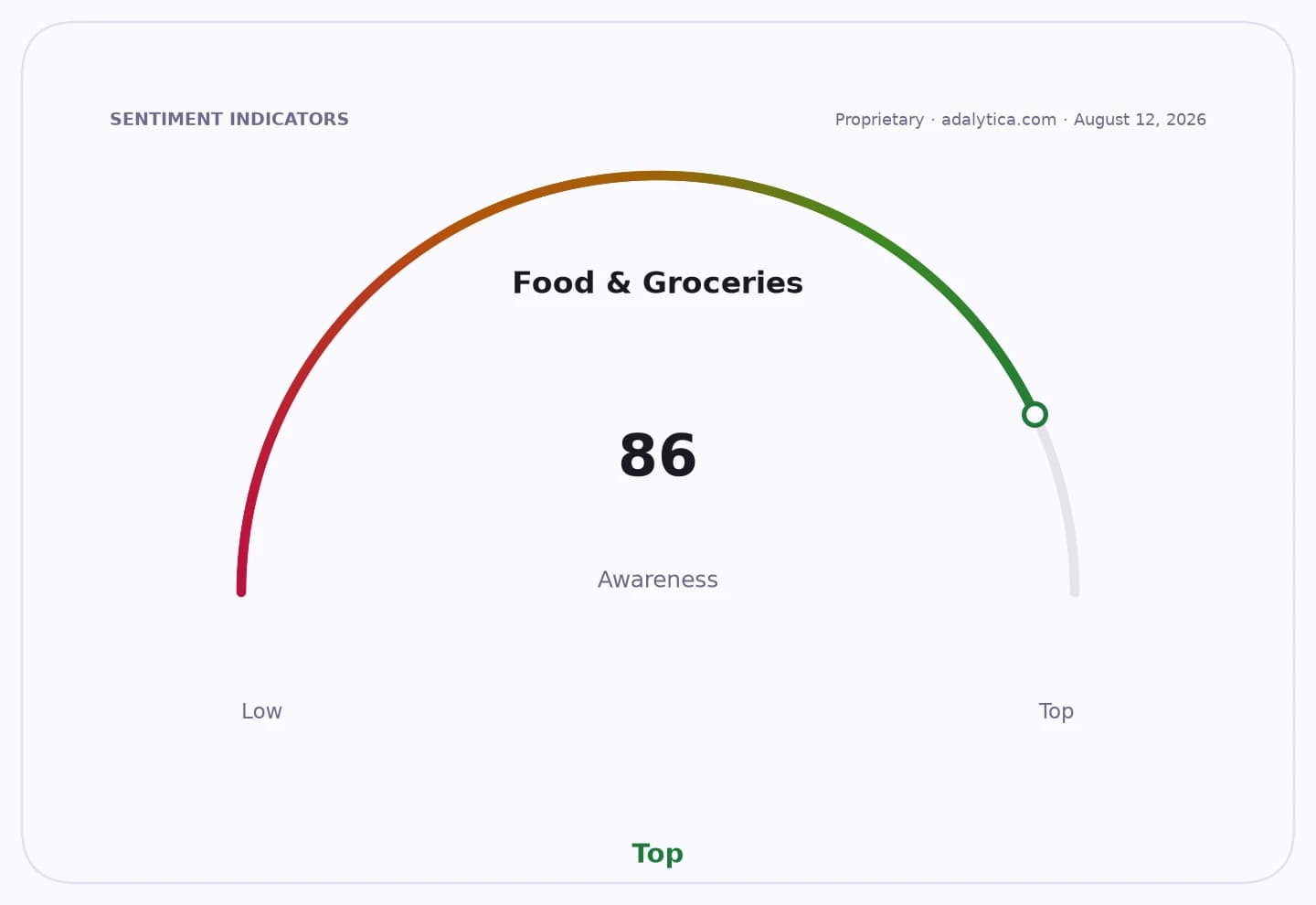
Sentiment in food and grocery spending also reflects the same pressure. Adalytica’s Food and Grocery Spending Sentiment gauge stood at 93, labeled “Extreme Greed,” after jumping 57 points over seven days. While that is not a direct wheat indicator, it suggests consumers and retailers are still absorbing elevated food-cost expectations, which can keep policymakers alert to inflation spillovers and preserve a floor under agricultural prices.
For investors, the bull case is that Black Sea disruptions, delayed harvests and policy measures in producer countries continue to constrain supply, while demand for staple grains remains inelastic. The bear case is that wheat’s recent rally has already pulled in a significant risk premium; if export routes stay open and harvest data improve, futures could give back gains quickly, particularly with technical momentum still vulnerable after the recent drop in RSI readings on WEAT.
The next catalyst is likely to be fresh evidence on shipments and official crop outlooks. Until then, wheat is likely to trade as a macro-hedge on global food security rather than as a simple response to taxes, and that keeps both physical traders and ETF investors focused on geopolitics, not just farm policy.
| Entity | Gains | Losses |
|---|---|---|
| Wheat producers | ▲Higher selling prices | ▼Consumers and millers |
| Exporting countries with open routes | ▲Stronger trade flows | ▼Import-dependent buyers |
| WEAT holders | ▲Price rebound potential | ▼Short-term momentum traders |
| Food retailers and households | ▲Higher-cost pass-through protection unlikely | ▼Elevated input costs |