Wheat Surges, Corn Hits Record on Black Sea Risk

Wheat surged to its daily limit and corn climbed to a lifetime high as renewed disruption around the Black Sea tightened one of the world’s most important grain corridors and forced traders to price in a bigger risk of prolonged supply losses.
The move matters because grain markets are no longer reacting only to weather and crop size. They are increasingly pricing geopolitics, with Ukrainian drone strikes on Russian infrastructure and port interruptions raising the odds that export bottlenecks persist into the Northern Hemisphere harvest period. That keeps a floor under global food inflation and raises hedging costs for food makers, livestock producers and import-dependent governments.

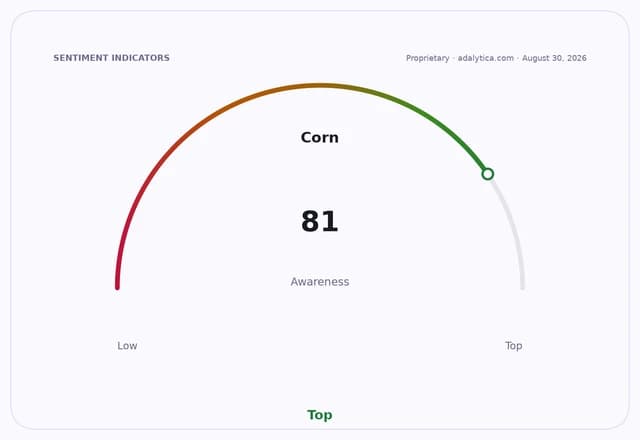
Corn’s advance to a record reflects a market already stretched by tight inventories and heavy speculative positioning, while wheat’s limit-up move shows how quickly liquidity can vanish when Black Sea supply is questioned. Adalytica’s Corn Fear & Greed Index had only just rebounded to neutral from extreme fear, but the jump in prices suggests traders remain highly sensitive to fresh headlines and logistical risk. The technical picture is equally overheated: corn is trading well above its 50-day and 200-day moving averages, with RSI readings deep in overbought territory, a sign the rally may be running ahead of fundamentals even as momentum remains strong.
The Black Sea remains the dominant price-setter for wheat and a critical route for corn and oilseed exports. Russia has tried to keep shipments moving despite port shutdowns, while India’s decision to lift its wheat export ban adds some relief. But that supply help is unlikely to offset the broader disruption if Black Sea export channels stay impaired. The result is a market where every new report on strikes, port access or shipping insurance can move prices sharply, as seen in the latest wheat limit-up session and corn’s push to new highs.
For investors, the implications cut across agriculture, food production and inflation-sensitive assets. Grain merchants and exporters can benefit from wider trading margins and volatility, while processors, livestock feeders and packaged-food companies face higher input costs and less pricing flexibility. The spike also complicates the macro backdrop: if grain prices stay elevated, headline inflation may prove stickier even as other commodity markets, including crude, remain volatile.
The key question now is whether supply responses can catch up with the geopolitical risk premium. If Black Sea flows normalize, wheat and corn could give back part of the rally quickly. If they do not, the current move may be less a spike than the next leg in a broader inflationary shock for global food markets.
| Entity | Gains | Losses |
|---|---|---|
| Grain exporters/traders | ▲Wider margins, volatility | ▼Logistics and execution risk |
| Food makers/livestock feeders | ▲Potential later relief from imports | ▼Higher feed and ingredient costs |
| Importers/purchasing governments | ▲Indian supply adds backup | ▼Black Sea disruption, higher bills |
| Longs in wheat/corn | ▲Momentum and scarce supply | ▼Sharp reversal if routes reopen |