Wheat Prices Rise on Drought and Black Sea Disruption
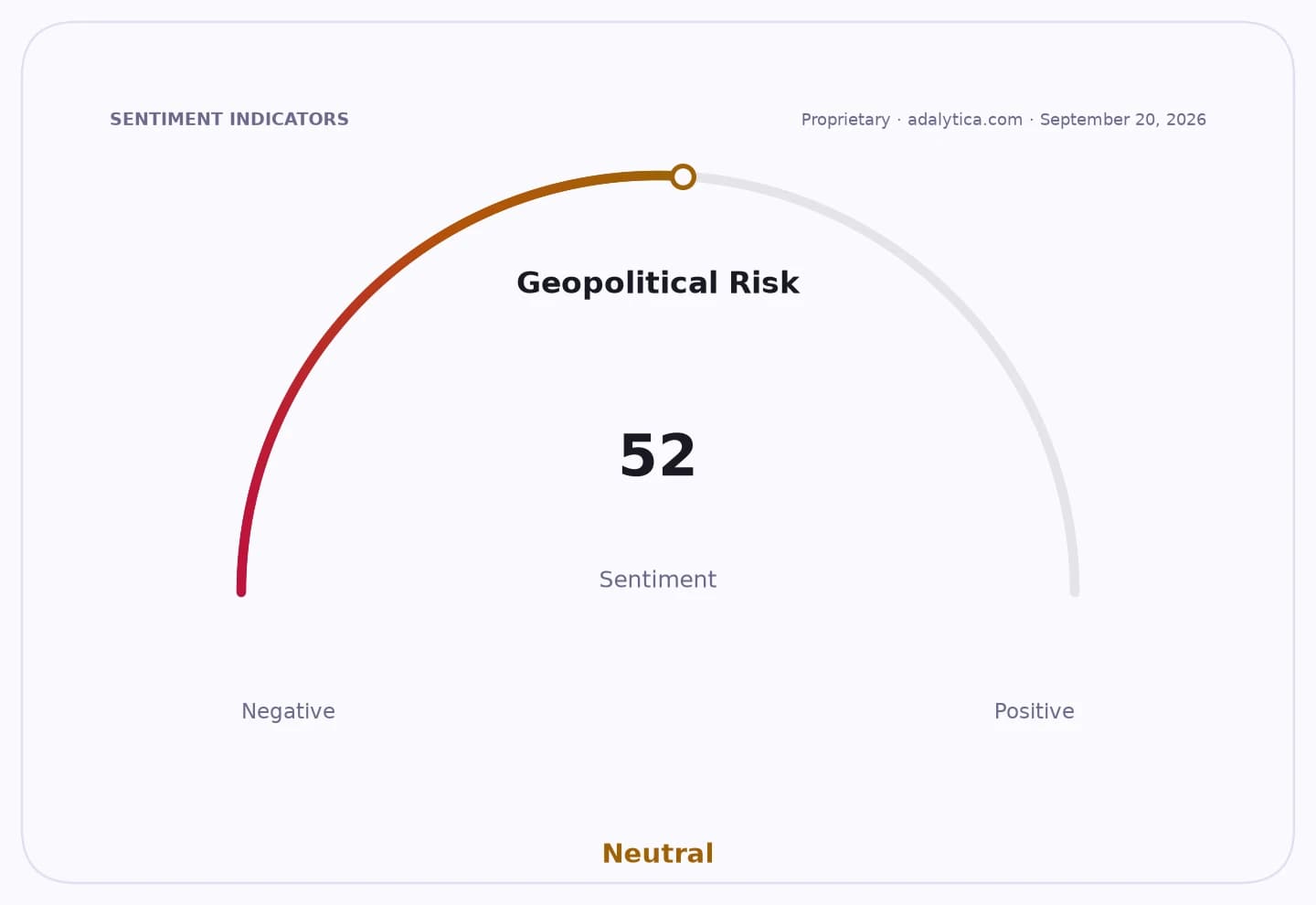
Wheat’s rally is offering US growers higher prices, but not yet the kind of windfall that can offset drought, record fuel costs and the geopolitical shocks distorting global grain flows.
For farmers in the southern Great Plains, the problem is less about market demand than whether they can actually produce enough bushels to sell. Futures for bread-type wheat are up 39%, and wheat prices are at a three-year high, yet Kansas grower Merrill Nielsen says erratic weather already wiped out his spring crop and has left him unsure how much he will plant this winter. In much of the region, drought has been worsening just as a super El Niño raises the stakes for another volatile season.
That matters because wheat is now being priced by scarcity and risk, not just by end-user demand. Higher global grain prices feed straight through to flour, bread and restaurant costs, adding to a broader food inflation backdrop that remains elevated even as some other commodity prices ease. The US labor market and consumer economy may be absorbing energy and food shocks better than in past cycles, but food staples still carry outsized political and inflation consequences.
The supply side looks increasingly fragile. Droughts in the US and Europe have trimmed harvests, while wheat supplies in key exporting countries are at their second-lowest levels on record, according to market participants cited in the report. Australia has cut wheat plantings 12% as dryness and fertilizer costs bite. In the Black Sea, Russian attacks on port facilities have disrupted shipments at a time when that corridor handles roughly a third of global wheat trade. Even if some grain is rerouted, strategists say only 35% to 50% may get out in the near term, and at higher transport costs.
That combination is supporting prices, but it is not automatically improving farm profitability. Diesel costs are at record highs, fertilizer remains expensive and harvested acreage in the US has shrunk to the lowest level since 1877 as farmers favor corn and soybeans. Mark Welch of Texas A&M said if yields are not at least average, breakeven costs rise quickly. The result is a familiar but harsh agricultural equation: higher futures can help, but only if weather and input costs cooperate.
The market is already reflecting that tension. The Teucrium Wheat Fund, a proxy for wheat exposure, recently traded at $25.86, well above the 50-day moving average of $25.41 and the 200-day average of $22.95, although its RSI had fallen to 28.9 from overbought levels earlier in the summer. That points to a market still underpinned by supply fear, but vulnerable to pullbacks if Black Sea exports find alternate routes or if US weather improves.
There is a bullish case for farmers and wheat bulls: a tighter global balance sheet, possible acreage expansion of about 10% in the US this winter, and the chance that El Niño brings wetter conditions to the southern Great Plains. During the last major El Niño in 2015-16, the US posted a record winter wheat yield, Welch said. But there is also a bearish case for producers: one good price year may not reverse a structural decline in US wheat acreage, and any rally that is not matched by yield gains can still leave growers below breakeven.
For investors, the story is less about a single weather event than about a multi-quarter squeeze on the grain system. Wheat-linked assets, grain merchants and food makers are all exposed to the same mix of climate volatility, Black Sea disruption and input inflation. Until either the weather or the war changes materially, wheat is likely to remain a market where volatility is the main crop.
| Entity | Gains | Losses |
|---|---|---|
| Wheat bulls | ▲Higher prices | ▼Volatility risk |
| US wheat farmers | ▲Stronger futures | ▼Drought, fuel costs |
| Grain merchants | ▲Trading opportunities | ▼Supply disruption |
| Consumers | ▲— | ▼Higher bread and food prices |