Wistron Shares Rise to T$191 on AI Demand
Wistron has turned an early wager on Nvidia into one of the AI boom’s clearest payoffs, with the Taiwanese contract manufacturer’s shares more than doubling this year as investors keep rewarding the firms that build the physical backbone of artificial intelligence.
That matters because the AI story is no longer just about software hype or model launches. It is about the enormous capex required to build data centers, server racks, networking gear and the semiconductors that sit at the center of them. Wistron sits in the sweet spot of that spending cycle, and the market is treating it like a company with years of growth still ahead.
Wistron’s stock closed at T$191.0 on Aug. 11, up from T$136.98 in early November and T$160 just two weeks earlier, a move that has left the shares well above both the 50-day and 200-day moving averages. The 50-day average has climbed to T$161.35 and the 200-day to T$141.07, while RSI readings around 65 show strong momentum without yet pointing to a full reversal in the trend.
For investors, that matters because the market is increasingly pricing AI infrastructure winners as long-duration compounders rather than cyclical electronics assemblers. Wistron is benefiting from the same global pull that has lifted Nvidia, TSMC and other supply-chain names as Wall Street pours money into AI hardware and the companies financing it lean more heavily on debt to keep up with demand.
Nvidia’s own shares have rebounded to $217.50, not far from recent highs, while Taiwan Semiconductor Manufacturing Co. is holding near T$422.06 after an even steeper climb earlier this summer. The message from the market is clear: the AI buildout is still gathering steam, and the companies that make the chips, servers and systems are still seeing the best demand.
The broader macro backdrop helps. Industrial production in the U.S. is still grinding higher, with the latest reading at 102.6395 in June and a forecast for 102.9436 in July, while the 10-year Treasury yield is sitting around 4.72%. That combination of steady output and still-elevated financing costs is exactly why investors are favoring businesses tied to real spending and real cash flow, not distant promises.
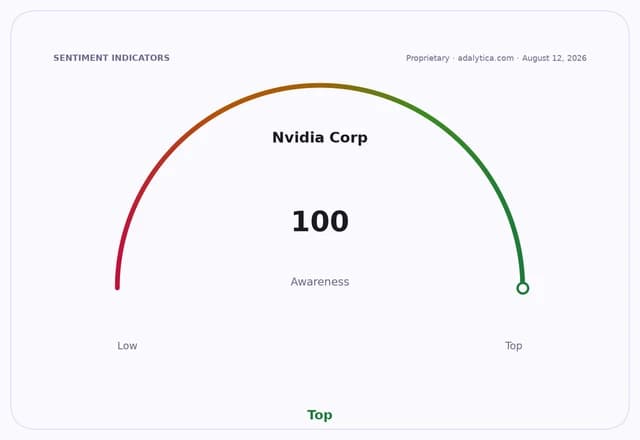
Wistron’s appeal is that it is not trying to invent the AI future from scratch. It is helping build it. Nvidia’s early choice to deepen relationships across the hardware supply chain gave partners like Wistron a front-row seat to a spending wave that shows few signs of ending soon, especially as cloud giants, chipmakers and data-center builders keep expanding capacity.
There are risks, of course. AI demand can cool, customer concentration can cut both ways, and Taiwan’s contract manufacturers always live with geopolitical overhang. But for long-term investors, the key question is whether AI infrastructure spending will be a one-year trade or a multi-year buildout. Right now, the evidence points to the latter.
If that remains true, Wistron looks less like a forgotten hardware vendor and more like one of the market’s quietest beneficiaries of a historic technology cycle — a name worth watching, and for patient investors, worth keeping on the list.
| Entity | Gains | Losses |
|---|---|---|
| Wistron | ▲AI server demand | ▼Low-margin legacy business |
| Nvidia | ▲More manufacturing capacity | ▼None material |
| TSMC | ▲Chip orders from AI buildout | ▼Slower non-AI demand |
| AI skeptics | ▲Fewer arguments on spending | ▼Missed the rally |