Yahoo comeback vs Alphabet and Microsoft AI spending
Yahoo is trying to turn itself back into a meaningful consumer internet brand, but the real story for investors is that its comeback will be judged in the shadow of AI spending and search competition dominated by Alphabet and Microsoft.
That matters because the internet veteran is no longer trying to win by being the default homepage of the web. It is trying to reclaim attention from a generation that grew up with Google, social media and AI assistants, which means Yahoo’s turnaround has to be powered by product relevance, not nostalgia. In a market where distribution is increasingly owned by platforms with massive data, cloud infrastructure and AI budgets, that is a brutally high bar.
For investors, the key question is not whether Yahoo can reawaken its brand. It is whether the AI wave is creating enough room for challenger experiences to matter again. The answer is likely yes — but only for companies that can attach themselves to the infrastructure and usage layer around AI rather than try to outspend the hyperscalers. That is why the better trade still sits with the toll roads of the AI economy: Alphabet, Microsoft and the broader compute stack, not a single consumer brand trying to stage a sentimental revival.
The price action in the megacap tech names underscores that divide. Alphabet has climbed to 348.06, above its 200-day moving average near 333.12, while Microsoft is at 487.31, also above its 200-day average near 429.32. Both stocks remain structurally stronger than the average internet turnaround story, even if their momentum has cooled from earlier peaks. Microsoft’s recent technical backdrop shows the stock well above its long-term trend but with its RSI slipping into the mid-40s, suggesting consolidation rather than collapse. Alphabet’s RSI is deeper in oversold territory, but its shares are still holding above long-term support.
That is the market telling you where the real AI exposure still resides. Microsoft’s Azure and AI tools remain central to enterprise adoption, while Alphabet continues to defend the search franchise that powers its cash machine and funds its AI investments. Yahoo, by contrast, is fighting for relevance in a market where users increasingly expect answers, recommendations and workflows to be embedded in AI-native interfaces. A comeback is possible, but it is far more likely to be selective and incremental than explosive.
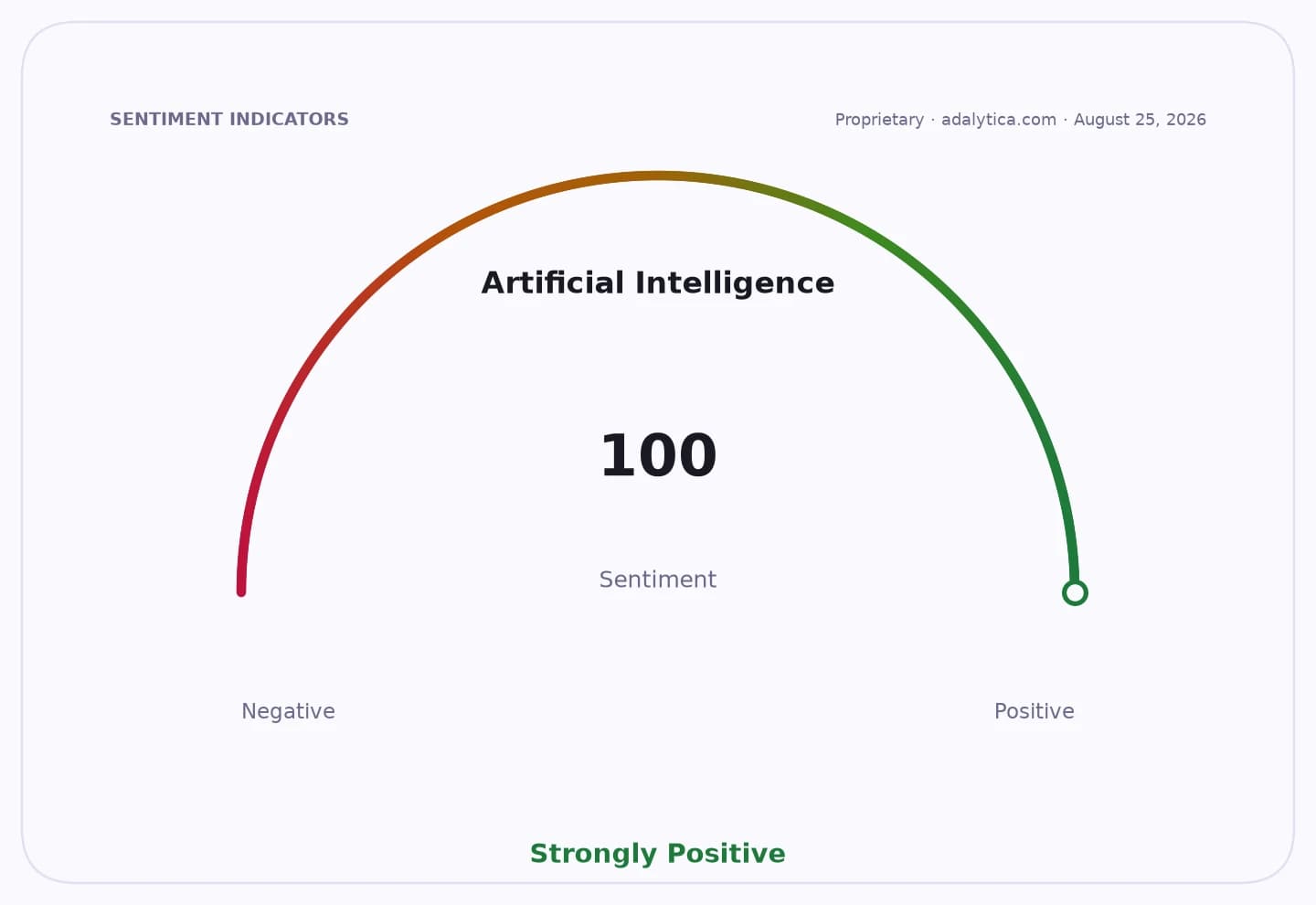
The broader backdrop also favors the infrastructure winners. Adalytica’s AI sentiment gauge shows “Extreme Greed” at 100, even as awareness remains “Extreme Fear” at 4, a combination that says enthusiasm is running ahead of broad public understanding. That is usually the kind of setup that rewards the platform owners and the picks-and-shovels suppliers first, because they capture the spend before the consumer layer fully resets.
In other words, Yahoo’s AI push is a reminder that the internet brand cycle is not dead — it has just become much harder to monetize without owning distribution, data or compute. I believe the market underestimates how lopsided this next phase will be. The upside still belongs to the companies building and powering AI, while the legacy consumer brands trying to buy back mindshare will need a lot more than a comeback story to close the gap.
For investors, the actionable takeaway is straightforward: treat Yahoo’s revival as a proof point for the next internet cycle, but position capital in the AI infrastructure, search and cloud leaders that stand to benefit if a new generation of users actually does return to the web through AI.
| Entity | Gains | Losses |
|---|---|---|
| Yahoo | ▲Brand relevance | ▼Legacy baggage |
| Alphabet | ▲Search dominance | ▼Complacency risk |
| Microsoft | ▲AI adoption | ▼High capex burden |
| Legacy portals | ▲Niche traffic | ▼User attention |