Yen intervention lifts FXY to 57.63 on July 31
Japan’s suspected yen-buying intervention has rattled currency markets just as the Bank of Japan prepares to set policy, raising the odds of a sharper squeeze on the crowded yen carry trade and forcing investors to reassess how much room officials really have to tolerate weakness in the currency.
The move matters because intervention at this point is not just a one-off defense of the yen; it is a signal that policymakers may be trying to slow speculative positioning before the BOJ delivers its decision. That can alter short-term funding dynamics across global markets, where the yen has been widely used as a cheap source of borrowing for higher-yielding assets. If traders conclude the BOJ will stay cautious while the authorities step in to cap losses in the currency, the immediate effect may be to encourage renewed yen shorts after any spike-driven pullback.
The market reaction suggests the pressure is real. The yen surged sharply, briefly reaching around 158 per dollar, while the yen-tracking FXY ETF jumped to 57.63 on July 31 from 56.13 a day earlier, with volume on the prior session rising to more than 1.8 million shares. The fund also remains below its 200-day moving average, even after the recent bounce, underscoring that the broader trend still points to a weaker yen despite the short-term squeeze.
Technical indicators on FXY show the rebound has improved momentum but not yet reversed the bigger picture. The ETF’s relative strength index climbed to 73.3 on July 31, a level that typically indicates an overbought condition, while the MACD has turned closer to neutral from bearish territory. That combination suggests the intervention-driven move may be vulnerable to profit-taking unless it is reinforced by a more hawkish BOJ or a decisive shift in US rates.
The macro backdrop remains central. US 10-year Treasury yields were around 4.67% on July 29 before easing to a forecast 4.618% on July 30, while 2-year yields were near 4.22% ahead of the same session. Even after the pullback, those yields remain high enough to preserve the dollar’s advantage against the yen, especially if the BOJ keeps policy settings loose. That is why a brief intervention, without a follow-through policy change, can cut against officials’ goal by creating a better entry point for traders betting the carry trade survives.
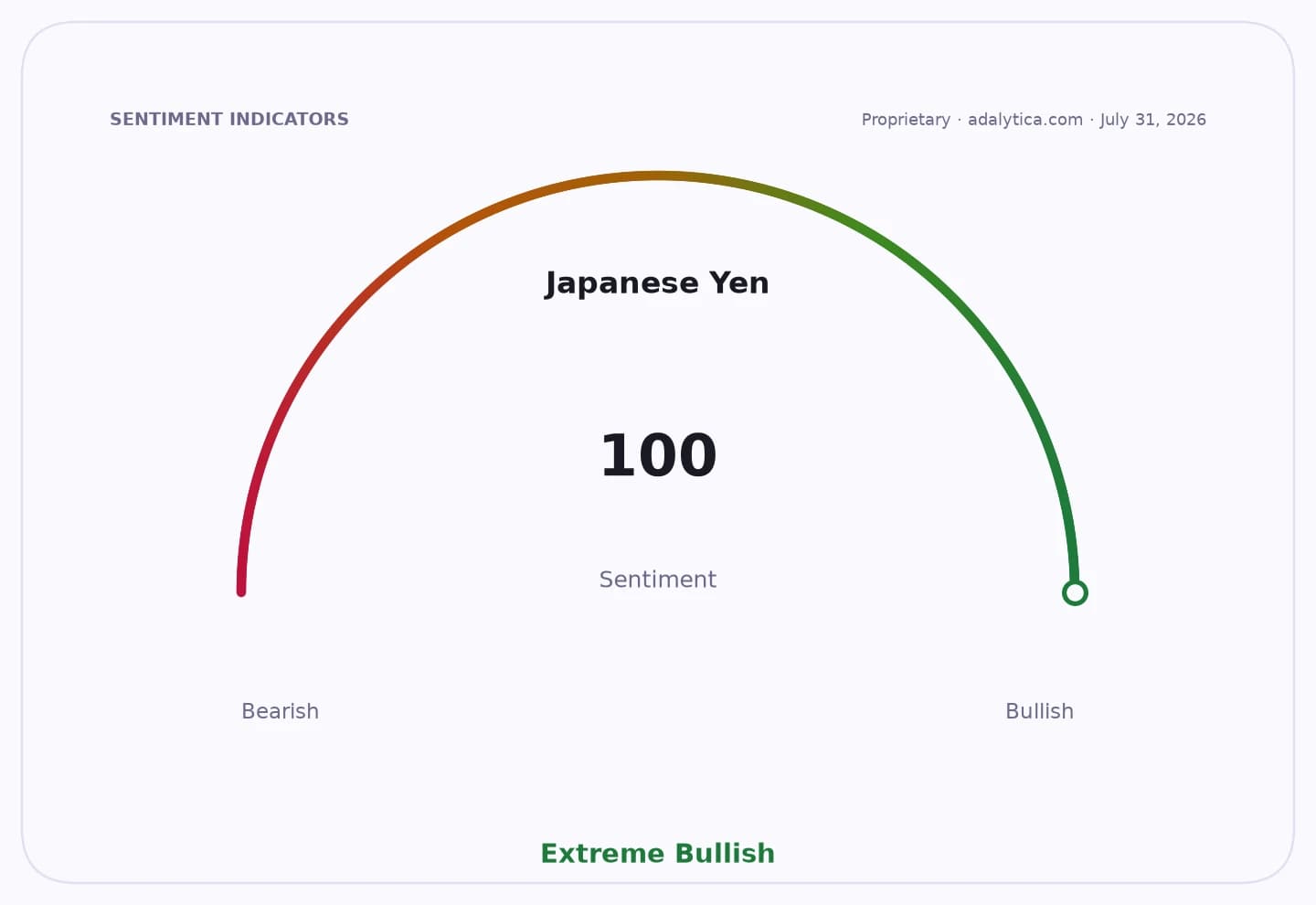
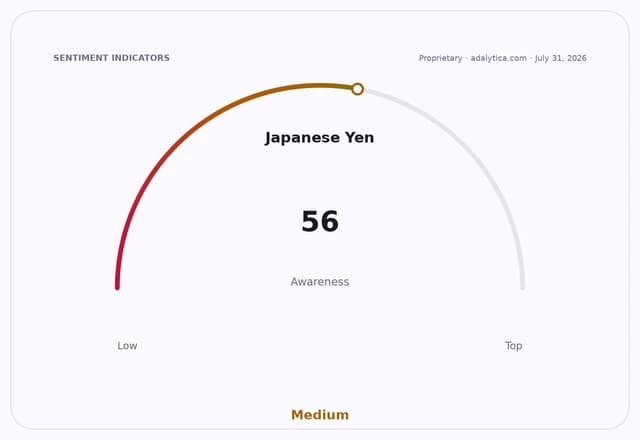
Adalytica’s Japanese yen trade signals point to the same tension. The snapshot shows sentiment at 100, described as “Extreme Greed,” with the 30-day change up 88%. In practical terms, that implies speculative interest in the yen has become stretched even as the currency’s broader narrative remains fragile. For investors, that can mean violent short-covering rallies followed by renewed pressure if policy expectations stay unchanged.
The key question now is whether the BOJ uses its meeting to validate the intervention with even a modestly tighter stance, or whether policymakers leave the market to infer that the yen is still a funding currency of choice. In the first case, the yen could stage a more durable recovery and force a broader repricing of global carry trades. In the second, the current rally risks becoming just another pause in a larger downtrend.
| Entity | Gains | Losses |
|---|---|---|
| Japanese authorities | ▲Short-term currency stability | ▼Market credibility if BOJ stays dovish |
| Yen bulls | ▲Sharp short-covering rally | ▼If intervention fades without policy follow-through |
| Carry trade borrowers | ▲Continued funding access if yen weakens again | ▼Rising squeeze risk during intervention spikes |
| US dollar holders | ▲Higher yields support the dollar | ▼If BOJ turns more hawkish than expected |