Yen Slides Toward 157 as BOJ Meets Fed

The yen’s renewed slide toward 157 per dollar is testing Japan’s resolve to defend currency stability just as the Bank of Japan lifts rates to a 31-year high and the Federal Reserve reinforces dollar strength.
Japan said it would keep working with the U.S. Treasury to maintain “orderly” currency moves after the yen weakened again following Wednesday’s Fed rate increase, underscoring how quickly the exchange rate can move when U.S. policy and Japanese tightening pull in opposite directions. Chief Cabinet Secretary Minoru Kihara said Tokyo’s stance had “absolutely not changed” since the rare joint yen-buying intervention at the end of July, when Japan and the U.S. pushed the currency away from a 40-year low near 164.
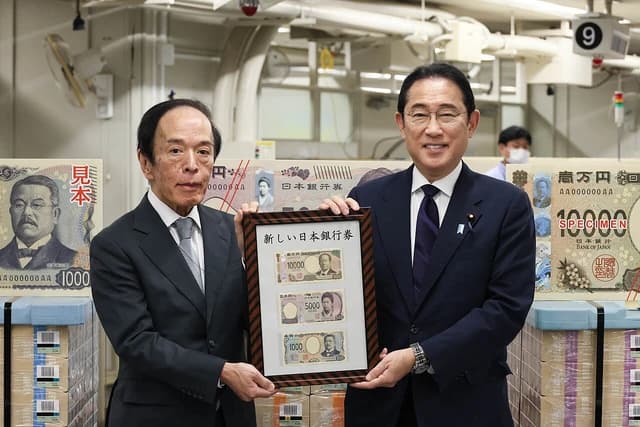
The message matters because the yen is not just another G10 currency: it is a key channel for imported inflation, household purchasing power and corporate margins in one of the world’s largest economies. A weaker yen raises the cost of food, energy and other imports, complicating the government’s effort to secure stable inflation around the BOJ’s 2% target without undermining growth. It also keeps pressure on policymakers to show they are willing to act if volatility becomes one-way and disorderly.
The market reaction shows how fragile the currency remains. The yen fell to around 155.50 in Asia on Thursday after the Fed’s move, despite having recently strengthened to a seven-month high of 152.89 on bets the BOJ would tighten faster. In the broader market, the yen exchange-traded fund FXY has retreated to 58.11, below its 50-day moving average of 57.61 and just under its 200-day average of 58.01, while RSI readings near 57.9 point to a market that is no longer deeply oversold but is still far from a strong bullish reversal. USD/JPY, meanwhile, climbed back to 157.8, leaving the pair near the upper end of its recent range.
That leaves Friday’s BOJ decision as the next major catalyst. The central bank is widely expected to raise rates to 1.25%, its highest in 31 years, but analysts say the move alone may not support the currency unless Governor Kazuo Ueda signals a faster pace of future tightening. The political backdrop matters too: Finance Minister Satsuki Katayama said Japan remains committed to countering excessive volatility, while both she and Kihara were reappointed in a cabinet reshuffle, suggesting continuity in Tokyo’s currency strategy.
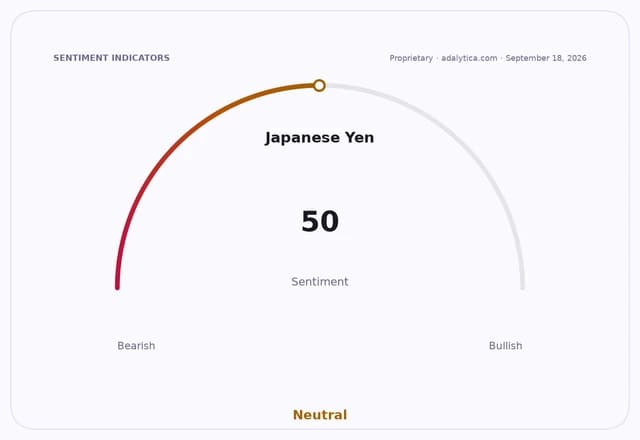
For investors, the divide is clear. A more hawkish BOJ path would support the yen, ease imported inflation and pressure Japanese exporters’ earnings translation. A slower or cautious stance would leave the currency vulnerable to further dollar strength, especially if the Fed keeps policy tighter for longer. Adalytica’s U.S. dollar trade signal is already at extreme greed, while its yen signal remains neutral, reflecting a market that is leaning toward continued dollar dominance but not yet convinced the yen has a durable floor.
The next test is whether Tokyo’s talk of orderly markets is backed by another intervention if USD/JPY pushes higher again. For now, the story is not simply that the yen is weak, but that policy divergence between Washington and Tokyo is keeping Japan on the defensive.
| Entity | Gains | Losses |
|---|---|---|
| U.S. dollar | ▲Supported by Fed tightening | ▼Faces intervention risk |
| Japanese exporters | ▲Better overseas earnings translation | ▼More policy uncertainty |
| Japanese importers/consumers | ▲— | ▼Higher import costs |
| BOJ hawks | ▲Stronger case for faster hikes | ▼Harder to defend yen alone |