YPF Advances Vaca Muerta LNG Export Buildout
YPF is moving to lock in the infrastructure that could turn Vaca Muerta from a shale play into a hard-currency export engine, a shift that matters far beyond one company’s capital plan.
That is the economic prize Argentina has been chasing: more gas sold abroad, less dependence on imported fuel, and a new source of foreign exchange for an economy that has spent years starved of dollars. For investors, the significance is even bigger. If YPF can execute on the plant and the associated midstream buildout, the market may be underpricing not just the company’s earnings power, but the entire Argentina energy complex.
YPF said its Vaca Muerta Oil Sur pipeline is on track to reach commercial operation by the end of the fourth quarter, with progress at about 80% as of July, and first oil expected by early 2027. More importantly for the gas story, the company said its Argentina LNG project has brought in Eni and XRG as partners in upstream development across five shale gas blocks, tightening the link between production growth and export capacity.
That is why this story matters now. Vaca Muerta is no longer just about lifting domestic output. It is becoming the backbone of a regional export platform, with YPF positioning itself as the toll road between the shale basin and global markets. The company’s latest filings also show it remains the country’s largest shale producer, producing about 30% of Argentina’s oil and gas, while it pushes to divest conventional assets and concentrate capital where returns are highest.
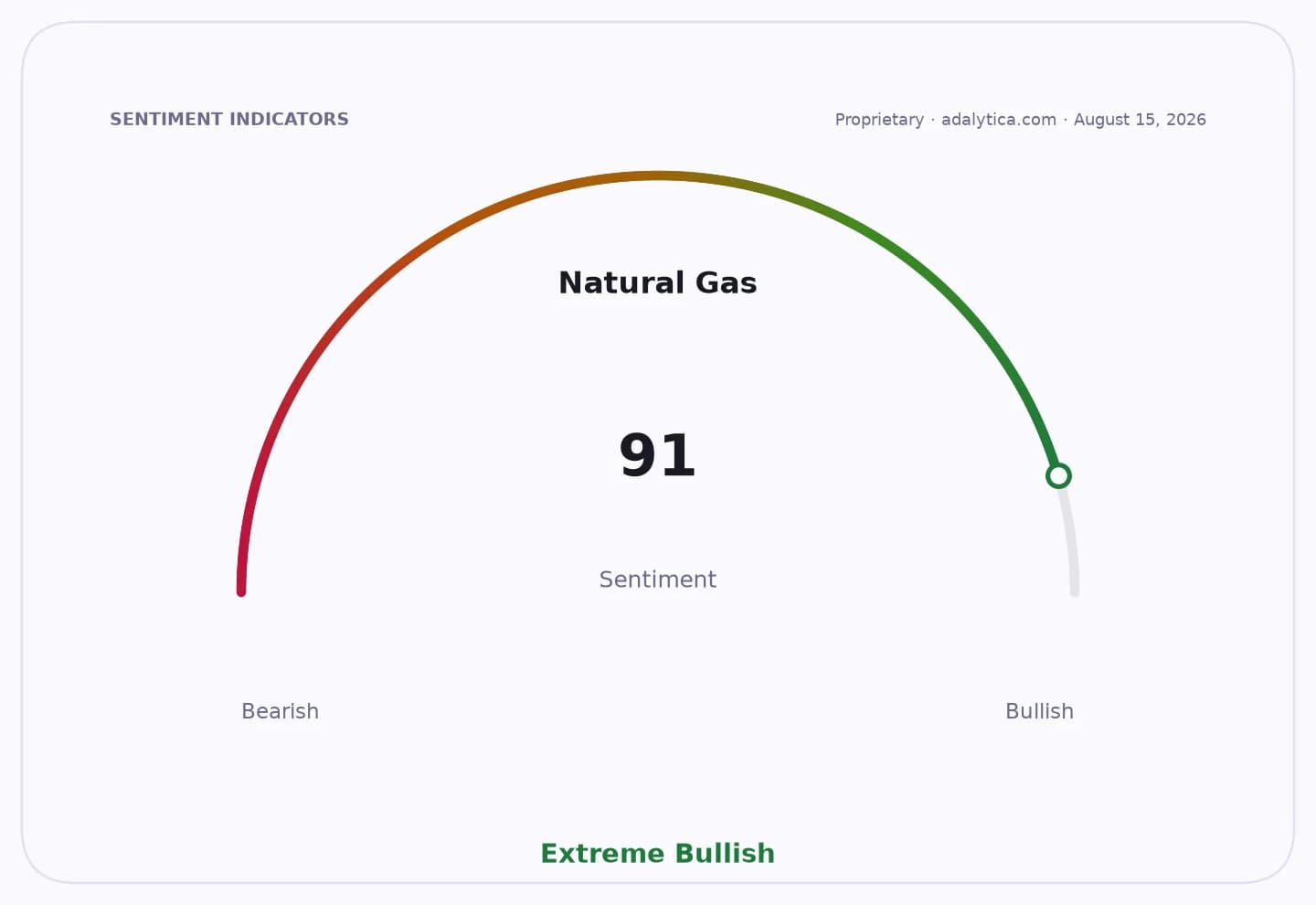
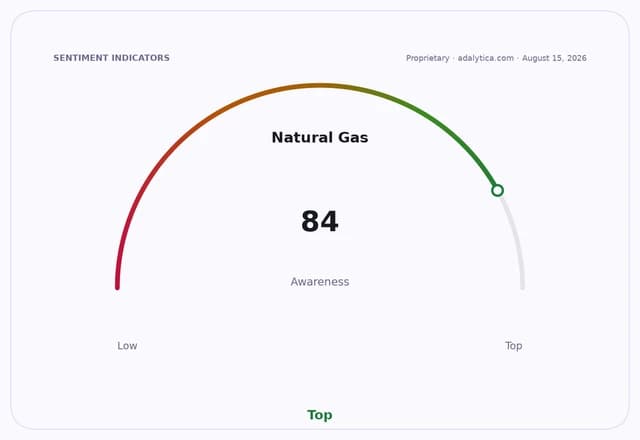
The broader market backdrop reinforces the case. NYMEX natural gas futures have jumped sharply, with Adalytica’s Natural Gas Market Trade Signals showing sentiment at “Extreme Greed” and awareness at “Greed,” reflecting a rapid turn in attention around the fuel. That is not a reason to chase the commodity blindly, but it does underline how quickly pricing power can improve once export infrastructure starts to matter.
YPF’s shares have already responded, rising to about $50.05 in recent trade, far above the 200-day moving average near $42.15 and just above the 50-day moving average around $49.90. The stock is no longer deeply oversold, but the setup still looks constructive: momentum has stabilized, and the market is beginning to recognize the value of an asset base tied to export optionality rather than just domestic demand.
The geopolitical angle only adds to the investable thesis. Washington is pressing Buenos Aires to limit Chinese involvement in Vaca Muerta, while Beijing is pushing back and Argentine lawmakers are drawing the dispute into Congress. That tension matters because energy projects at this scale need foreign capital, engineering, equipment and offtake relationships. If Argentina can keep financing diversified and avoid becoming trapped in a geopolitical standoff, the upside to investment flows could be substantial.
I believe the market is still focused too narrowly on YPF as an oil producer and not enough on what it is becoming: the anchor of an LNG export franchise in a country desperate for dollar generation. If the plant and pipeline milestones stay on track, Vaca Muerta could shift from a national resource story to a multi-year cash-flow story with global relevance.
For investors, the cleanest way to play it is to stay with the infrastructure and export enablers, not just the commodity itself. YPF is the direct lever. The better second-order beneficiaries are contractors, midstream players and broader Argentina exposure through ARGT. If the LNG buildout keeps advancing, the next leg is not just higher production — it is a rerating of Argentina energy assets as export infrastructure, and that is where the asymmetric opportunity sits.
| Entity | Gains | Losses |
|---|---|---|
| YPF | ▲export optionality, higher cash flow | ▼capex execution risk |
| Argentina LNG/Eni/XRG | ▲resource access, long-term supply | ▼geopolitical friction |
| Natural gas bulls | ▲tighter export narrative | ▼volatility from supply swings |
| Domestic fuel importers | ▲cheaper local supply | ▼less relevance over time |