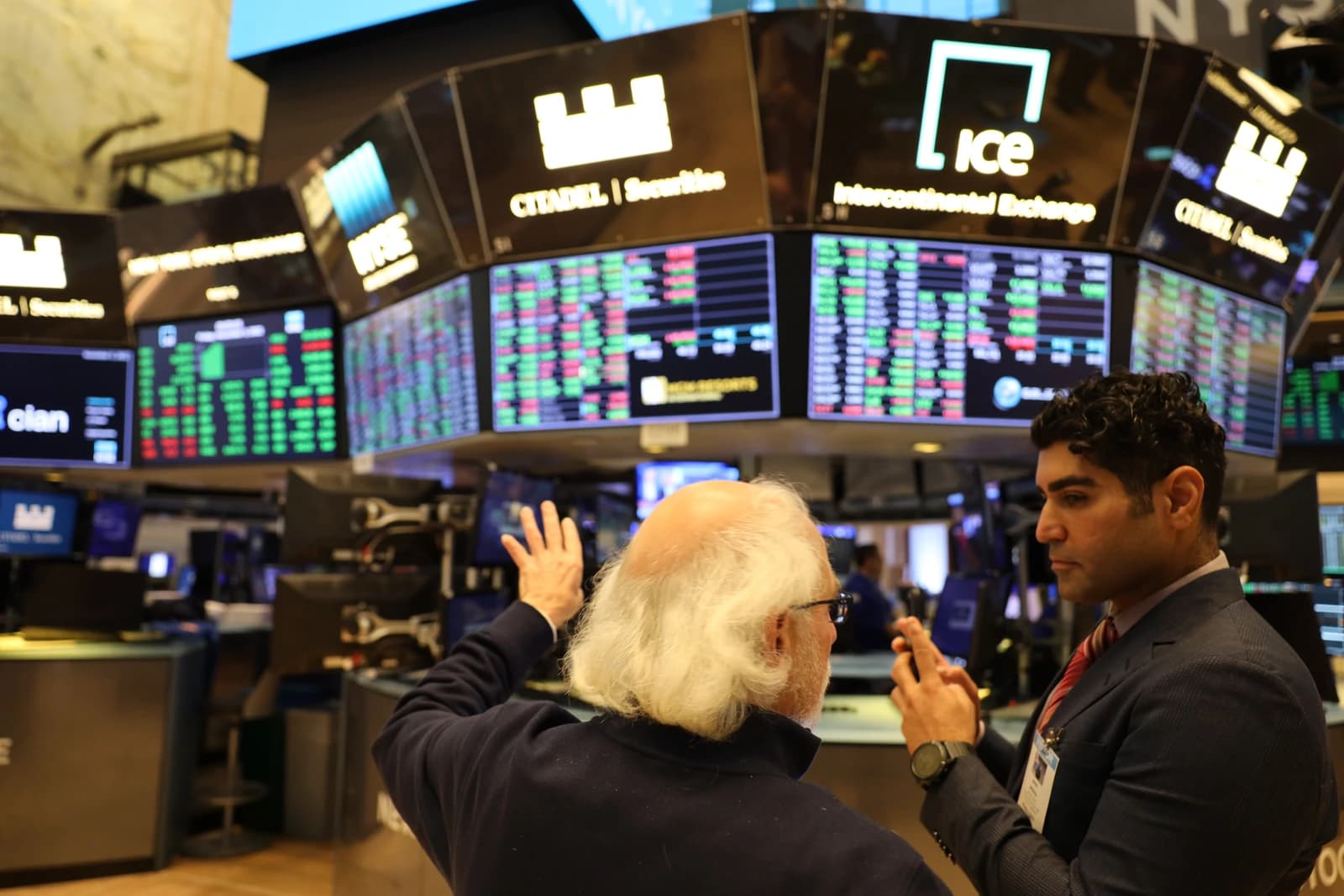
Adobe, Booking Holdings and Uber are all trading well below their recent highs as investors keep punishing stocks tied to slower growth, margin pressure and fears that AI will reshape their business models faster than they can adapt.
Adobe, Booking, Uber Trade Below Recent Highs

The selloff underscores a broader market split: capital is flowing toward companies seen as direct AI beneficiaries, while shares of once-reliable compounders are getting de-rated on the assumption that technological change or a weaker macro backdrop will crimp future earnings power. That matters because it can drag valuations lower even when underlying businesses remain profitable and cash-generative.
Sentiment IndicatorsⓘProprietary · adalytica.com · September 26, 2026
This is a snapshot — live sentiment, awareness and momentum for 130+ markets update continuously in the dashboard.Open AlphaPulse
Adobe has been the clearest casualty. The stock closed at $235.47 on Sept. 25, down from $346.26 on Dec. 5, and now sits below its 50-day moving average of $257.42 and its 200-day moving average of $262.68. Its RSI reading of 29.3 points to deeply oversold conditions, while the price has also slipped toward the lower end of its Bollinger Bands, a sign that selling pressure has been persistent.
The market is worried that generative AI could erode some of Adobe’s creative software moat even as the company spends heavily to defend it. Adobe’s 10-Q also flagged uncertainty around whether new AI solutions will be adopted or monetized, a concern that is now showing up directly in the stock.
Booking Holdings has been hit even harder. The stock fell to $163.95 on Sept. 25 from $203.54 on Dec. 2 and is far below both its 50-day moving average of $190.88 and 200-day average of $183.07. Its RSI of 21.7 signals the shares are oversold, but the market is still treating the travel giant as vulnerable to a softer demand backdrop.
Uber has also been sold despite a stronger long-term growth story. Shares closed at $69.62 on Sept. 25, down from $99.72 on Nov. 3 and below the 50-day average of $73.30 and 200-day average of $75.15. RSI at 25.4 suggests the stock is also in oversold territory, but investors appear unconvinced that recent gains in mobility and delivery can fully offset concerns about competition, regulation and the pace of future autonomous-vehicle disruption.
The divergence fits a broader rotation in which AI-linked names are getting rewarded while traditional software, travel and platform businesses are being judged more harshly. Adalytica’s S&P 500 trade signals show neutral sentiment even as awareness remains elevated, suggesting the market is still hunting for a clear leadership group rather than buying the index indiscriminately.
For investors, the opportunity lies in separating temporary multiple compression from genuine business deterioration. The next test will come from upcoming earnings, guidance and any evidence that these companies can convert AI investments into revenue without sacrificing margins.
| Entity | Gains | Losses |
|---|---|---|
| AI leaders | ▲Higher multiples and fresh inflows | ▼N/A |
| Adobe | ▲Re-rating if AI monetization improves | ▼Valuation compression and moat concerns |
| Booking Holdings | ▲Rebound if travel demand holds up | ▼Macro-sensitive demand worries |
| Uber | ▲Upside from scale and autonomous progress | ▼Fear of disruption and regulation |