Adobe just reminded investors that a business can be thriving and still be punished if the market starts doubting its future. The software maker posted another strong quarter of double-digit revenue growth, record cash generation and fat margins, yet its shares slumped after management’s outlook fell short of the bar Wall Street had set — a bar increasingly shaped by fear that artificial intelligence could erode Adobe’s pricing power and customer base.
Adobe Earnings Beat, Shares Fall on AI Worries
That reaction matters because Adobe is not showing signs of a business in distress. Revenue rose 13% to $6.76 billion in the fiscal third quarter, net income reached $1.83 billion and adjusted earnings came in at $6.13 a share. Operating margin held at 44%, and operating cash flow hit a record $2.52 billion. Annual recurring revenue climbed 10.2% to $27.5 billion, while AI-first ARR surged 150% from a year earlier, a sign the company is already monetizing artificial intelligence rather than merely defending against it.
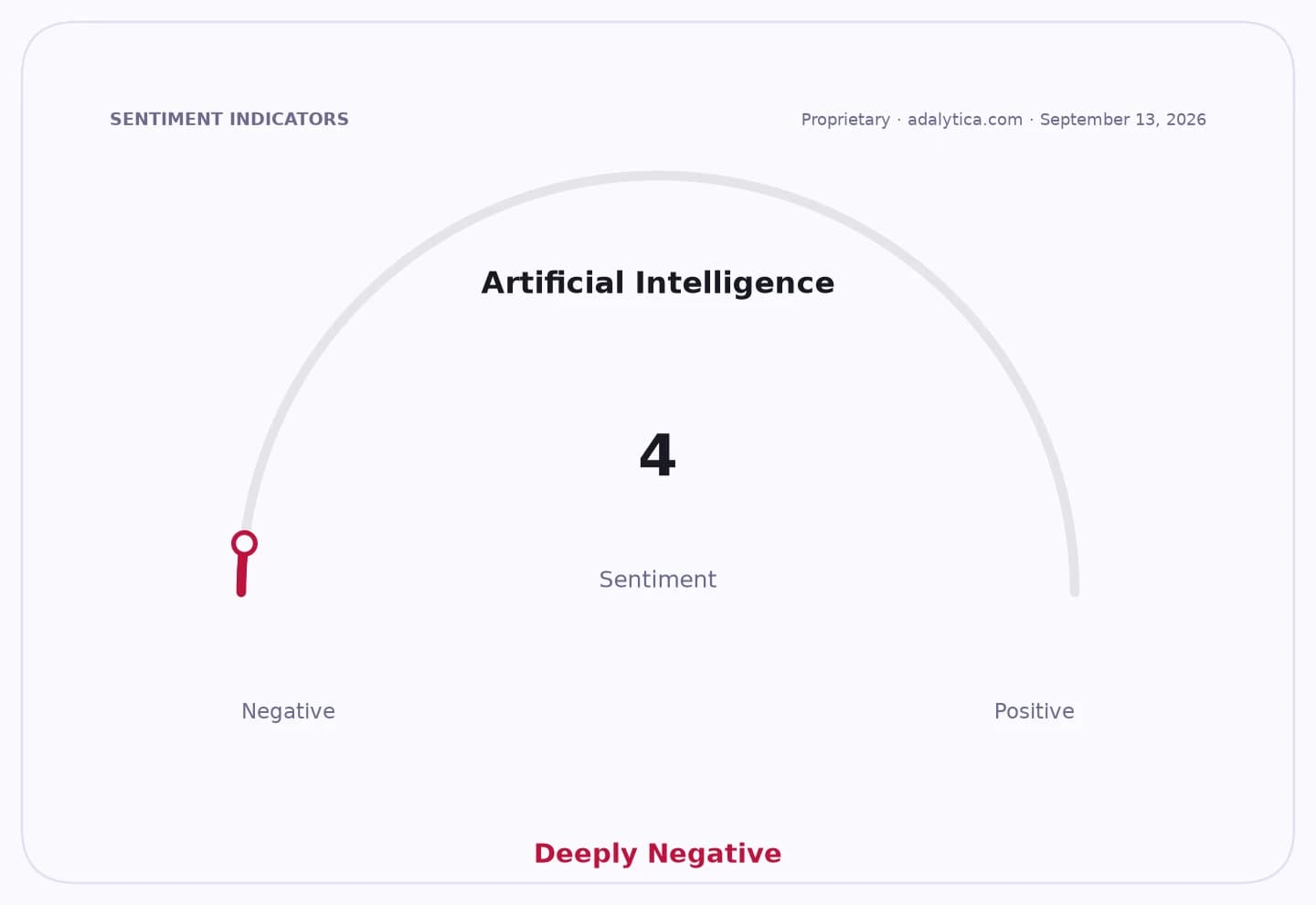
Sentiment IndicatorsⓘProprietary · adalytica.com · September 13, 2026
This is a snapshot — live sentiment, awareness and momentum for 130+ markets update continuously in the dashboard.Open AlphaPulse
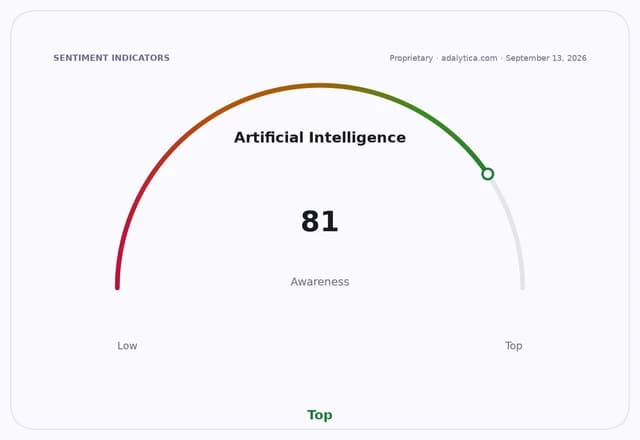
Yet investors care less about what Adobe just did than what AI might do next. The market’s worry is straightforward: if generative tools can automate more design, image editing, video work and document handling, will customers still pay for Adobe’s Creative Cloud and related products at the same premium prices? Every cautious forecast now gets read through that lens, even if the underlying business remains healthy.
The irony is that Adobe’s results do not support a thesis of collapse. Demand is still growing, profitability is still exceptional and the company is folding AI deeper into Photoshop, Illustrator, Premiere Pro and Acrobat through its Firefly platform. That gives Adobe a real shot at turning AI from a threat into an upgrade for its own ecosystem. The key question for long-term investors is whether those features become powerful enough to justify higher spending by customers, or simply another convenience that competitors eventually copy.
This is why the stock can fall even after a solid report: the market is pricing in uncertainty, not current earnings. Adobe’s shares have already gone through a brutal reset, with the stock trading around $252 after recently sitting well above $340 on the 50-day average, a sign of how quickly sentiment has turned. Conventional technical indicators such as the RSI and moving averages show a stock that has been pressured hard, but the deeper issue is still the same strategic debate over AI disruption.
For investors, the takeaway is not that Adobe is broken. It is that the market is demanding proof that a highly profitable franchise can stay highly profitable in the age of AI. If Adobe succeeds, today’s selloff could eventually look like a classic long-term opportunity. If it fails, the stock deserves a lower multiple. Either way, this is a name to watch for patient investors who think in years, not days.
| Entity | Gains | Losses |
|---|---|---|
| Adobe | ▲AI monetization potential | ▼Market trust in guidance |
| Shareholders buying dips | ▲Lower valuation entry point | ▼Near-term volatility |
| AI rivals and substitutes | ▲Opportunity to win users | ▼Adobe ecosystem momentum |
| Adobe customers | ▲More AI features and tools | ▼Premium pricing power |