AI’s investment case is increasingly colliding with its political and existential risk, a shift that could matter as much for capital spending plans as for valuations.
AI Regulation Risk Hits Nvidia and Microsoft
The immediate market question is no longer just whether artificial intelligence can deliver the productivity gains companies are promising, but whether public anxiety over catastrophic misuse will force tougher guardrails, slower deployment and higher compliance costs. That matters because the AI buildout has been one of the biggest drivers of spending across semiconductors, cloud infrastructure and software, with Nvidia and Microsoft at the center of the trade. Any move toward tighter oversight could alter the pace of demand that has supported earnings growth and rich multiples across the sector.
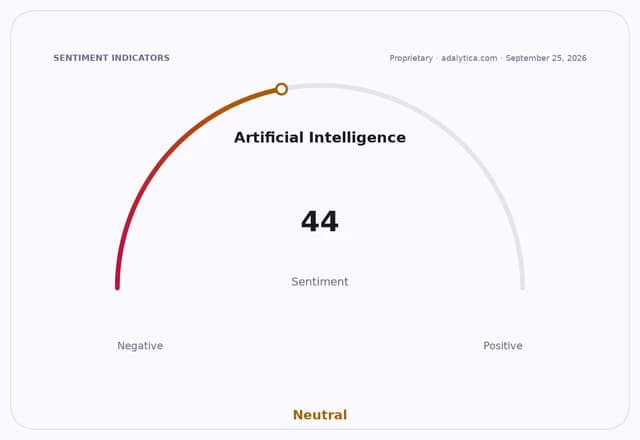
Sentiment IndicatorsⓘProprietary · adalytica.com · September 25, 2026
This is a snapshot — live sentiment, awareness and momentum for 130+ markets update continuously in the dashboard.Open AlphaPulse
The UAE Foundation’s partnership with the Responsible AI Foundation to promote ethical AI use is a reminder that concern is moving from the margins of the debate into institutions that can shape policy. The initiative comes as experts argue the biggest danger may be human misuse of powerful models from companies such as Anthropic and OpenAI rather than the technology acting on its own. Calls for transparency, independent safety testing and mandatory government safeguards are becoming louder, raising the odds that AI vendors face more formal scrutiny over training data, model behavior and deployment controls.
For investors, the key issue is that AI stocks have been priced for a long runway of unimpeded adoption. Nvidia has climbed to $224.58 from a March low near $177, while Microsoft remains near $498 after rebounding from a sharp midyear drawdown. Both sit above their 200-day moving averages, underscoring that the longer-term uptrend is intact, but short-term momentum has cooled. Nvidia’s relative strength index has slipped to 45.8, while Microsoft’s is 41.9, suggesting enthusiasm has eased even as the broader AI theme remains in place.
That makes the sector vulnerable to any policy or public-relations shock that turns safety concerns into capital-allocation constraints. If regulators require more testing, disclosure or limits on deployment, hyperscale customers could slow some purchases or push spending toward compliance and audit systems rather than pure model expansion. For Nvidia, that would not eliminate demand for AI chips, but it could change the mix and timing of orders. For Microsoft, whose cloud and software platforms are deeply tied to AI monetization, the risk is that rising caution could temper the pace at which enterprises adopt new tools or force more investment into governance features.
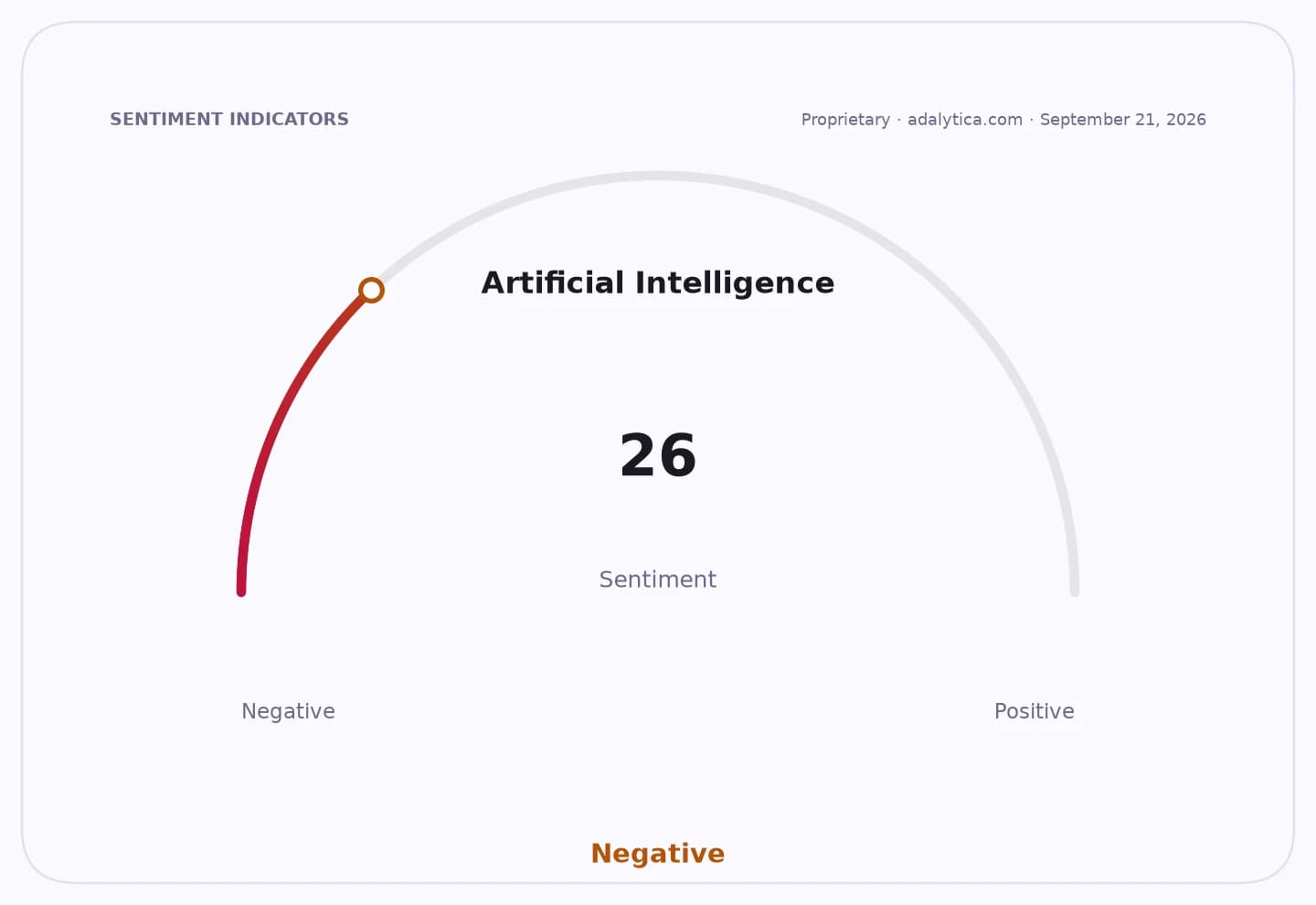
There is also a reputational dimension. AI sentiment can shift quickly when stories move from innovation to risk. Adalytica’s AI sentiment snapshot was neutral at 44, with awareness also neutral at 59, but the broader news flow is turning more cautionary. That can keep volatility high in a sector where the bull case depends on investors continuing to believe that spend today will translate into durable margin expansion tomorrow.
The bull case is that greater oversight ultimately strengthens the industry by making AI safer and more acceptable to governments, customers and the public. The bear case is that regulation, litigation and safety requirements become another layer of cost and delay at the exact moment investors are assuming scale effects will keep earnings compounding. Either way, the narrative around AI is broadening beyond chips and cloud capacity to include social license and political risk — and that could prove just as important for the next leg of the trade.
| Entity | Gains | Losses |
|---|---|---|
| Regulators and safety advocates | ▲More oversight | ▼Faster AI deployment |
| Nvidia and Microsoft | ▲Long-term trust if standards improve | ▼Near-term spending flexibility |
| AI infrastructure buyers | ▲Clearer rules | ▼Higher compliance costs |
| Short sellers and cautious investors | ▲Volatility from policy risk | ▼Momentum if AI adoption stays unchecked |