AI’s biggest winners are increasingly being judged not by how far they can push model capability, but by whether those systems turn into products people and businesses will actually pay for.
Nvidia, Microsoft, Alphabet Pull Back on AI Selectivity

That shift was visible in the recent trading pattern across the sector. Nvidia fell to $224.54 on Sept. 9 from a 2026 high of $235.47 in May, while Microsoft slid to $493.31 from an August peak above $513 and Google parent Alphabet dropped to $329.95 from more than $382 in May. The pullback comes even as all three remain well above their longer-term trend lines, with Nvidia trading comfortably above its 200-day moving average and Microsoft and Alphabet still holding gains for the year. Investors are still buying the AI story, but they are becoming more selective about which part of the stack deserves the premium.
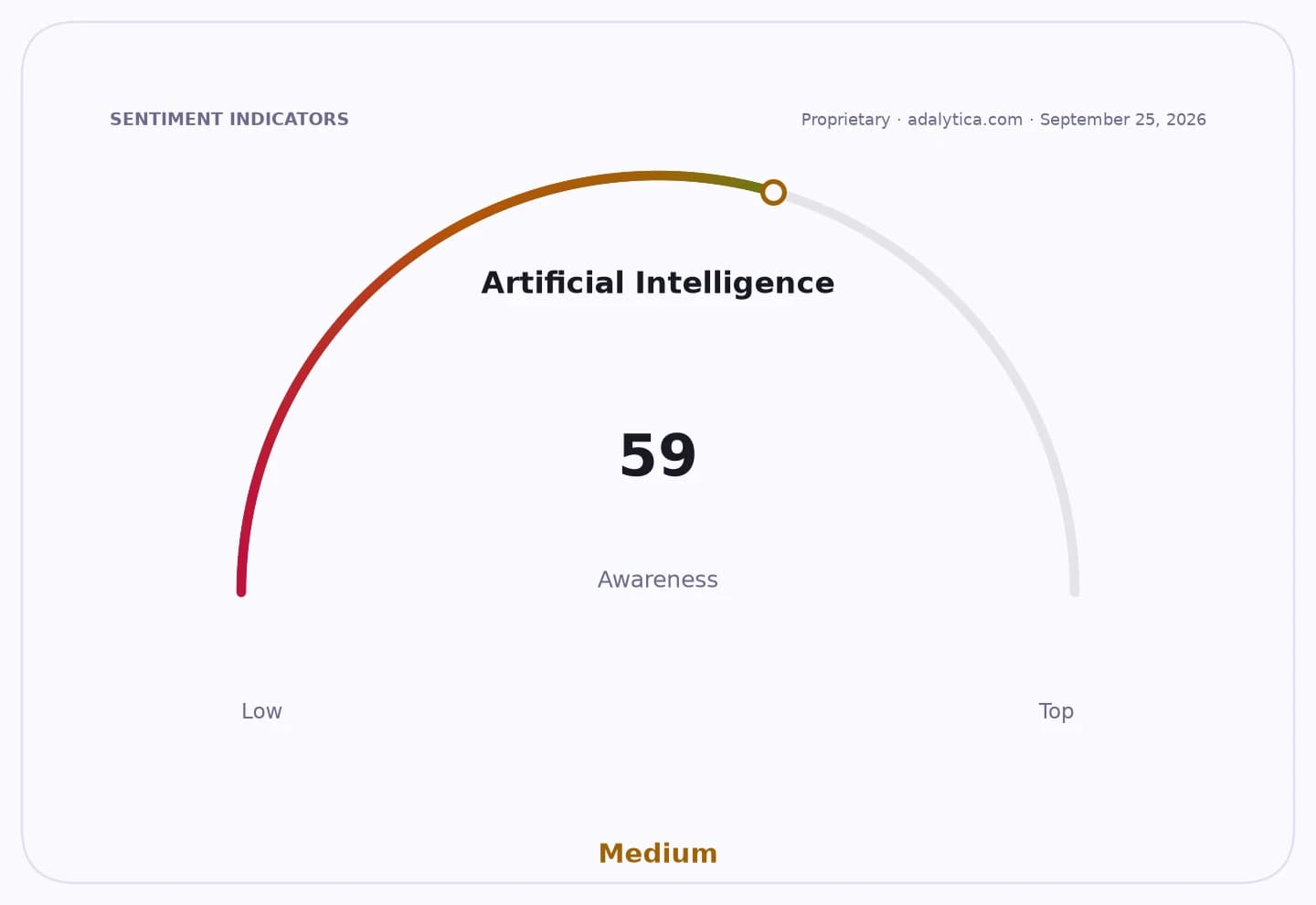
Sentiment IndicatorsⓘProprietary · adalytica.com · September 9, 2026
This is a snapshot — live sentiment, awareness and momentum for 130+ markets update continuously in the dashboard.Open AlphaPulse
That selectivity matters because the market has already priced in a large amount of infrastructure spending. Nvidia remains the clearest barometer of the capex cycle: its share price has more than doubled from the lows seen in early 2026, but the stock’s recent flattening suggests enthusiasm is no longer enough on its own. Microsoft and Alphabet face a similar challenge. Both companies have spent heavily on AI and data centers, but their next leg of valuation expansion will depend on whether copilots, search reinvention, cloud AI services and enterprise workflow tools produce durable revenue rather than just higher costs.
The debate inside the industry has also become more contentious. A leading Anthropic researcher recently resigned after warning that the race toward superintelligence could carry existential risks and should slow down. That does not directly change near-term earnings, but it does sharpen the central tension for investors: the faster the industry moves, the greater the chance of regulation, safety constraints or reputational blowback; the slower it moves, the harder it becomes to justify the enormous capital being poured into the field. Nvidia’s own filings have acknowledged lobbying pressure around open-source AI and regulatory measures, underscoring that policy risk is becoming part of the investment case.
For investors, the key question is no longer whether AI is real. It is which companies can prove a commercial use case strong enough to convert hype into recurring cash flow. Infrastructure suppliers such as Nvidia still benefit from every new wave of model training and inference demand, but their upside depends on customers continuing to spend. Platform leaders such as Microsoft and Alphabet have more ways to monetize AI, yet they also face the burden of proving that the technology lifts margins rather than just absorbing capital.
The bull case remains intact if enterprise adoption accelerates and AI features become embedded in software, search and cloud workflows. The bear case is that the industry ends up with expensive, impressive technology that is still searching for a mass-market economic engine, while regulation and safety concerns slow deployment. For now, the market is still betting on AI — but the stock leadership will increasingly belong to whichever company can show the clearest path from model progress to profits.
| Entity | Gains | Losses |
|---|---|---|
| Nvidia | ▲More AI infrastructure demand | ▼Premium multiple if capex slows |
| Microsoft | ▲Copilot and cloud monetization | ▼Margin pressure from AI spending |
| Alphabet | ▲Search and cloud AI use cases | ▼Higher regulatory and safety risk |
| Short-duration skeptics | ▲Lower entry points on pullbacks | ▼Miss upside if adoption accelerates |