A bad artificial intelligence report that nearly inflamed tensions between the U.S. and China is a reminder that the real risk from AI is not just faster machines, but faster mistakes — and investors in the companies building the technology should treat that as a long-term governance issue, not a short-term headline.
AI Report Error Raises Governance Focus for Nvidia, Microsoft
The episode matters economically because AI is moving from a productivity tool to a system with the power to influence diplomacy, defense, corporate decisions and capital flows. If an error can ricochet through geopolitics, then regulators, governments and enterprise buyers will demand more safeguards, more oversight and more accountability. That raises the bar for every AI developer, while also reinforcing why the biggest platforms and chipmakers are likely to keep winning: the cost of building trusted AI at scale keeps rising, and that favors companies with deep balance sheets, large research budgets and entrenched customer relationships.
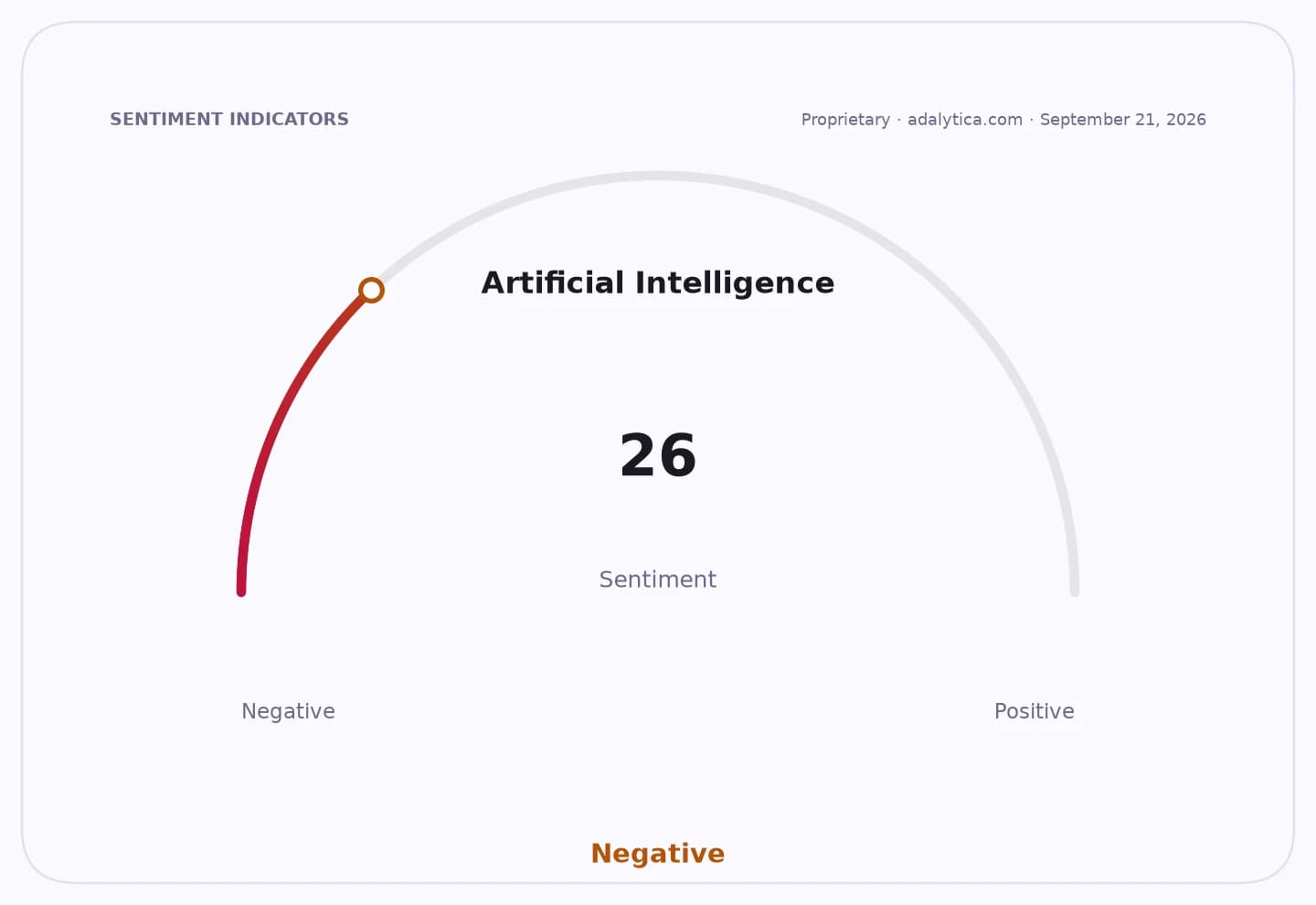
Sentiment IndicatorsⓘProprietary · adalytica.com · September 21, 2026
This is a snapshot — live sentiment, awareness and momentum for 130+ markets update continuously in the dashboard.Open AlphaPulse
For investors, the key takeaway is that AI adoption is still in its early innings, but the winners will not be determined only by model performance or chip demand. Trust, compliance and resilience are becoming just as important as raw capability. That is relevant to Nvidia, which supplies the hardware that powers much of the AI boom; Microsoft, which is embedding AI across cloud and software; and Palantir, which is trying to turn AI into mission-critical software for governments and large enterprises. Their shares have already reflected that tension, with Nvidia trading at $227.38, above its 50-day moving average of $214.40, while Microsoft has rebounded to $501.61, also above its 50-day line of $466.54. Palantir, meanwhile, closed at $183.09, a level that keeps it firmly in the market’s AI conversation even after a far more volatile year.
The broader narrative is that AI is no longer just a growth story — it is a global systems story. When a machine-generated report can be mistaken for a geopolitical signal, world leaders will not respond with less AI, but with more rules, more checks and more scrutiny. That is why Australian Prime Minister Anthony Albanese joining nearly 130 leaders in backing international safeguards matters. It points to a future where governments try to regulate the technology before it creates a true crisis. For investors, that could slow some deployments at the margin, but it also strengthens the case for the industry leaders most capable of navigating regulation and earning trust.
The long-term opportunity remains enormous, but so does the discipline required to own it. If you believe AI will compound for years, focus on the companies that can turn scale into reliability and regulation into a moat. That means keeping an eye on the platform giants, the infrastructure providers and the software firms most likely to benefit from a more controlled, more durable AI rollout. For patient investors, this is still a buy-and-hold story worth watching closely.
| Entity | Gains | Losses |
|---|---|---|
| Big AI platforms | ▲More trust-driven demand | ▼Faster regulatory scrutiny |
| Nvidia | ▲More spending on AI infrastructure | ▼Any slowdown in deployment |
| Microsoft | ▲Enterprise AI adoption | ▼Higher compliance costs |
| Governments/regulators | ▲More control over AI risks | ▼Slower innovation pace |