Netflix puts and calls on ASML and Taiwan Semiconductor Manufacturing capture the more important cross-asset story: investors are paying for exposure to AI infrastructure cash flows while fading consumer-subscription growth that is losing technical and fundamental support.
AI Infrastructure Outshines Netflix Consumer Growth

The trade is not simply momentum chasing. It reflects a sharper allocation divide between capital-expenditure beneficiaries and companies more exposed to household budgets, pricing fatigue and operating-cost creep. Netflix closed at $73.37 on July 10, down about 40% from its September level of $122.85 and 23% below its 200-day moving average. ASML and TSM have also pulled back from late-June highs, but both remain well above their long-term trend lines, leaving the semiconductor trade bruised rather than broken.
Sentiment Indicators
That distinction matters economically because AI hardware spending has become one of the few large-scale corporate investment cycles capable of resisting tighter credit conditions and uneven consumer demand. TSM is still 25% above its 200-day moving average, while ASML is nearly 35% above its own, reflecting the market’s willingness to underwrite earnings durability in advanced chips, foundry capacity and lithography equipment. Netflix, by contrast, derives revenue primarily from monthly membership fees and disclosed a 22% year-on-year increase in first-quarter sales and marketing expense to $842 million, underscoring the cost of defending growth in a maturing streaming market.
The price action reinforces that narrative. Netflix’s latest close sits 11% below its 50-day moving average and came on volume of 45.2 million shares, suggesting renewed distribution rather than a clean capitulation. Conventional technical indicators show the stock is weak but not deeply washed out: its 14-day RSI is 41.1, above the extreme oversold reading of 25.6 seen on June 30, while MACD remains negative. That makes the “obvious” dip-buy call trade less compelling if the market continues to penalize consumer-facing growth.
ASML and TSM look different. ASML closed at $1,797.32, down 9.7% from its June 30 close but still 6.8% above its 50-day moving average and 93% above its October level. TSM closed at $434.11, down 9.1% from June 30 but still 2.5% above its 50-day average and 37.5% above its March low. Their RSI readings, at 42.7 for ASML and 42.3 for TSM, no longer signal overbought conditions, while their MACD readings have cooled below signal lines. For options investors, that cooling can improve the asymmetry of calls if the AI capex cycle remains intact.
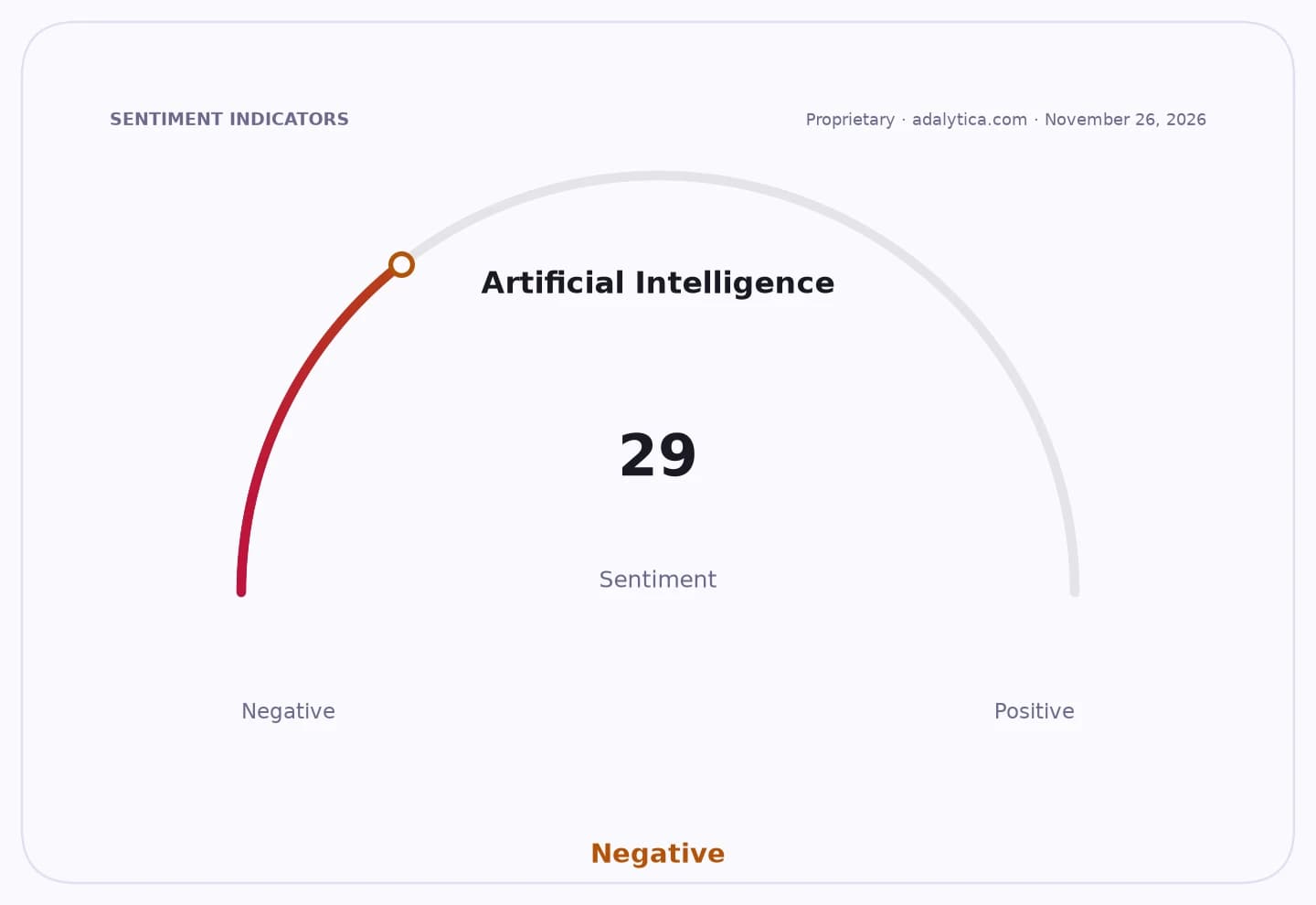
Sentiment data point to the same selective setup. Proprietary indicators from Adalytica.com show TSM earnings sentiment at 74, still in “Greed,” but down 19 points in one day and 26 points over seven days, with awareness at only 22. NVIDIA earnings sentiment is at 15, in “Extreme Fear,” while broader AI sentiment is neutral at 33. That is not a uniformly euphoric backdrop; it suggests investors have become more discriminating inside the AI complex even as the structural demand story remains in place.
The macro linkage is direct. If monetary policy remains restrictive, companies tied to discretionary spending and subscription pricing face a higher hurdle for revenue growth and margin expansion. If policy eases, long-duration equities broadly benefit, but the operating leverage is likely to accrue first to firms attached to enterprise and hyperscale investment budgets. ASML and TSM sit closer to that investment impulse than Netflix does.
The risk is that the semiconductor trade is already crowded and vulnerable to any sign of slower AI server demand, export-control tightening or Taiwan-related geopolitical stress. Netflix also has obvious upside risk if pricing, advertising or subscriber metrics reaccelerate. But the current market message is clear: puts on NFLX express a bet that consumer growth is still being repriced lower, while calls on ASML and TSM express confidence that AI infrastructure remains the stronger earnings channel.
The next test will be whether earnings commentary confirms that divergence — Netflix must prove it can restore growth without buying it through higher marketing spend, while ASML and TSM need to show that AI demand is converting into durable orders, pricing power and capacity utilization.
| Entity | Gains | Losses |
|---|---|---|
| ASML and TSM call buyers | ▲AI capex upside | ▼Export-control shocks |
| Netflix put buyers | ▲Consumer-growth derating | ▼Subscriber reacceleration |
| AI infrastructure suppliers | ▲Hyperscaler spending | ▼Capex slowdown |
| Streaming growth longs | ▲Fed easing optionality | ▼Margin compression |