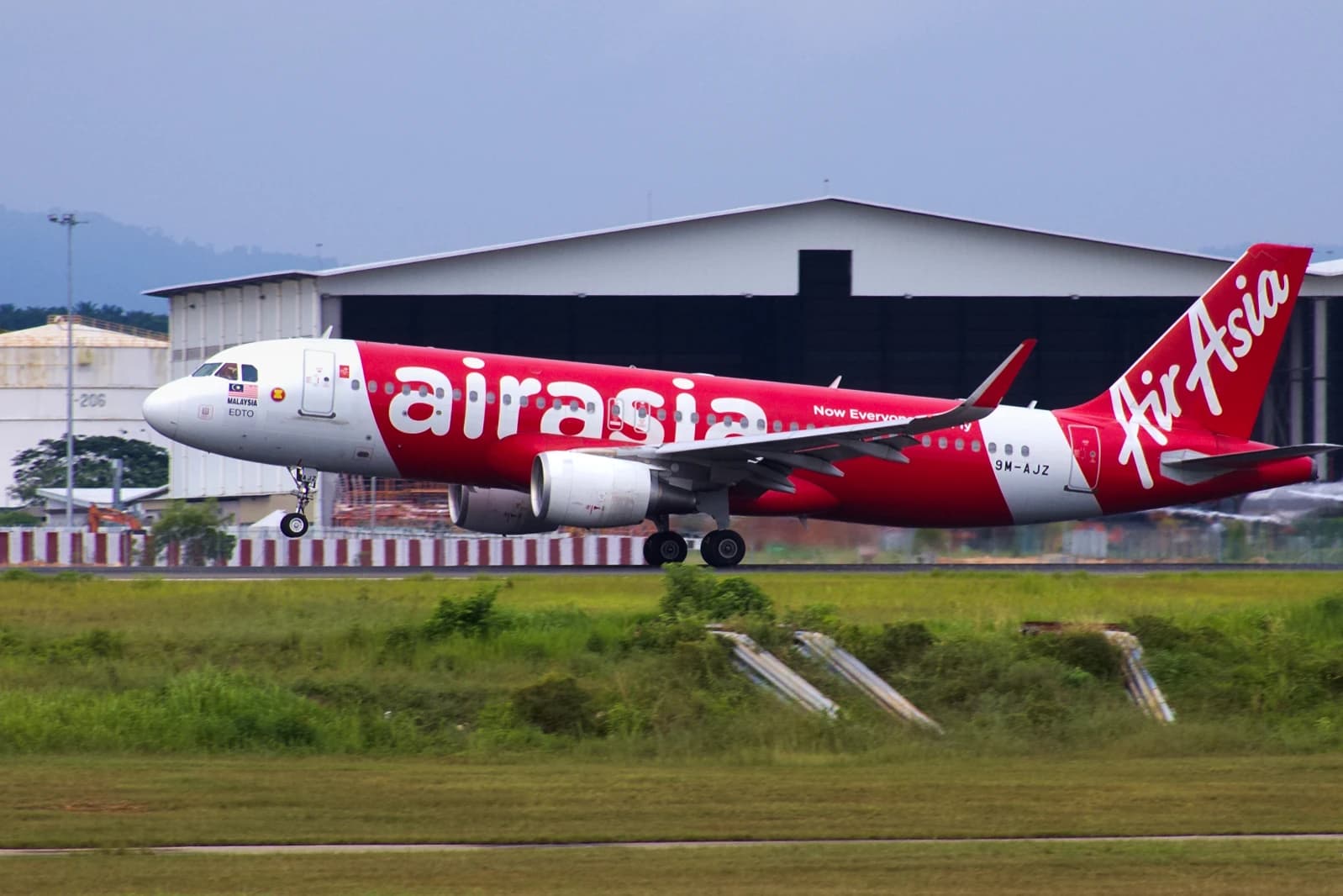
AirAsia shares sank to their lowest level since 2022 after reports that Malaysia’s government has asked local airlines to consider absorbing some of the cash-strapped carrier’s domestic market share, deepening investor concern about the group’s financial health and competitive position.
AirAsia Shares Fall on Malaysia Route Share Talks
The move matters because it suggests policymakers are preparing for the possibility that AirAsia cannot sustain its current network without outside support or a forced restructuring of capacity. Any redistribution of domestic routes would directly affect revenue, load factors and pricing power across Malaysia’s airline market, while underscoring pressure on the country’s biggest budget carrier.
Sentiment IndicatorsⓘProprietary · adalytica.com · September 18, 2026
This is a snapshot — live sentiment, awareness and momentum for 130+ markets update continuously in the dashboard.Open AlphaPulse
Reuters reported that talks with Malaysia Airlines Bhd and Batik Air are part of scenario planning as authorities monitor AirAsia’s finances. The carrier didn’t respond to requests for comment.
The stock slump comes after AirAsia posted its largest quarterly loss in four years last month and sought to amend terms on a US$200 million private credit loan. Earlier this month, the airline said it planned to raise more than US$1 billion in fresh funds to refinance expensive debt, pushing back against reports that it was trying to shore up liquidity.
AirAsia’s balance sheet has been hit by higher fuel costs after Middle East conflict pushed up energy prices, while the airline’s lack of fuel hedging amplified the damage. The shares have fallen almost 70% this year, the worst performance on the 56-member Bloomberg World Airlines Index, and sister company Capital A Bhd dropped as much as 18% to a more than one-year low on the news.
For investors, the headline risk is no longer just earnings pressure but the possibility that domestic competition in Malaysia could be reshaped by intervention or contingency planning. That could benefit stronger rivals such as Malaysia Airlines and Batik Air if they pick up routes, but it also signals that AirAsia may need fresh capital, debt relief or a broader operational reset to stabilize.
The next catalyst is likely to be any formal government statement, creditor discussions around the private loan, or further details on the airline’s fundraising plan.
| Entity | Gains | Losses |
|---|---|---|
| Malaysia Airlines | ▲Potential route expansion | ▼Competitive uncertainty |
| Batik Air | ▲Possible market-share gains | ▼Higher capacity risk |
| AirAsia | ▲None in the near term | ▼Share price, routes, financing flexibility |
| Capital A Bhd | ▲— | ▼Investor confidence, related-stock valuation |