The open web is increasingly saturated with machine-written material, and that matters because it is beginning to reshape how people find, trust and monetize information online.
Alphabet Faces AI Text Pressure in Search
New Pew Research data point to a fast-growing layer of AI-generated text across the internet, reinforcing what publishers, search platforms and advertisers have already been seeing: much of the web’s newer content is becoming cheaper to produce, harder to verify and less differentiated from page to page. For businesses that rely on search traffic or user trust, that is not a cosmetic problem. It is an economic one.
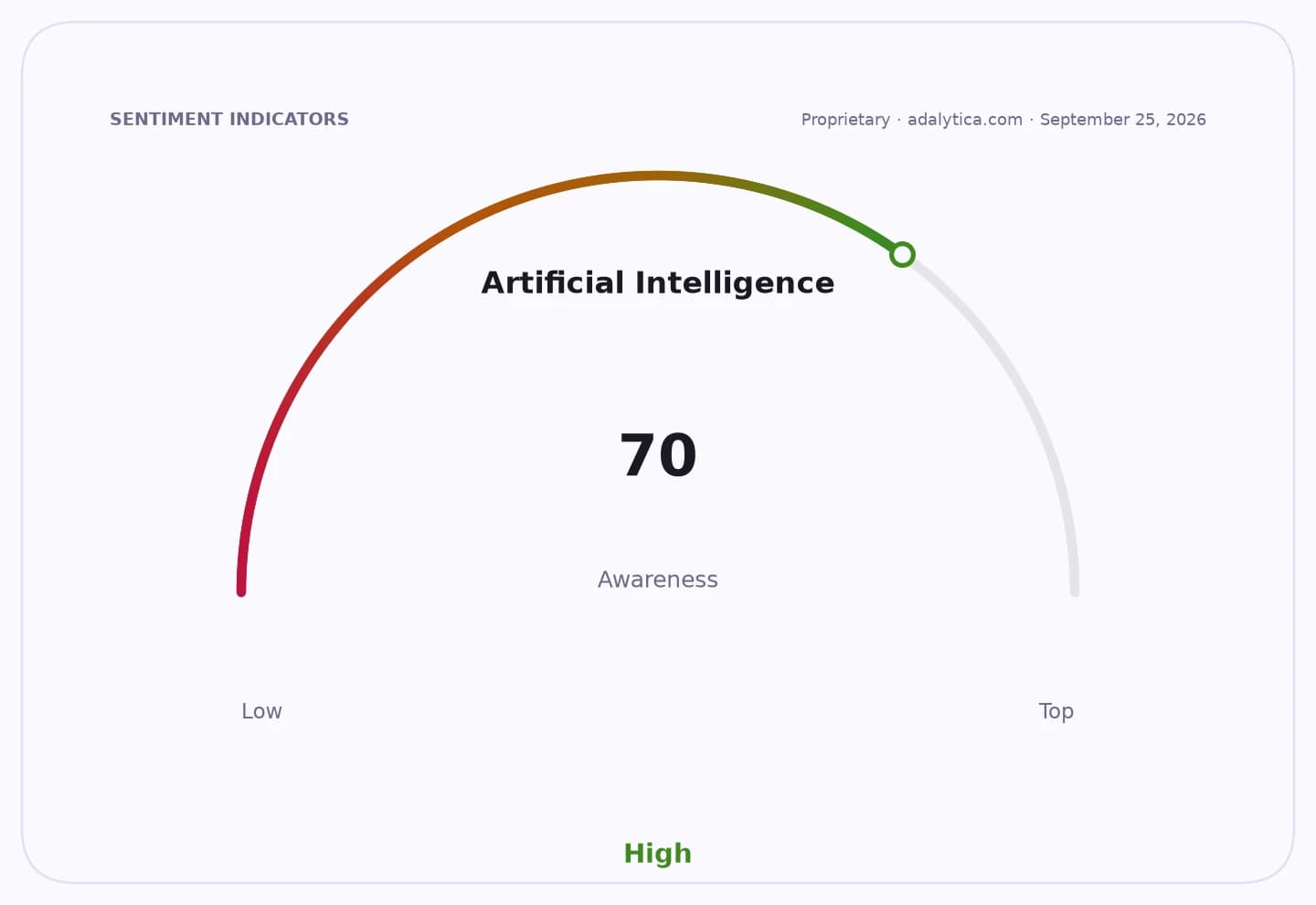
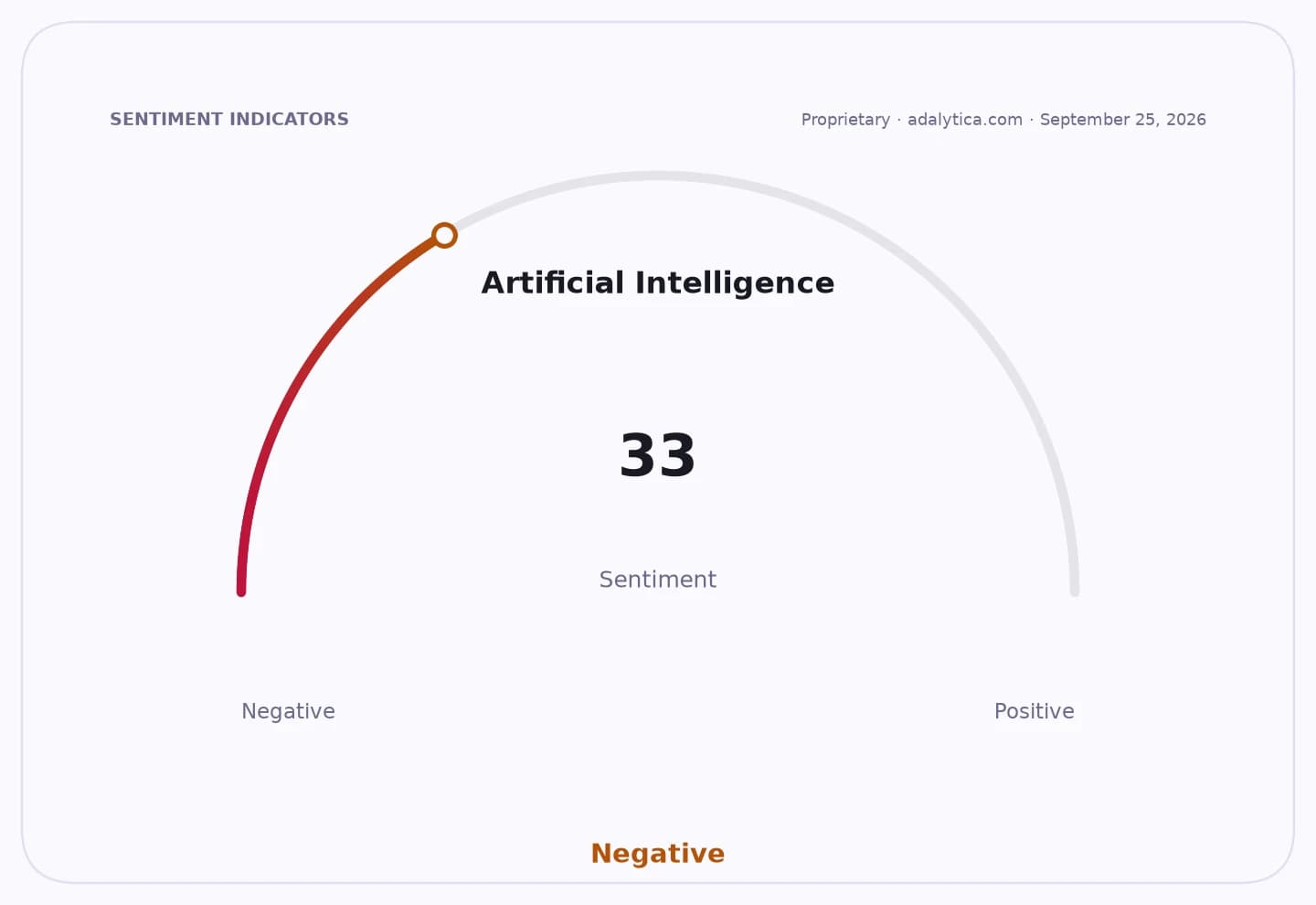
Sentiment IndicatorsⓘProprietary · adalytica.com · August 24, 2026
This is a snapshot — live sentiment, awareness and momentum for 130+ markets update continuously in the dashboard.Open AlphaPulse
The biggest implication is for the online information economy. If synthetic text keeps flooding blogs, product pages, forums and news-adjacent sites, the marginal cost of content collapses while the value of original reporting, expert commentary and first-party data rises. That creates a widening gap between firms that can produce trusted content and those that depend on scale and automation. It also raises the odds that search engines and social platforms will need to filter more aggressively, potentially changing traffic flows and ad yields.
That shift is especially relevant to Alphabet, whose search business sits at the center of the web’s distribution layer. Google has spent the past two years trying to integrate generative AI into search without destroying the click-through economics that support publishers and, by extension, its own ad ecosystem. If users face more low-quality AI copy in search results, the pressure grows on Google to elevate authoritative sources, a move that could both improve quality and reduce the open-web traffic that has historically financed much of the internet.
Artificial Intelligence vs GOOGLadalytica.com
Explore this data interactively — full history, time series and cross-market comparisons.Open AlphaPulse
The market has already begun to reflect the tension. Alphabet shares have climbed sharply over the past year and remain above their longer-term trend even after recent volatility, suggesting investors still believe the company can defend search economics while monetizing AI. But the underlying question has not gone away: whether generative AI becomes a tool that strengthens Google’s moat or one that accelerates content commoditization and weakens the broader web that search depends on.
Meta faces a different but related exposure. Its ad business benefits from abundant content supply, but a web increasingly polluted by synthetic text could deepen moderation, brand-safety and user-trust concerns, especially as regulators scrutinize how platforms handle AI-generated material. Microsoft, meanwhile, remains both a beneficiary and a risk bearer: it profits from enterprise AI adoption, yet its products and models are part of the same ecosystem now producing more low-value content.
For investors, the Pew findings are a reminder that the AI trade is no longer just about model quality or cloud spending. It is also about the structure of the internet itself. The winners are likely to be companies that can authenticate content, control distribution and monetize direct relationships with users. The losers are likely to be lower-quality publishers, affiliate-heavy sites and anyone selling undifferentiated text in a market where text is becoming abundant.
What happens next will hinge on whether search and platform operators can keep user trust intact while AI-generated material continues to multiply. If they cannot, the web may become easier to produce, but harder to price.
| Entity | Gains | Losses |
|---|---|---|
| Alphabet / Google | ▲Higher demand for authoritative search | ▼More pressure on search quality |
| Original publishers | ▲Premium for trusted reporting | ▼Reach from low-value content |
| AI content farms | ▲Lower production costs | ▼Deeper commoditization |
| Advertisers / users | ▲Better filtering, cleaner results | ▼More noise, weaker trust |