Alphabet is drawing fresh support from JP Morgan even as the broader AI trade remains under pressure, a sign that investors are starting to separate the company’s earnings durability and balance-sheet strength from the more volatile parts of the mega-cap tech complex.
Alphabet Gains JP Morgan Support Amid AI Selloff

That matters because Alphabet has been one of the few large technology names still able to command funding on attractive terms while sentiment toward artificial intelligence stocks has turned sharply more cautious. The company’s recent €6 billion Canadian bond sale reinforced that point: Alphabet can still raise large amounts of debt at scale, preserving flexibility for capex, buybacks and AI investment at a time when markets are demanding proof that the spending cycle will generate returns.
Sentiment Indicators
Artificial Intelligence
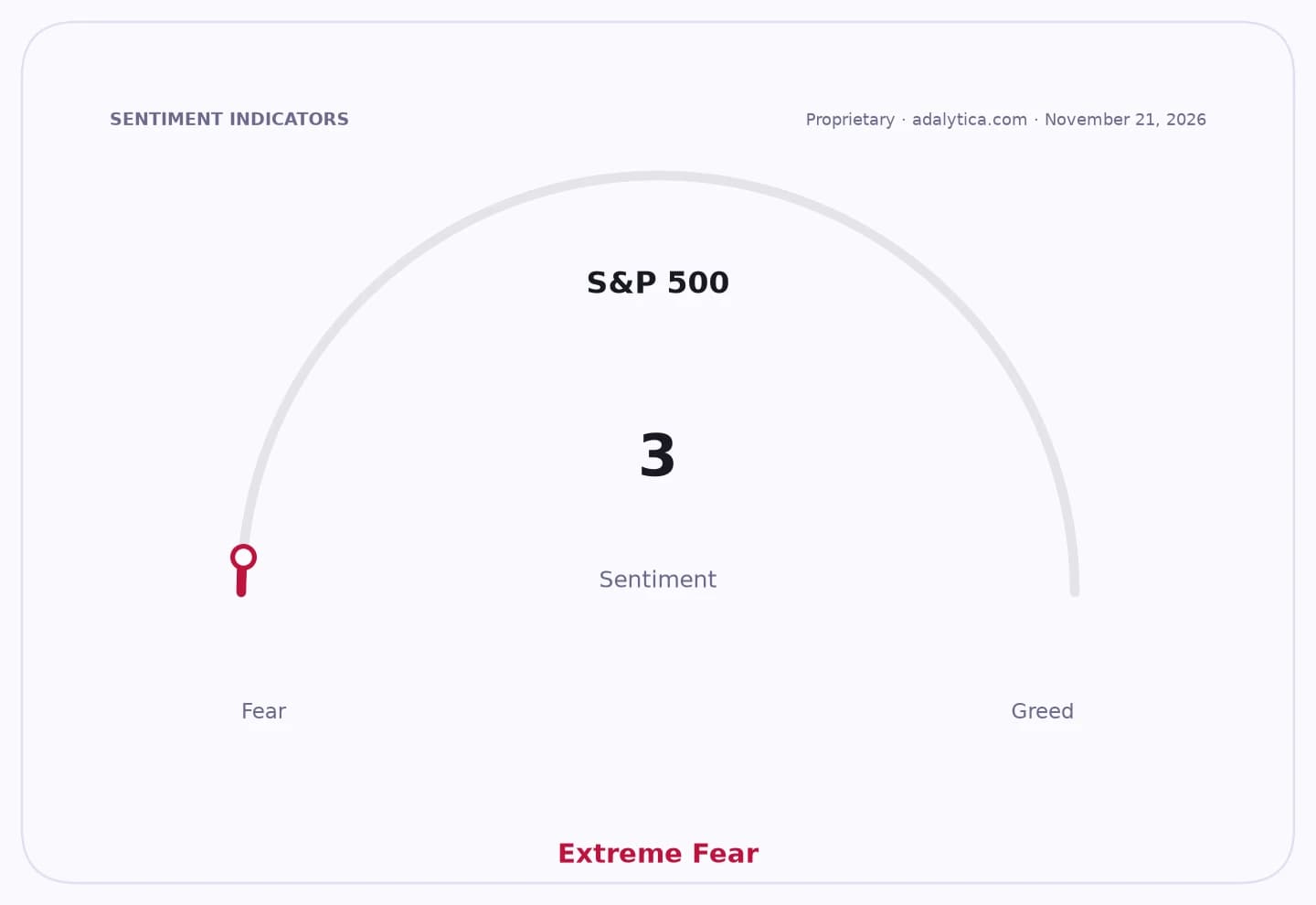
The stock’s recent price action shows the tension. GOOG and GOOGL both have fallen to around $264 to $265, well below their 50-day and 200-day moving averages, after a sharp late-November selloff that pushed RSI readings into weak territory and left momentum indicators negative. The broader backdrop has been even harsher, with the S&P 500 showing fear in Adalytica’s gauge and AI sentiment sitting in extreme fear despite elevated awareness. In other words, the market is still rewarding selectivity, not just exposure to AI.
For Alphabet, the bullish case rests on its search and YouTube franchises, which continue to generate cash even as ad pricing and click trends fluctuate. A positive broker call can help stabilize the name by reminding investors that Alphabet’s earnings power is not simply a bet on experimental AI products, but on a mature advertising machine with recurring cash flow and balance-sheet optionality. That makes the stock more attractive than many peers whose valuations depend more directly on future AI monetization.
The bear case is that Alphabet is not immune to a sector-wide de-rating. Heavy spending on data centers, chips and AI infrastructure could pressure margins before revenue catches up, and the recent rout in the stock suggests the market remains skeptical about the near-term payoff. Stanley Druckenmiller’s decision to exit his Alphabet stake also underscores how quickly large investors can rotate out of the name when conviction on the AI trade weakens.
Still, JP Morgan’s upgrade lands at a moment when the market is repricing the quality of AI exposure. If Alphabet can keep converting its ad scale into cash while funding AI without damaging returns, it may emerge as one of the few beneficiaries of the current shakeout. The next catalyst will be earnings, where investors will look for evidence that capital spending is translating into durable top-line growth rather than just higher costs.
| Entity | Gains | Losses |
|---|---|---|
| Alphabet | ▲valuation support | ▼short-term skeptics |
| JP Morgan bullish view | ▲credibility if proven right | ▼if AI spending disappoints |
| Long-term shareholders | ▲rebound potential | ▼holders facing volatility |
| AI-heavy peers | ▲little direct gain | ▼re-rating pressure |