A former Google safety executive’s warning that AI tools could harm children is sharpening the market’s view that the next big AI fight will be about regulation, not just model quality or compute capacity.
Alphabet, OpenAI face child-safety AI regulation risk

Tom Siegel, formerly Google’s vice president for user safety, said the industry was repeating the mistakes of social media and could do even greater damage to minors through AI chatbots and search products. Now leading Common Sense Media’s new Youth AI Safety Institute, he is pressing OpenAI and Anthropic to add stricter age checks and urging Google to make it easier to turn off AI Overviews, arguing that companies face a choice between accepting some near-term profit pressure or risking lawsuits and tougher rules later.
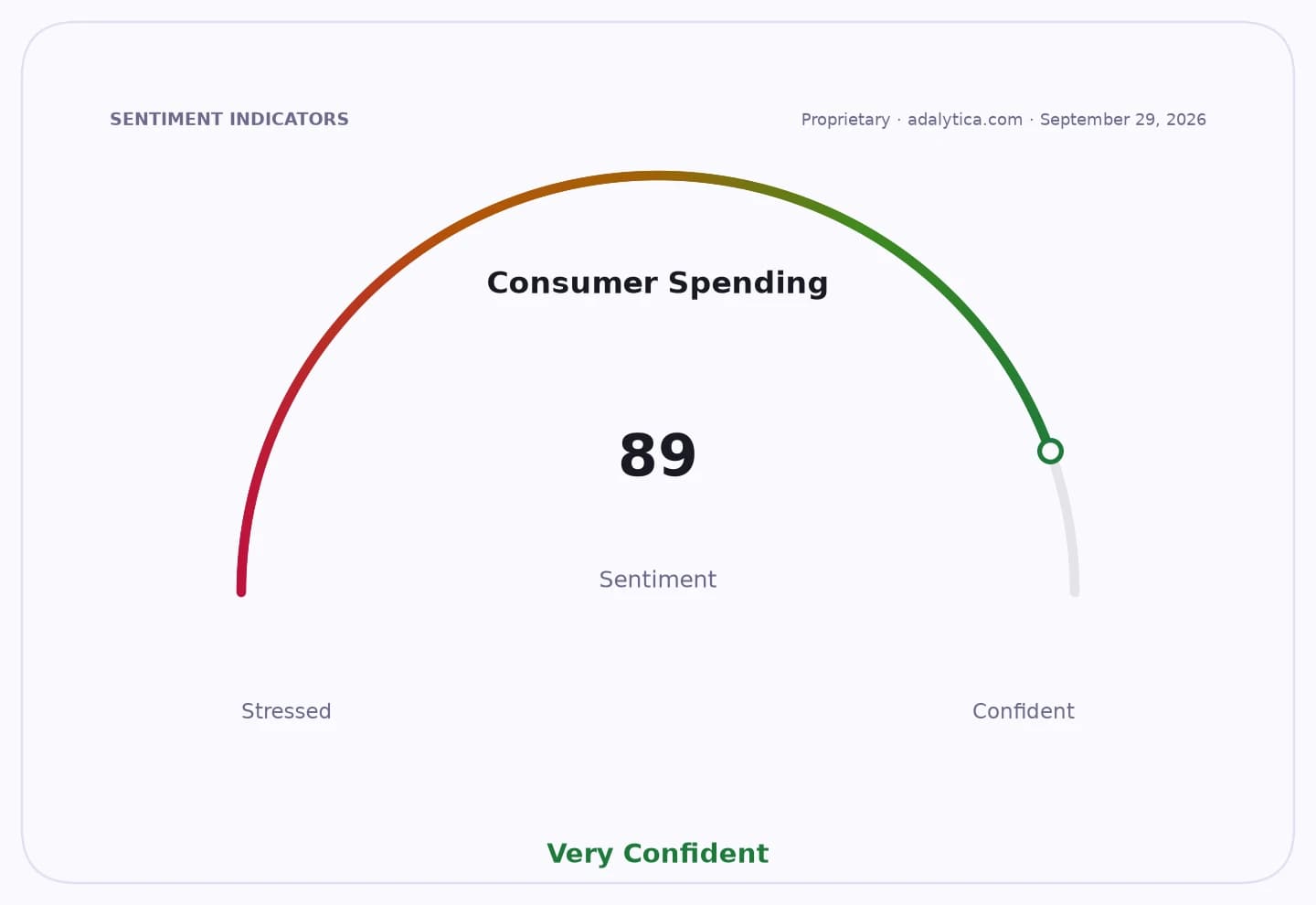
Sentiment IndicatorsⓘProprietary · adalytica.com · September 29, 2026
This is a snapshot — live sentiment, awareness and momentum for 130+ markets update continuously in the dashboard.Open AlphaPulse
That matters because the AI boom has been priced largely as a race for scale, distribution and margins. But the fastest-growing exposure is now reputational and legal: children’s safety, mental health, privacy and product liability. Those are not abstract policy debates. They can alter product design, slow monetization and force higher compliance costs across the platforms that have become the front door to AI for consumers.
The warning lands as OpenAI has paused a new model release over safety concerns, underscoring how quickly the industry’s growth narrative is colliding with oversight. Reuters also noted the broader risk range cited by Siegel — from suicide and psychosis to reduced critical thinking — which helps explain why regulators and advocacy groups are focusing on vulnerable users rather than general AI risk alone.
Investors should pay close attention to the companies most exposed to consumer-facing AI rollouts. Alphabet’s Google, Microsoft, OpenAI and Anthropic are not just competing on performance; they are now competing on trust, child-safety controls and the ability to show regulators they can govern the product before the product governs users. Alphabet and Microsoft have already flagged AI-related legal, privacy and enforcement risks in filings, while Google’s own disclosures reference children’s privacy laws such as COPPA and the U.K.’s Age-Appropriate Design Code.
The market is still rewarding AI monetization, but the valuation gap can narrow fast if governments decide the social cost is rising faster than the safety guardrails. That would hit the biggest beneficiaries of consumer AI distribution first, while aiding companies that sell safety, moderation, identity verification and compliance tooling into the ecosystem.
The trade is not to abandon AI; it is to own the picks-and-shovels around AI governance while staying selective on the consumer-facing names most vulnerable to headline risk. If the next phase of AI is defined by guardrails, then child safety is not a side issue — it is the new margin line.
| Entity | Gains | Losses |
|---|---|---|
| Safety-tech and compliance vendors | ▲More demand for verification and moderation tools | ▼Slower policy timeline |
| Alphabet/Google, Microsoft, OpenAI, Anthropic | ▲Trust could improve with tighter controls | ▼Higher compliance costs, slower monetization |
| Regulators and child-safety groups | ▲More leverage over product design | ▼Need for fast enforcement capacity |
| Short-term AI growth bulls | ▲Longer runway if backlash fades | ▼Multiple compression if rules tighten |