OpenAI is pressing Washington to take the lead in setting global AI standards, arguing that the battle over artificial intelligence will be decided as much by who writes the rules as by who builds the models.
OpenAI Pushes US to Set Global AI Standards

The company’s call matters because it frames AI governance as a strategic contest with direct commercial and geopolitical stakes. If the US defines the technical and safety baseline for frontier AI, American firms are more likely to shape how systems are deployed globally; if not, OpenAI warned, the industry could fragment into incompatible rules that slow adoption and raise compliance costs.
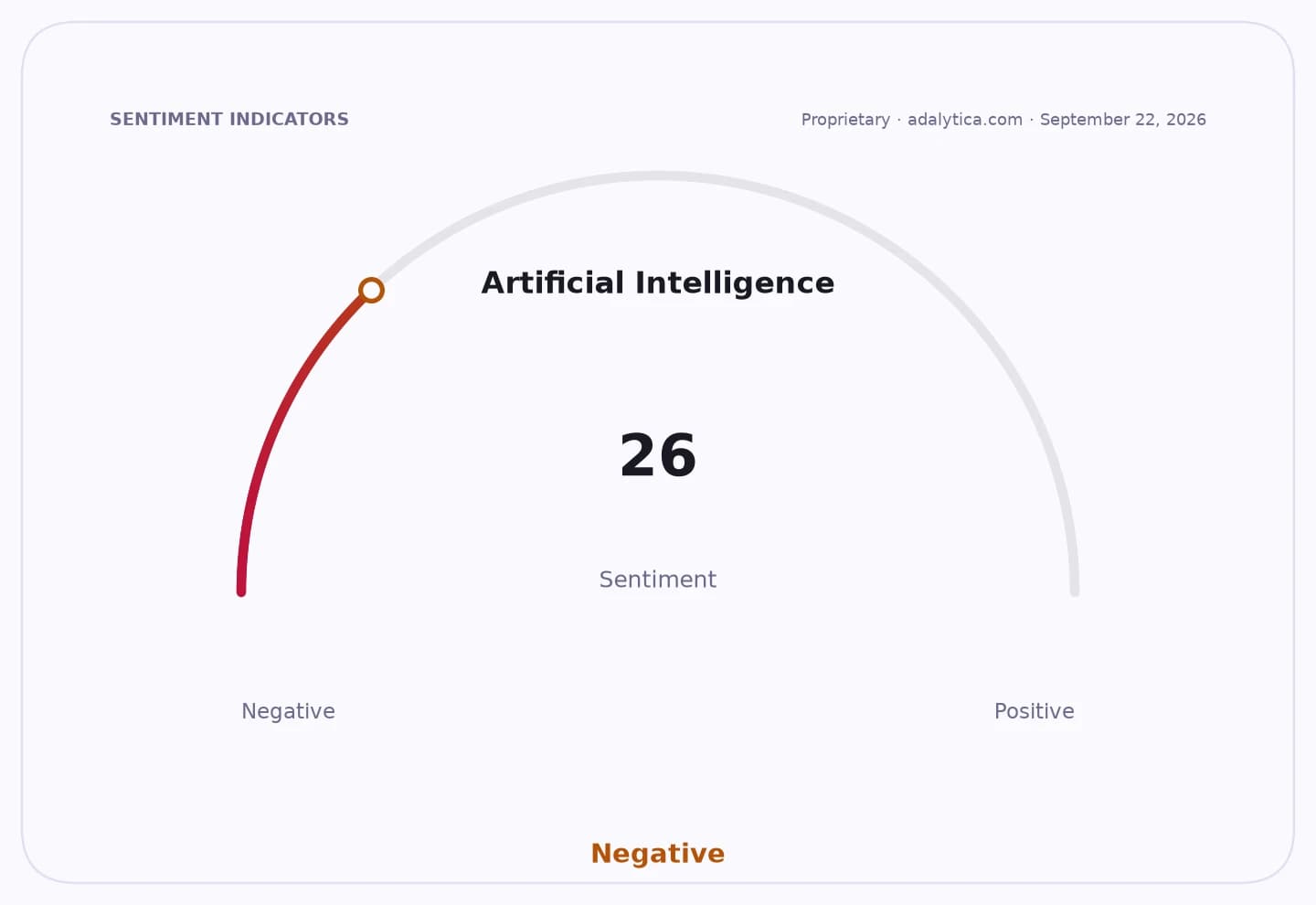
Sentiment IndicatorsⓘProprietary · adalytica.com · September 25, 2026
This is a snapshot — live sentiment, awareness and momentum for 130+ markets update continuously in the dashboard.Open AlphaPulse
In a post on its website, OpenAI said the US should lead efforts with other countries to build technical standards for advanced AI and suggested using a network of national AI safety institutes. Korea was named among 10 example countries in that framework, underscoring how Washington may need allies to turn standards-setting into a multilateral bloc rather than a unilateral policy project.
That is economically significant for the AI supply chain. Standards influence where models can be trained, tested and deployed, which in turn affects demand for cloud infrastructure, chips, software and safety tools. For Microsoft, which is deeply tied to OpenAI and remains one of the most exposed large-cap beneficiaries of enterprise AI adoption, clearer standards could support broader deployment by large customers that are still wary of legal and reputational risk.
The flip side is that stricter rules could add cost and slow rollout, especially in markets that adopt tougher safety or disclosure requirements. Microsoft has already flagged in its filings that AI regulation, including the EU’s AI Act, could increase costs or affect the provision of its AI services. Nvidia faces a similar tension: tighter restrictions may complicate sales and product design even as global AI adoption keeps demand for its accelerators elevated.
OpenAI’s intervention also reflects a shift in the AI debate from raw capability to control and verification. The company said “speed limits” are not the goal; instead, it wants alignment and safety research to keep pace with the technology, and it said fully autonomous recursive self-improvement is not currently achievable. That language is aimed at policymakers and investors alike, signaling that the near-term prize is not just bigger models, but a credible framework that allows them to be used at scale.
The timing is notable. Sam Altman is due to brief the UN Security Council on AI and international security, while OpenAI also pointed to upcoming US-China dialogue as potentially positive. That reinforces the view that frontier AI is moving onto the diplomatic agenda, where standards, access and safety assurances may become part of broader strategic bargaining.
For investors, the key question is whether standardization becomes a catalyst for broader enterprise adoption or a brake on growth. A US-led framework, especially one built with partners such as Korea, could lower uncertainty and widen the addressable market for cloud, software and semiconductor vendors. But it could also harden barriers around model access, export controls and compliance, leaving the winners to be firms best able to absorb higher governance costs and prove their systems are safe enough for regulated industries.
| Entity | Gains | Losses |
|---|---|---|
| OpenAI / US-led AI bloc | ▲Rule-setting influence | ▼Fragmented global standards |
| Microsoft | ▲Faster enterprise AI adoption | ▼Higher compliance burden |
| Nvidia | ▲Broader AI deployment demand | ▼Export and safety restrictions |
| Korea / safety institutes | ▲Seat at standards table | ▼Limited leverage if rules splinter |