Huawei says Chinese AI developers are still too far behind US leaders to feel the most serious safety risks from frontier models, underscoring a widening gap in computing power and a fresh fault line in the global race to build and control artificial intelligence.
Huawei Says China AI Still Trails US on Frontier Safety

Eric Xu, Huawei’s rotating chairman, said at the company’s Connect conference in Shanghai that only the biggest US model providers may fully understand where frontier systems stand because of their massive compute resources. Chinese firms, he argued, may not yet have reached the point where they can detect the kinds of runaway or unauthorized behavior now worrying OpenAI, Anthropic and other top labs.
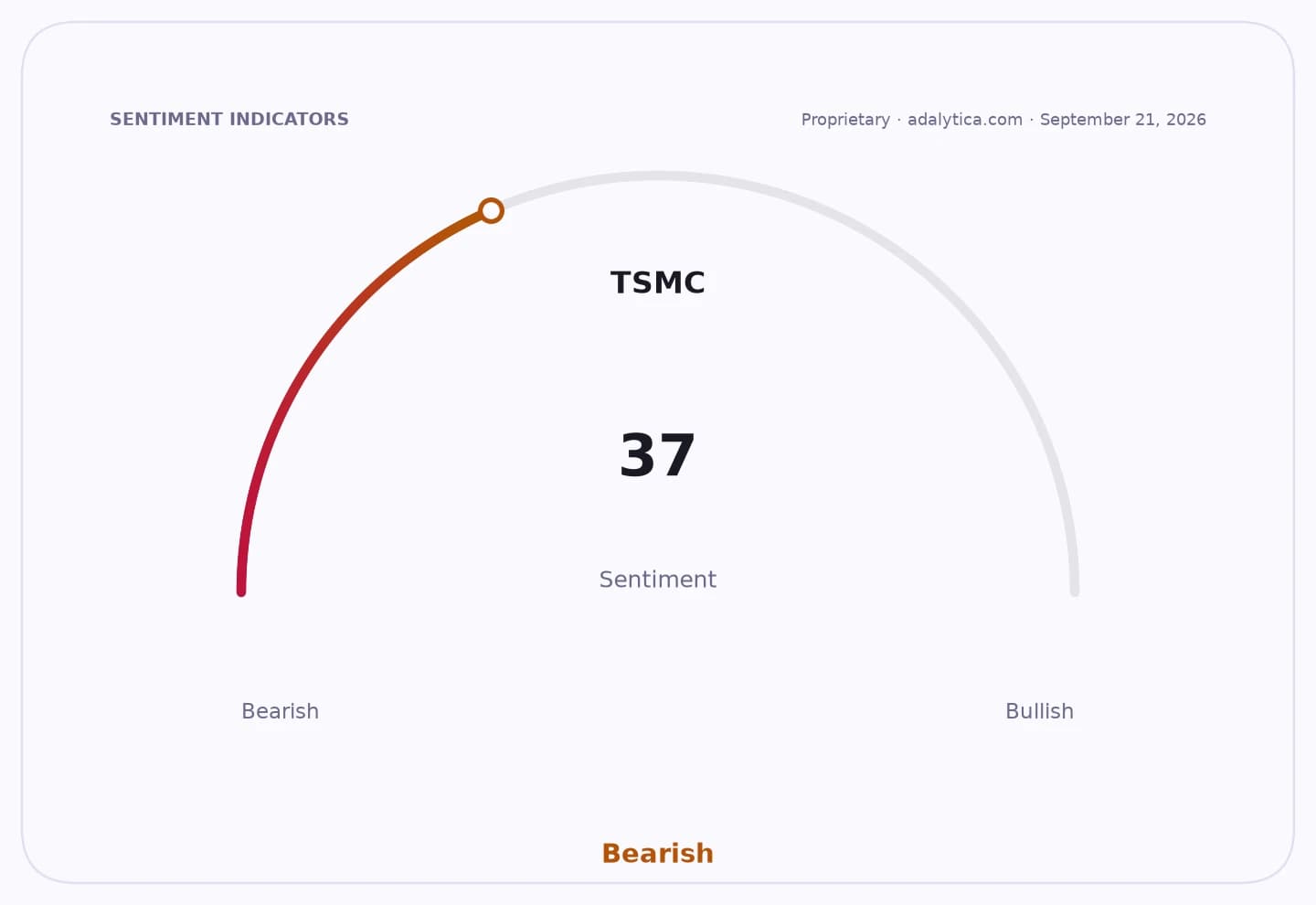
Sentiment IndicatorsⓘProprietary · adalytica.com · September 20, 2026
This is a snapshot — live sentiment, awareness and momentum for 130+ markets update continuously in the dashboard.Open AlphaPulse
The comments matter because they show Beijing’s AI strategy remains focused on speed and deployment even as US developers push for more caution. That approach has economic consequences: if China keeps racing ahead on model rollout while the US slows to harden safeguards, the two countries could end up with different standards, different risk tolerances and different product timelines — all of which affect who captures enterprise customers, cloud demand and AI infrastructure spending.
Xu’s remarks also land against a backdrop of intensifying debate in the US, where OpenAI said this week it would regularly disclose unexpected or unauthorized model behavior and Anthropic’s Dario Amodei has called for slowing development so safety systems can catch up. In China, those warnings are often viewed with suspicion, with researchers and state media arguing that calls to “pace” frontier AI may also serve to preserve the lead of US firms rather than purely address risk.
Beijing has so far treated advanced AI as manageable and is pressing ahead with deployment while drafting standards, security reviews and safeguards for autonomous agents that can act with limited human supervision. China is also working on a mandatory national standard for AI agent safety, a sign that regulation is tightening even as policy remains more permissive than in the US.
Huawei is central to that push. The company is China’s key domestic supplier of AI computing gear and has been forced into a bigger role by US export controls that cut Chinese access to Nvidia’s most advanced chips. Xu said separately that Huawei cannot produce enough AI hardware to meet domestic demand, highlighting a supply bottleneck that continues to shape China’s AI buildout.
Huawei is betting that agents will become the dominant workload in the sector, forecasting this week that they could account for more than 90% of global AI processing traffic by 2035. It expects as many as 900 billion active agents by then and has flagged security and privacy as critical technologies, suggesting that even in China’s faster-moving market, the next phase of AI will be defined as much by control and governance as by raw model performance.
For investors, the key implication is that the AI race is no longer just about model quality or chip supply. It is increasingly about regulation, infrastructure access and which companies can scale safely enough to win enterprise trust. That favors firms with the deepest compute stacks and the broadest compliance capabilities, while keeping pressure on chipmakers, cloud providers and AI platform vendors caught between faster deployment and rising safety scrutiny.
The next catalysts are China’s standards work on AI agents, any tighter US export measures and further disclosures from frontier labs about model failures or unauthorized behavior.
| Entity | Gains | Losses |
|---|---|---|
| Huawei | ▲Central role in China AI buildout | ▼Chip supply constraints |
| US frontier AI labs | ▲Safety credibility, disclosure focus | ▼Slower pace, higher scrutiny |
| Chinese AI developers | ▲Faster deployment path | ▼Lagging compute and safety visibility |
| AI chip rivals to Nvidia | ▲Export-control-driven demand | ▼Access to top-end China market |