Amaroq Ltd has delivered the kind of production inflection and index upgrade that can re-rate a small miner fast: gold output at its Nalunaq mine hit about 12,000 ounces in the third quarter, bringing nine-month production to roughly 21,000 ounces and putting the company on track to hit its full-year target of 25,000 to 35,000 ounces, while FTSE Russell will add the stock to the FTSE 250 on Oct. 8.
Amaroq Ltd Hits Q3 Output and FTSE 250 Inclusion

That combination matters because it turns Amaroq from a story stock into a liquidity event. The early delivery of a production target originally slated for the fourth quarter suggests the mine is ramping faster than expected, helped by a flotation recovery circuit commissioned over the summer. For a developer trying to prove that Greenland can be a repeatable mining jurisdiction, consistency is everything. Investors do not pay up for optionality alone; they pay for operational evidence that reserves can become cash flow.
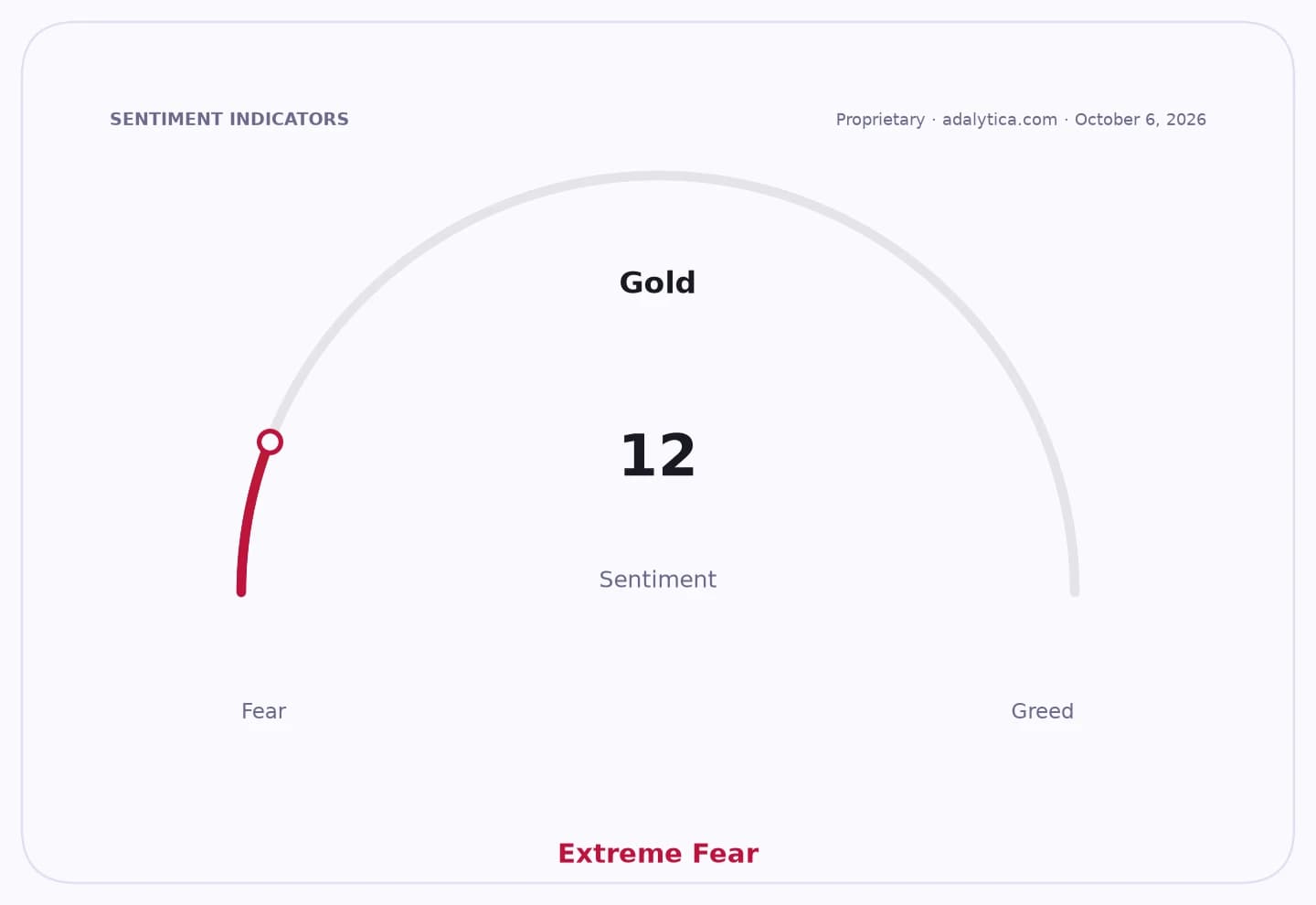
Sentiment IndicatorsⓘProprietary · adalytica.com · October 6, 2026
This is a snapshot — live sentiment, awareness and momentum for 130+ markets update continuously in the dashboard.Open AlphaPulse
The index inclusion may be even more important over time. Moving from AIM to the London Stock Exchange’s main market was always about widening the pool of capital, and FTSE 250 membership now pushes Amaroq into the path of index trackers and institutional mandates that cannot own smaller-market names. That should support liquidity, broaden shareholder ownership and reduce the stock’s reliance on speculative retail flows.
The market is also missing the second-order effect here: index demand plus improving production tends to sharpen valuation reratings in junior miners when the commodity backdrop is constructive. Gold has remained a favored hedge in a world of sticky inflation, geopolitical risk and heavy central-bank buying, and miners with visible output growth are increasingly the easiest way to express that theme without taking direct bullion exposure.
Amaroq still has to keep delivering. The company’s guidance range is intact, but the real test is whether Nalunaq can sustain this pace into year-end and whether the broader Greenland portfolio can become more than a geopolitical promise. If it does, FTSE 250 membership could prove to be the first step in a much larger institutional ownership cycle.
For investors, the setup is straightforward: the production beat confirms operational traction, while the index inclusion creates structural buying pressure. That is exactly the sort of asymmetry the market often underestimates before it shows up in the register.
| Entity | Gains | Losses |
|---|---|---|
| Amaroq Ltd | ▲Higher visibility, index demand | ▼Higher execution pressure |
| FTSE 250 trackers | ▲New eligible mining exposure | ▼Forced rebalancing costs |
| Existing shareholders | ▲Better liquidity, potential rerating | ▼Dilution risk if growth needs funding |
| Smaller AIM miners | ▲Benchmark attention shifts away | ▼Relative capital outflows |