AMD’s launch of its first rack-scale AI system, Helios, matters because it pushes the company beyond selling chips and into the higher-value battle for full AI infrastructure — the kind of platform Nvidia has dominated and investors have rewarded handsomely.
AMD Pushes Into Full AI Systems
That shift is economically important because rack-level systems are where the biggest AI spending decisions are made. Hyperscalers and data-center operators are no longer just comparing accelerators; they want complete, power-efficient, integrated stacks that can be deployed faster and run at scale. If AMD can prove Helios is competitive in performance, cost and availability, it could capture more of the spending tied to the AI buildout, not just a slice of the silicon.
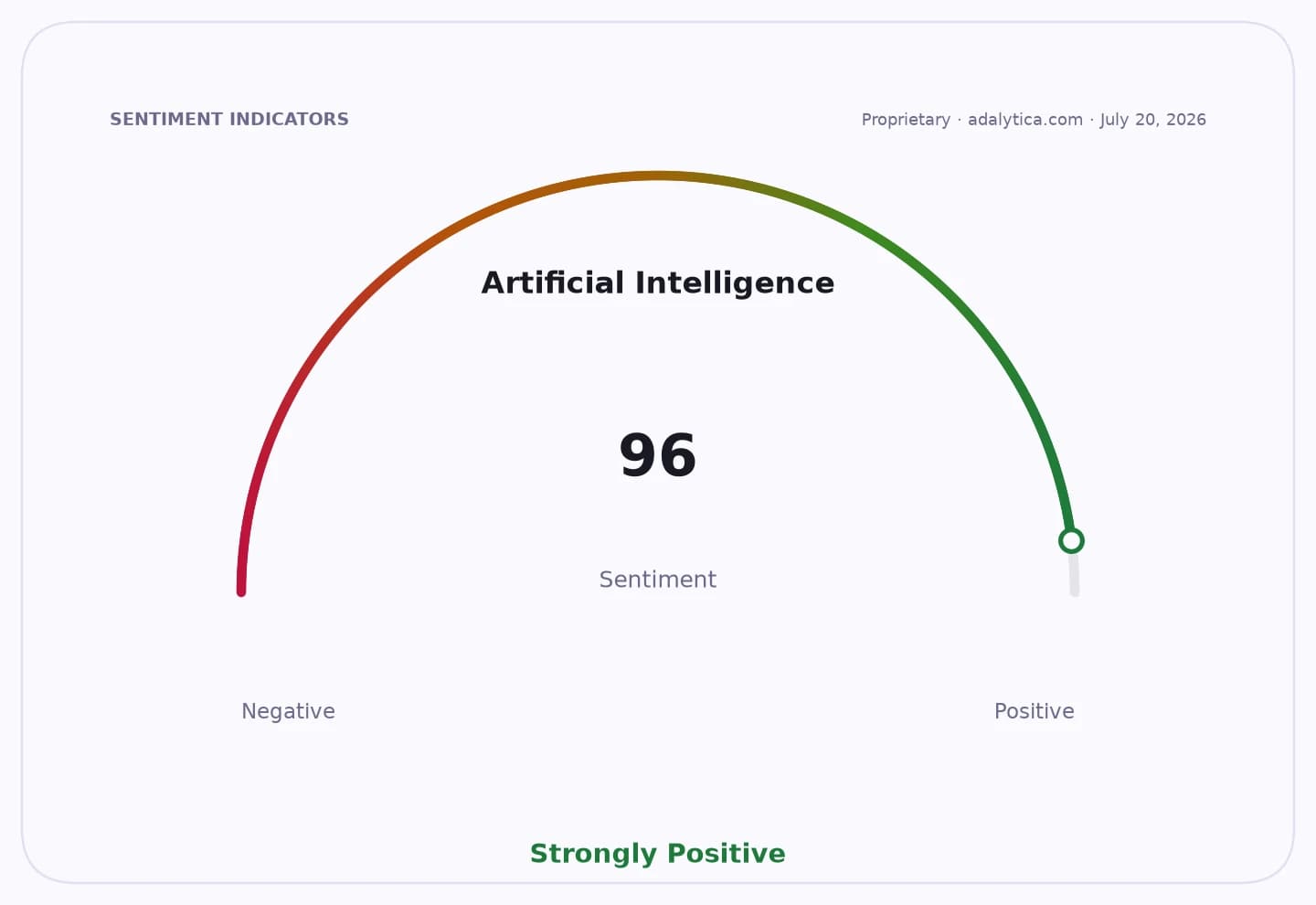
Sentiment IndicatorsⓘProprietary · adalytica.com · July 20, 2026
This is a snapshot — live sentiment, awareness and momentum for 130+ markets update continuously in the dashboard.Open AlphaPulse
Investors noticed the significance immediately. AMD shares have climbed to about $503, up from around $221 in late March and roughly $298 above the 200-day moving average, a sign of how aggressively the market is pricing in the company’s AI ambitions. The stock has also been trading near the upper end of its recent range, with RSI readings that suggest the rally has been powerful enough to leave the shares technically stretched. That is not a reason to dismiss the move — it is a reminder that expectations are now extremely high.
The broader message is that AMD is trying to attack Nvidia where the moat is deepest. Nvidia has not just sold GPUs; it has sold an ecosystem, a software layer and increasingly a system-level architecture that customers can buy whole. AMD’s Helios is a declaration that it wants to compete at that same level. In a market where AI infrastructure spending is becoming a multi-year capital cycle, that matters more than any single product launch.
For long-term investors, the key question is not whether AMD can knock Nvidia off its perch overnight. It is whether AMD can steadily widen its role in the AI stack and turn design wins into durable revenue growth and free cash flow. The AI theme remains powerful, but the winners over the next three to five years will be the companies that make their systems indispensable, not just impressive.
Nvidia still has the advantage of scale, brand and a deeply entrenched ecosystem, which is why its own stock continues to reflect extreme enthusiasm. But AMD’s Helios launch shows the competitive landscape is getting more interesting, not less. For investors building portfolios for the long run, AMD is worth keeping on the watchlist — and if execution follows ambition, it could become a much more compelling AI compounder.
| Entity | Gains | Losses |
|---|---|---|
| AMD | ▲Higher-value AI system sales | ▼Chip-only pricing power |
| Nvidia | ▲Overall AI demand tailwind | ▼Some share of system-level spend |
| Hyperscalers/data centers | ▲More supplier choice | ▼Less negotiating leverage for incumbent vendors |
| Long-term AMD investors | ▲Potential AI upside | ▼Risk of execution misses |